
[ad_1]
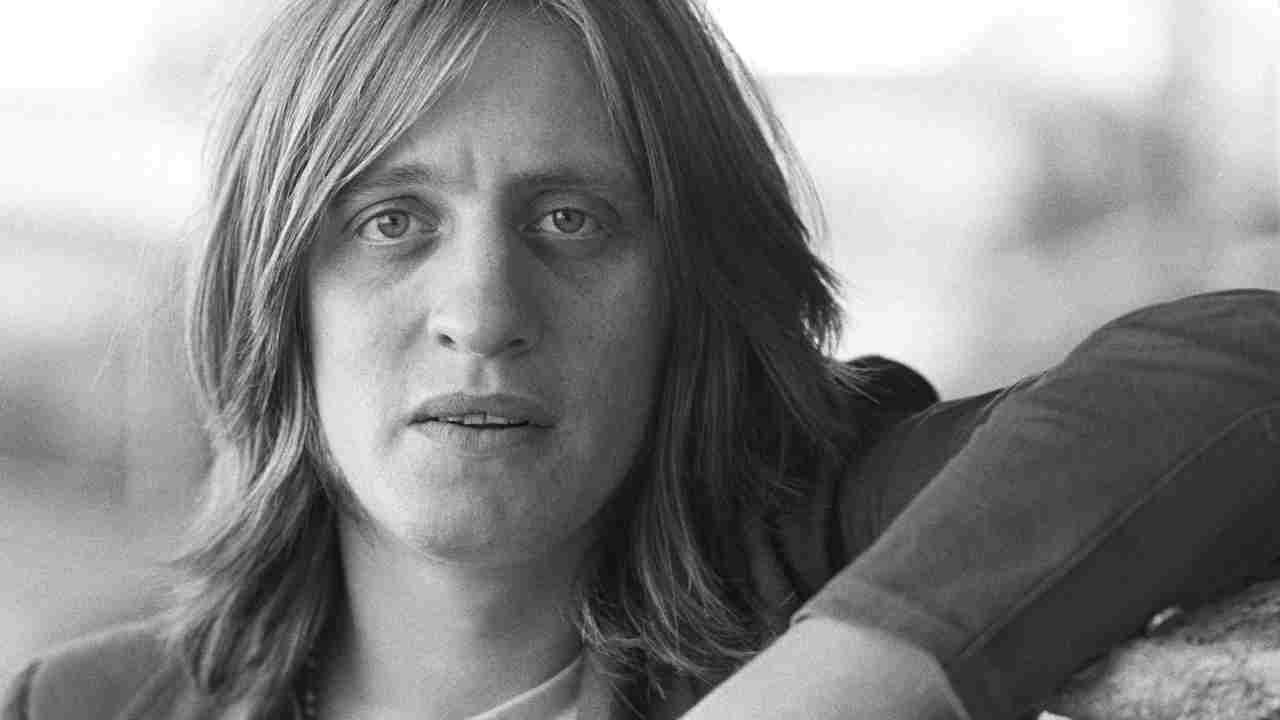
A friend and peer of Robert Plant and Steve Winwood, Jess Roden is one of the great forgotten singers of the late 60s and early 70s. In 2014, Classic Rock tracked down this cult figure to look back on a career that deserves to be better known than it is.

They must have put something in the water in the West Midlands during the post-war years. In that period the region threw up not one, but three of the great British rock singers. Each of them – Robert Plant, Steve Winwood and Jess Roden – took their formative steps in Birmingham and the Black Country just as the 1960s began rushing towards the counter-culture revolution.
Of the three, only Roden didn’t go on to join the rock aristocracy, never breaking out from being a cult artist. But the path he followed was no less eventful. Like his friend Plant, Roden spent his childhood in the shadow of the rolling Clent Hills to the west of Birmingham, but he shared the Handsworth-born Winwood’s freakishly soulful voice. If you closed your eyes to hear Roden sing – his voice a blend of honey and grit – it was possible to think you were listening to a black soul man.

Roden ducked out of the music business in the 80s, taking up a second career as a graphic designer. These days he’s retired to the Sussex coast and spends his time happily pottering about by the sea. He’s been prompted to reflect on his past life by the release of Hidden Masters, a six-CD box-set covering the span of his music career. Its 93 tracks take in fire and brimstone R&B, free-form country rock, hard blues, stomping rock, slick blue-eyed soul and all points in between. It’s a telling reminder of the fact that Roden is among the finest and most expressive singers this country has produced.
“When I started, I wanted to find out who’d done the original versions of all these songs the British bands were then playing,” he says. “And then I wanted to sing more like those guys, the black American singers. There was something deeper going on in their voices.”

Roden was born on December 28, 1948, and raised by his grandparents on one of the new council estates springing up around the Midlands. At the dawn of the 60s, the area’s music scene was dominated by the big swing bands of the previous decade, and by the suited-and-booted groups covering instrumental tracks by The Shadows and The Ventures.
The appearance of The Beatles on TV variety show Thank Your Lucky Stars in January 1963 – recorded at ATV’s studios in Birmingham – changed the city’s musical landscape. Suddenly, half the young upstarts clamouring for gigs wanted to be just like The Beatles, sporting brand new mop-tops and dropping Tamla Motown tunes into their repertoires.
At the same time, the air was crackling with the sound of black America. Blues and R&B records had first been brought into Britain by US servicemen during the war, and by the early 60s they were pouring in through the ports. Like Plant and Winwood, Roden got the bug fast, and made weekend pilgrimages to the Diskery, a poky record shop in Birmingham’s city centre. A black DJ, Erskine T, who worked in the shop, would turn fresh-faced youngsters on to the hottest sounds coming in from the States.

The 14-year-old Winwood was soon causing a sensation fronting the Spencer Davis Group around Birmingham’s pubs and clubs. Roden, like Plant, took a more scenic route to begin with – finding his voice singing along at home to his record collection, and then volunteering his services to a local cabaret band called The Raiders.
Robert Plant and I got on very well. He stayed at our house when he left home over some dispute with his parents
Jess Roden
“They were playing at St Mary’s youth club in Kidderminster one Thursday night,” he recalls now. “They did mostly instrumental stuff. I was terribly brave, because I went up to them and said I could sing Shakin’ All Over by Johnny Kidd & The Pirates, and they invited me up.”
After his short-lived tenure in The Raiders, Roden gravitated to Kevyn Gammond, an aspirant guitarist and blues nut. Gammond was forming a band, the Shakedown Sound, and told Roden he could join if he could handle a couple of Buddy Guy tracks. Roden sailed through the audition, and was soon performing two or three nights a week on the Birmingham ballroom circuit.
It was there that he entered Robert Plant’s orbit. In late 1964 and early 1965, Plant was playing the same venues, fronting the Crawling King Snakes. The two singers lived close to each other, and they struck up an instant accord.
“Robert and I got on very well,” says Roden. “His parents weren’t terrifically happy when he got into singing with groups. He ended up staying at our house for a couple of days when he left home over some dispute about him wanting to make music his profession. He had a Lambretta and I used to ride around on the back of it. We shared influences, talked about the blues and sang little things together. There was a very healthy kind of rivalry.”
Both were also fired up by two bands exploding out of London – the Rolling Stones and The Who. The Shakedown Sound took particular note of The Who’s assault-by-volume on the blues and the equipment-trashing finale to their act.
“As a result of The Who, we got louder and louder, and our drummer started knocking his kit around like Keith Moon,” says Roden. “The trouble was, pretty soon we had no gear left and no money to be able to replace it.”
Roden jumped ship, throwing his lot in with a straight-laced R&B collective from Slough called the Alan Bown Set. They’d become minor stars on the emerging Northern Soul club scene and had signed a record deal with Pye. This was enough to tempt the 18-year-old Roden, who bought a new Mini and spray-painted it orange with his share of the £500 advance. He cut his first single with them in 1966, a strutting R&B cover, Baby Don’t Push Me. It failed to chart, and nor did a follow up.

By the time the band’s debut album came out in 1967, Roden’s head had been turned again. Their former road manager had been poached by The Who, and returned from that band’s first US tour with a suitcase full of records by emerging West Coast bands such as the Grateful Dead and Jefferson Airplane. Flushed with the new sound of psychedelic rock, Roden began hanging out in rural Berkshire with Jim Capaldi and Steve Winwood, who were putting together Traffic.
Robbie Krieger and John Densmore were incredibly normal guys, but then they’d been on a hell of a ride with Morrison.
Jess Roden
“Various people would tip up at the country house they were living in to jam,” says Roden. “We’d go rambling over the hills, talking about music. It was all about the music – apart from the pot. I smoked a lot of pot at the time.”
This was all too much for the buttoned-up Alan Bown, hastening Roden’s exit. He was considered for the job of singer with Deep Purple and sounded out about replacing Paul Rodgers in Free, so fractious were relations in that group, but nothing came of either. He returned instead to Kidderminster, hooking up once more with Kevyn Gammond and a second whizz-kid guitarist, Robbie Blunt, and forming Bronco.

Signed by Chris Blackwell to his Island Records empire, Bronco recorded two albums of country-tinged psych-rock – 1970’s Country Home, with guest appearances from Mott The Hoople’s Ian Hunter and Mick Ralphs, and 1971’s Ace Of Sunlight. There was critical acclaim, but little commercial success, though Bronco built a decent live following supporting labelmates Traffic, Free and John Martyn.
Bronco were done for when their bus crashed returning from a gig in Bristol, their various injuries forcing them off the road for months. Blackwell whisked Roden into the studio to make a solo record, but this was interrupted when he was recruited into a new band being put together by ex-Doors men Robby Krieger and John Densmore, both still then nursing the psychcological wounds of Jim Morrison’s death. Named the Butts Band and completed by two more English musicians – bassist Phil Chen and pianist Roy Davies – they set off for Jamaica to make an album.
The Butts Band shacked up at Blackwell’s house high in the island’s Blue Mountains. Each morning, a driver would pick them up in a beat-up VW van and drive them down the perilous road to Kingston at death-defying speeds.
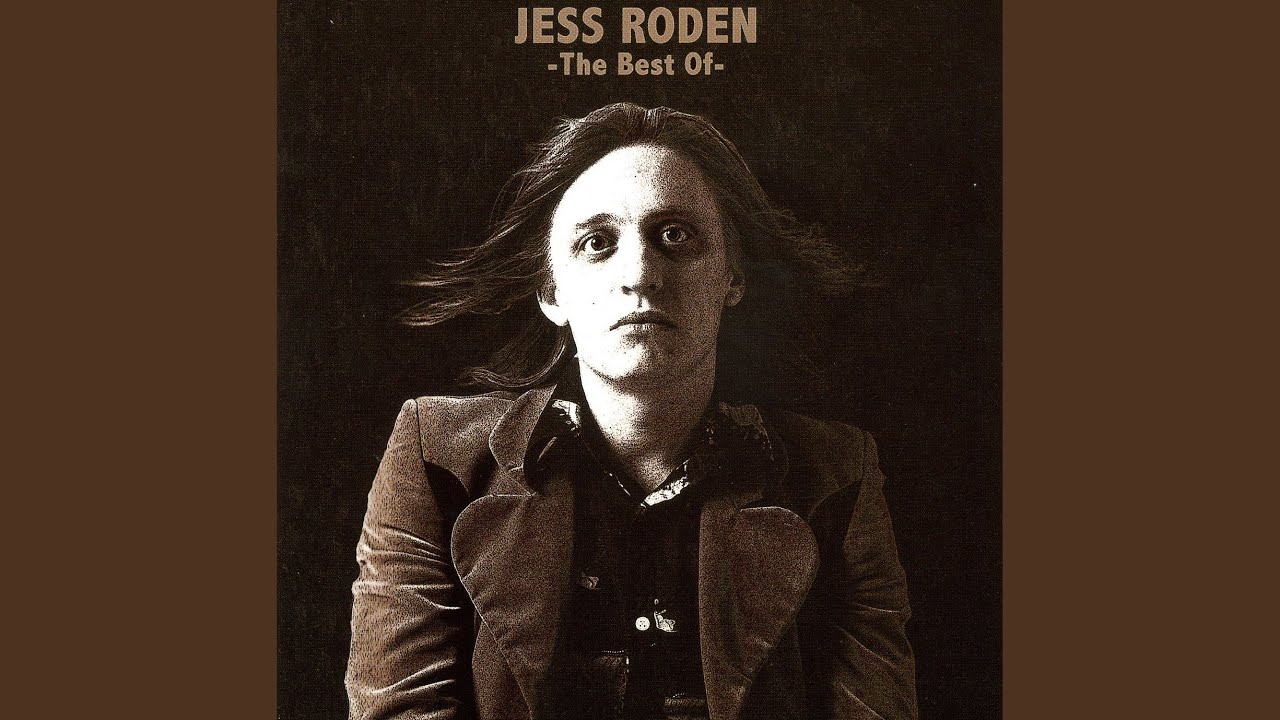
“It was a great time,” says Roden. “Jimmy Cliff was recording in the room next door, and there was so much weed being smoked. Robbie and John were incredibly normal guys, but then they’d been on a hell of a ride with Morrison, so there was very little craziness. The trouble was they wanted to keep the band on a low profile – go back to their roots and do the clubs. The rest of us English guys were hoping for something a little bigger.”
Our drummer started knocking his kit around like Keith Moon. The trouble was, we had no gear left and no money to be able to replace it.
Jess Roden
The Butts Band fizzled out after a self-titled album and club tour in 1973. Like a West Midlands Zelig, Roden gravitated to session work, guesting with Sandy Danny and notably singing on ex-Free guitarist Paul Kossoff’s Back Street Crawler album. For that record, Roden co-wrote the brooding rocker I’m Ready, a tantalising glimpse at what Free might have been with him at the helm. Sadly, the session was marked by Kossoff’s shambolic state.
“He’d gotten addicted to these heavy sedatives,” Roden explains. “Physically they’re a destroyer. You become completely hopeless. Poor Koss, some nights he couldn’t play and he wasn’t functioning. Later on he came to stay at my house, when his manager was trying to get him off all manner of drugs. But you could tell it was hard for him. I think the aim was that he and I should do some writing together, but he didn’t really want to and I didn’t push him. It was too upsetting in a way.”

Following his experience with Kossoff, Roden’s road took him through a series of soul-rock albums released under his own name and as the Jess Roden Band. The pick of these, 1974’s self-titled debut and 1977’s The Player Not The Game, are a match for Steve Winwood’s later blue-eyed soul albums, but each slipped through the net, admired by his peers but stuck out on the fringes of the mainstream.
By the time of 1980’s grandiose Stonechaser, Roden had moved to New York. That album employed the cream of the Big Apple’s session men, a 32-piece orchestra and a gospel choir, and took months to complete. It tanked on release, leading to Chris Blackwell dropping him from Island – then promptly re-signing his next project, The Rivits, a duo he’d put together with a fellow English expat, Peter Wood. Roden had intended The Rivits to be a low-key affair, but this didn’t deter Blackwell from shipping them off to his new studio at Compass Point in the Bahamas.
Blackwell envisaged the duo making an elaborate song cycle in the image of Funkadelic’s funk-rock masterpiece One Nation Under A Groove. Things began to go awry the minute they landed.
“Our producers were going to be Chris’s house rhythm section, Sly Dunbar and Robbie Shakespeare,” Roden recounts. “But there was some sort of incident – they weren’t exactly behind bars, but they couldn’t leave the country. You knew well enough not to ask questions.”
Grace Jones was an unusual lady. Her image was so huge that it had encompassed the person underneath.
Jess Roden
Roden and Wood spent time with Talking Heads duo Tina Weymouth and Chris Frantz, who were staying in the same apartment block behind the studio while making a record with their side-project the Tom Tom Club. Joe Cocker and Grace Jones were also there recording.
“To be fair, there was a bit of partying going on,” says Roden. “I ended up doing backing vocals on Grace’s Pull Up To The Bumper. She was… an unusual lady. Her image was so huge that it had encompassed the person underneath.”
The Rivits’ album came and went. The apartment of the artist who’d designed its sleeve made a greater impression on Roden, and he took himself off to college, learning graphic design and taking a job in New York. Later he returned to England and founded his own design company.

He’s put his name to just two records since – 1986’s Seven Windows, a polished soul confection fashioned from some of his home-made demo tapes by a pair of New York-based producers (“It made me think I was perhaps best off not being involved in my own records,” he reflects ruefully), and 1995’s Jess Roden & The Humans, featuring guest appearances from Winwood and Capaldi. In the mid-90s he did the odd gig with the SAS Band, a collective formed by Queen’s Brian May and Roger Taylor for charity bashes, but his race was run.
Jess Roden may have come up with giants, but his voice is too big, too strong to reside in shadows. Ask him if he’s craved the highs that his old friend Robert Plant scaled, or a smash hit like Steve Winwood’s Higher Love, and this modest man simply smiles beatifically. “Not at all,” he says. “I’m happy with how it all turned out.’
Originally published in Classic Rock issue 193 (January 2014)
[ad_2]
Source link