
[ad_1]
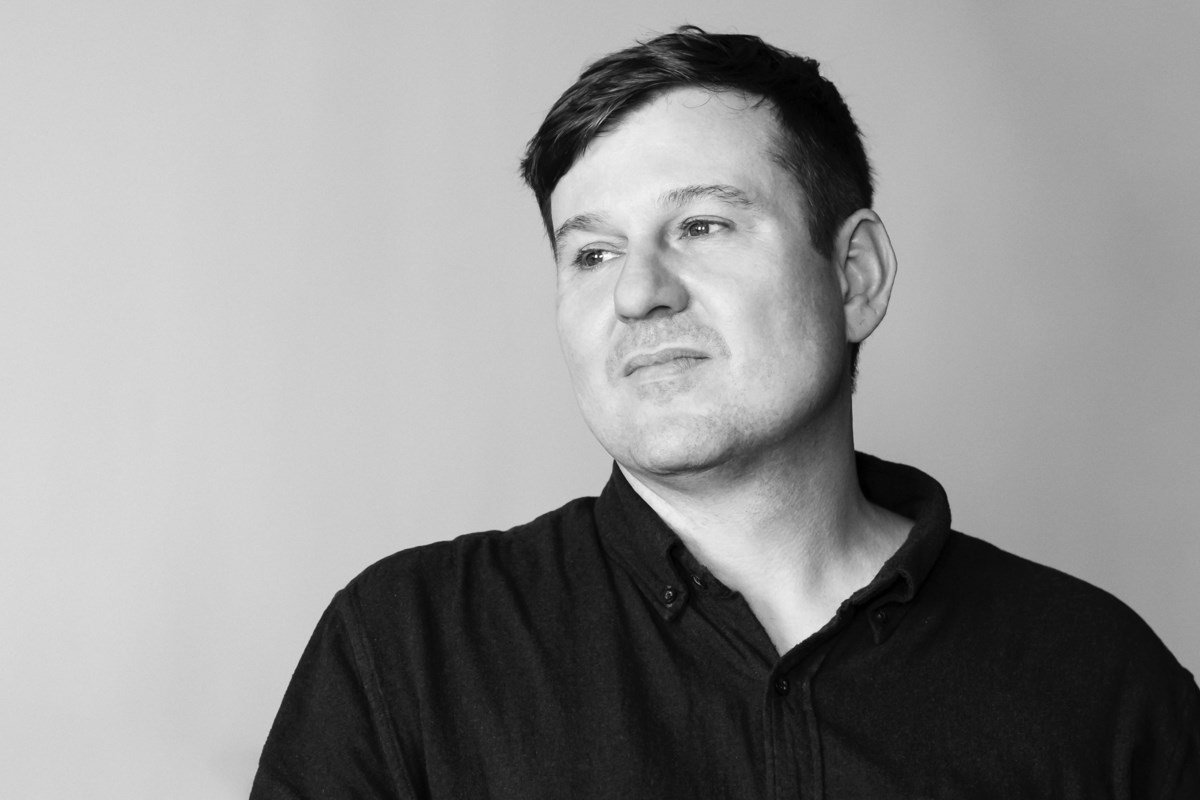
Jude Griebel, who has roots in the Bergen area of Mountain View County, recently awarded a 2026 Guggenheim Fellowship
MOUNTAIN VIEW COUNTY – The work of an artist with roots to the Bergen area south of Sundre has earned him international recognition among a select group of distinguished creatives who were recently awarded a 2026 Guggenheim Fellowship.
Jude Griebel was one of 223 artists working across 55 disciplines who were appointed to the 101st class of Guggenheim Fellows by the John Simon Guggenheim Memorial Foundation’s board of trustees.
“Chosen through a rigorous application and peer review process from a pool of nearly 5,000 applicants, the Class of 2026 Guggenheim Fellows was tapped based on both prior career achievement and exceptional promise,” reads part of a press statement issued by the Massey Klein Gallery in New York, where some of Griebel’s work is being exhibited until June 17.
“I was an applicant supported by staff from institutions and museums in the U.S. and Canada,” Griebel told the Albertan by email in response to follow-up questions, adding the application “puts your entire career and its trajectory into perspective.”
Considering the number of applicants, Griebel wasn’t holding his breath and said the announcement came as a surprise that left him in “shock and disbelief.”
“The Guggenheim is a career milestone in the arts and sciences. I feel incredibly privileged and humbled to have received it as the talent pool is rich and diverse, spanning numerous disciplines and areas of research,” he said.
“A career in the arts can be extremely challenging – especially on the prairies where it can be difficult to make connections to the broader international art world,” he elaborated.
“Receiving the recognition of a Guggenheim fellowship not only provides me with a greater sense of confidence when creating my work, but it provides a sense of legacy for the work itself.”
Per the organization’s founder Senator Simon Guggenheim, who established the fellowship in 1925, each recipient is granted “a monetary stipend to pursue independent work at the highest level under ‘the freest possible conditions,’” reads the presser.
The work that earned Griebel the award is an exploration of human-induced environmental collapse on a planetary scale.
“With a focus on contemporary human behaviours such as consumption, the factory food system, land depletion, and waste production, Griebel’s works are objective yet fantastical depictions of humanity’s complex and destructive connection to the surrounding world,” the statement reads.
“By weaving symbolism, diverse cultural references, and scientific reality the artist produces intricate portrayals of cyclical human consumption, eco-anxiety, and planetary decline, encouraging viewers to scrutinize their entanglement with the world and question destructive habitual behaviours.”
Griebel is primarily a figurative sculptor who works with a wide variety of mediums such as clay, textiles, hand-carved woods, and papier-mâché. He employs a combination of techniques such as modeling, carving, and constructing to produce his sculptural forms.
“Walking a line between the grotesque, the tender, and the humorous, Griebel’s work reflects on the mechanics of consumerism, the erasure of living identity, and interspecific relationships.”
Asked what inspired him to explore the theme of planetary collapse, Griebel said his sculptures “are a direct reflection of my concerns for the world.
“I am particularly perplexed by my home province of Alberta, where people simultaneously tout the beauty of the province while feeling entitled to profit from the continuous destruction of the landscape,” he said, citing the contentious issue of coal mining on the Eastern Slopes as an ongoing concern.
“That will both devastate the environment, natural habitats and water sources,” he said.
“There is a lot that you have to turn a blind eye to if actively promoting – and gaining from – ecological ruin. My work considers these blindspots in imaginative ways that might help shift perspectives.”
Additionally, he considers art a crucial avenue for silently expressing oneself.
“At a time when people’s opinions are vastly polarized, art has the capacity to share ideas and question systems in place without using words,” he said.
“People generally enter art galleries open to experiencing the work that is present there before forming opinions. In this way, art may play a more critical and pertinent role in society than ever before.”
Despite his concerns about a shortsighted, disposable consumer culture that is more obsessed with quarterly profits than the collective future of humankind, Griebel finds reason for hope and optimism among the up-and-coming generations.
“I am especially encouraged by young people, who seem to be more open to new approaches and models of living in this world that they will be inheriting,” he said.
“I am also heartened to see community gathering and opposing shortsighted projects, in terms of local organizations such as Water Not Coal (campaign) and the Legacy Land Trust Society.”
With this latest feather added to his artist’s cap, Griebel looks forward to making the most of the opportunity awarded to him.
“The Fellowship provides funding for me to live, travel, research and produce ambitious new works over the course of a year,” he said.
“It is a year to fully immerse myself in my studio work without other concerns or priorities. In this way it is a huge gift.”
Meanwhile, the artist also currently has exhibitions up in Montreal, New York and Vermont. In the year ahead, he plans to prepare new exhibits throughout Canada, New York City, and in Turin, Italy.
Griebel also co-runs the Museum of Fear and Wonder, located in a renovated army barracks outside Bergen, alongside his brother Brendan.
[ad_2]
Source link