

[ad_1]
According to Timothy Brittain-Catlin’s recent biography on Edwin Rickards, the competition rules did not dictate the style of architecture and or the materials to be used but added: “It is suggested to avoid as far as possible useless ornament and ‘fussy’ detail.”
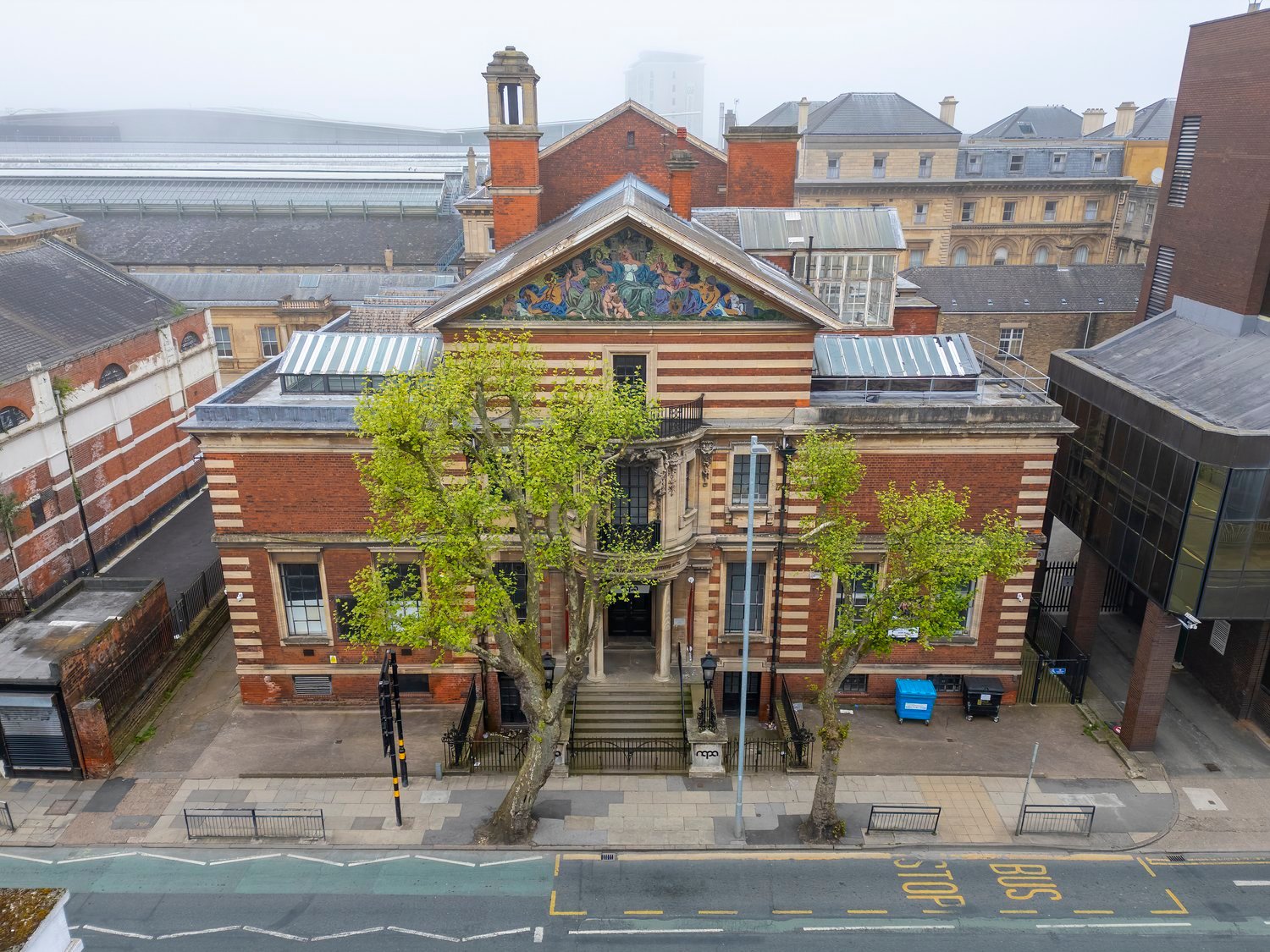
Rickards, a flamboyant talent, seemingly ignored this and duly delivered a building which Brittain-Catlin compares to a grand red brick Italian villa.
“The Hull School of Art is an exquisite building, still complete today in its details, excellent in comparison to the city’s very high quality late Victorian and Edwardian architecture,” he writes, describing the beautiful curved central stairwell and the space around it as its “tour de force”.
“The genius of this building is in the way in which a few bold elements are placed up against one another within on a very small space without overcrowding; all of them following the logic of the flow of the circulation: the pillars; the landings; the arches cut out of the central stack of masonry.
“The building is also astonishingly intact: not just in its decorative features, such as the fireplace surround in the headmaster’s office above the porch, but down to the leaded internal sliding sash windows and even to the doors to the lavatory cubicles.”
For nearly a century, fine art students were taught there with natural light ushered in through large glazed skylights and a series of oval windows in each studio.
[ad_2]
Source link
Other Articles

Bitterne Park’s local website – bitternepark.info