
By Joshua Pritchard, Arts & Culture Feature Writer
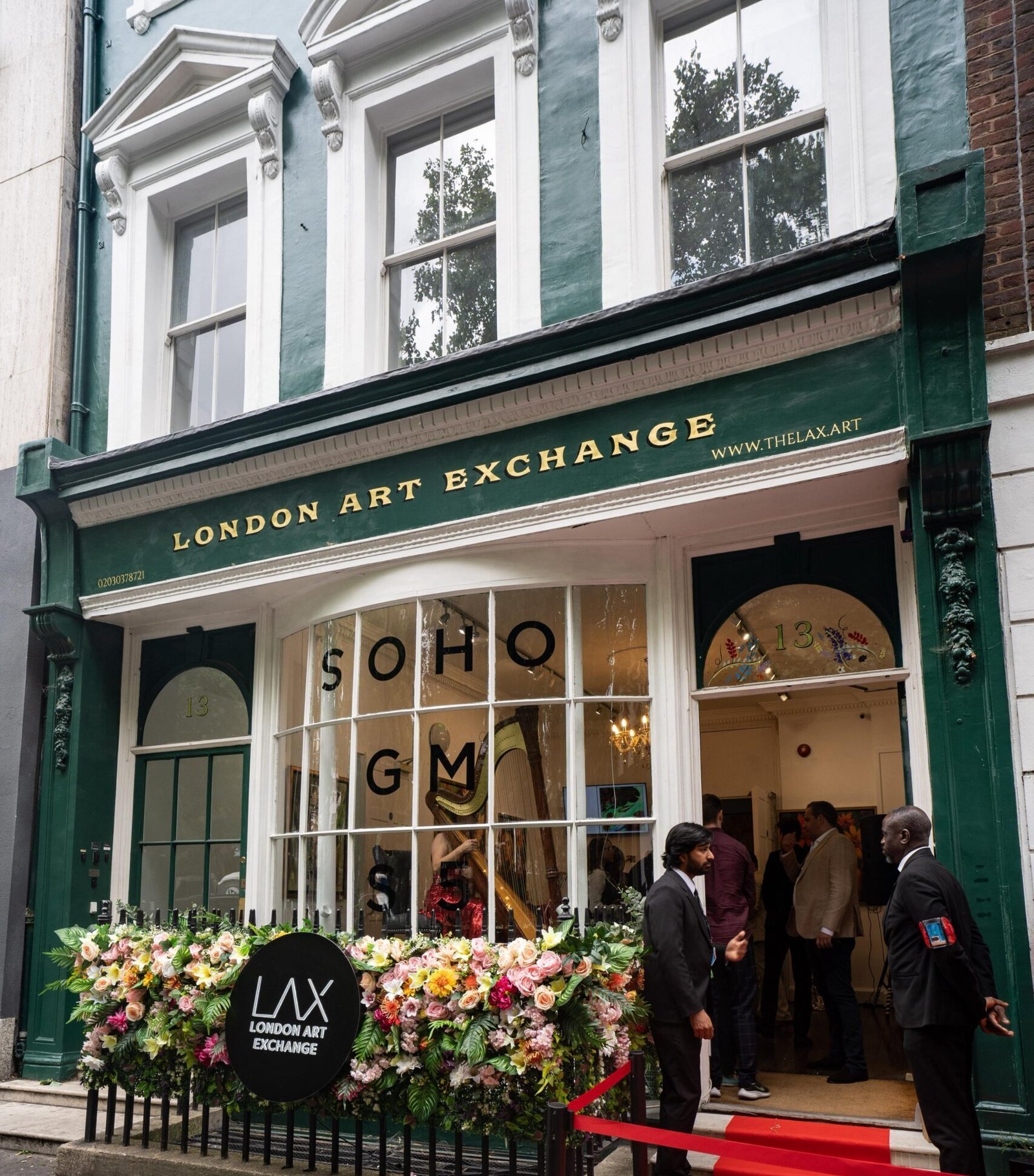
On the evening of August 1st, 2025, Soho became the setting for a celebration of portraiture, culture and shared humanity as Gabrielle Malak unveiled his fifth collection, S5, at London Art Exchange. The exhibition brought Malak’s approach to contemporary figurative painting into focus through portraits centred on women, culture and human experience.
Outside the gallery stood a vintage 1927 Ford covered in London Art Exchange branding. It immediately established the character of the evening, bringing something historic into the centre of a contemporary art exhibition.
Inside, the atmosphere shifted between old world glamour and contemporary Soho. Harp music and saxophone accompanied the evening while guests moved through the gallery, encountering portraits concerned with different cultures, identities and experiences.
Who Is Gabrielle Malak?
Gabrielle Malak is a contemporary artist whose work combines figurative painting, cultural storytelling and emotionally charged imagery. His practice explores identity, heritage, memory and human experience through compositions that balance realism with expressive and symbolic elements.
Malak’s work has evolved through successive collections, with each body of work developing new ways of connecting individual experience with wider cultural narratives. Portraiture remains central to that approach, allowing the human face to become a point of connection between different histories and cultures.
More of Gabrielle Malak’s work can be explored on the artist’s official website.

Gabrielle Malak and the Story Behind S5
To understand S5, it is important to understand the ideas that continue to shape Gabrielle Malak’s art. Portraiture provides a recurring way for Malak to explore the individual while simultaneously addressing themes that extend beyond a single person.
With S5, that approach becomes particularly important. The collection centres on portraits of women while considering culture, beauty and the human experiences that can connect people across geographical boundaries.
Rather than treating cultural difference as something that separates the subjects, the collection asks viewers to consider what remains universal.
Gabrielle Malak’s S5 Collection
The premise of S5 is direct but ambitious. Women from different parts of the world become the subjects through which Malak examines different expressions of beauty while returning to a common idea of humanity.
Gabrielle Malak has long been interested in contrasts. Across his practice, identity, belonging and cultural inheritance provide opportunities to explore both difference and connection. In S5, these ideas are channelled through portraiture.
Walking through the exhibition, viewers encounter different visual references and cultural influences. Colour, expression, clothing, composition and environment help give each portrait an individual identity.
Yet the strength of the collection comes from the conversation between the works. Different faces and different stories occupy the same exhibition, connected by Malak’s interest in human experience.
Inside Gabrielle Malak’s S5 Exhibition
Inside London Art Exchange that evening, the exhibition became more than a conventional presentation of paintings.
Guests moved between conversations and artworks while live music shaped the atmosphere around them. The combination of portraiture, performance and the Soho setting gave the evening a social quality while keeping the paintings at its centre.
The audience itself reflected that openness, bringing together collectors, artists and visitors with different levels of experience in contemporary art.
Rather than requiring specialist knowledge before entering the conversation, S5 offered an immediate point of connection through one of art’s oldest subjects: the human face.
Gabrielle Malak on Humanity and Portraiture
Throughout S5, portraiture becomes a way of looking beyond surface appearance.
A portrait can record a face, but it can also communicate vulnerability, identity, confidence, memory and cultural experience. This tension between the visible and the emotional gives the collection much of its character.
For Gabrielle Malak, the individual figure becomes part of a wider conversation. Each subject has her own identity, but the collection places those identities beside one another and encourages the viewer to consider their connections.
The result is an exhibition concerned not simply with how people look, but with how portraiture can communicate something shared.
How Collectors Responded to Gabrielle Malak’s S5
As the evening developed, the paintings naturally became the focus of conversations throughout the gallery.
Some viewers were drawn immediately to individual portraits, while others responded to the relationship between the works as a complete collection. This is an important distinction within S5. Each painting can function independently, but viewing the works together makes the central themes of culture and humanity more apparent.
For collectors already familiar with Malak’s previous collections, S5 offered an opportunity to see how his visual language had developed.
For those encountering the artist for the first time, the portraits provided an accessible introduction to his interest in figurative painting and cultural storytelling.
Gabrielle Malak and London Art Exchange
Gabrielle Malak’s relationship with London Art Exchange has provided a setting for the presentation of his developing collections, including S5. The Soho exhibition brought his figurative practice together with a wider evening centred on art, culture and community.
Gallery representation can also provide an important framework around the presentation and documentation of an artist’s work, connecting individual collections to a broader professional practice.
Through the exhibition, London Art Exchange created an environment in which visitors could experience the paintings directly while also engaging with the wider ideas behind the collection.
More information about the gallery and its artists is available through London Art Exchange.
What Makes Gabrielle Malak’s S5 Different?
What distinguishes S5 is not simply the individual beauty of its portraits. It is the conversation created between them.
The collection moves between cultural specificity and universal human experience. Each subject retains an individual identity, while the exhibition asks what might connect people whose lives, backgrounds and experiences are otherwise very different.
This gives Gabrielle Malak’s S5 an emotional dimension beyond conventional portraiture.
Rather than presenting beauty as a single ideal, the collection allows it to appear through difference. The portraits become individual stories while simultaneously contributing to a larger picture of humanity.
Why Gabrielle Malak’s S5 Left an Impression
As the evening came to an end, conversations continued outside the gallery and onto the streets of Soho.
Inside, the portraits remained.
Without the movement and sound of the opening night around them, the paintings returned to what had made the collection compelling in the first place: faces, identities and individual stories brought together within one space.
That may ultimately be the most effective aspect of S5. The exhibition creates spectacle around the paintings, but its central message does not depend upon spectacle.
It depends upon people.
What Comes Next for Gabrielle Malak?
S5 represents another stage in the development of Gabrielle Malak and his approach to contemporary figurative art.
Across the collection, portraiture becomes a way of examining beauty, identity, cultural difference and shared experience. Individual subjects remain distinct while contributing to a larger conversation about what connects people across cultures.
As Gabrielle Malak’s practice continues to develop, S5 provides a clear record of this particular stage in his artistic progression.
For those who experienced the Soho exhibition, the evening ultimately returned to the same idea expressed throughout the paintings: however different our histories, cultures and appearances may be, humanity remains the common thread.