
[ad_1]
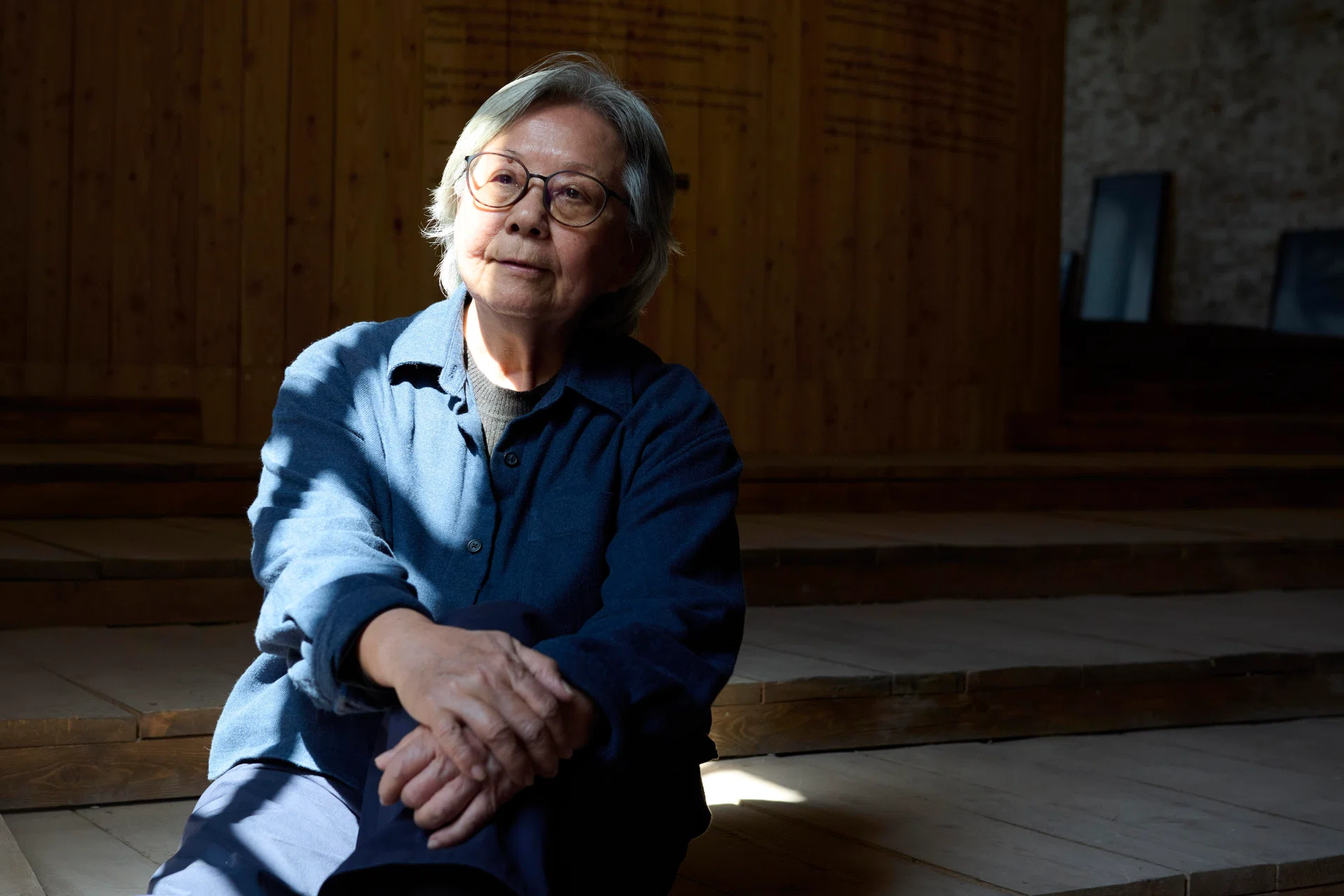
[VENICE] At the world’s biggest art contest, where 99 nations are competing, Singapore artist Amanda Heng is telling people to “do nothing”.
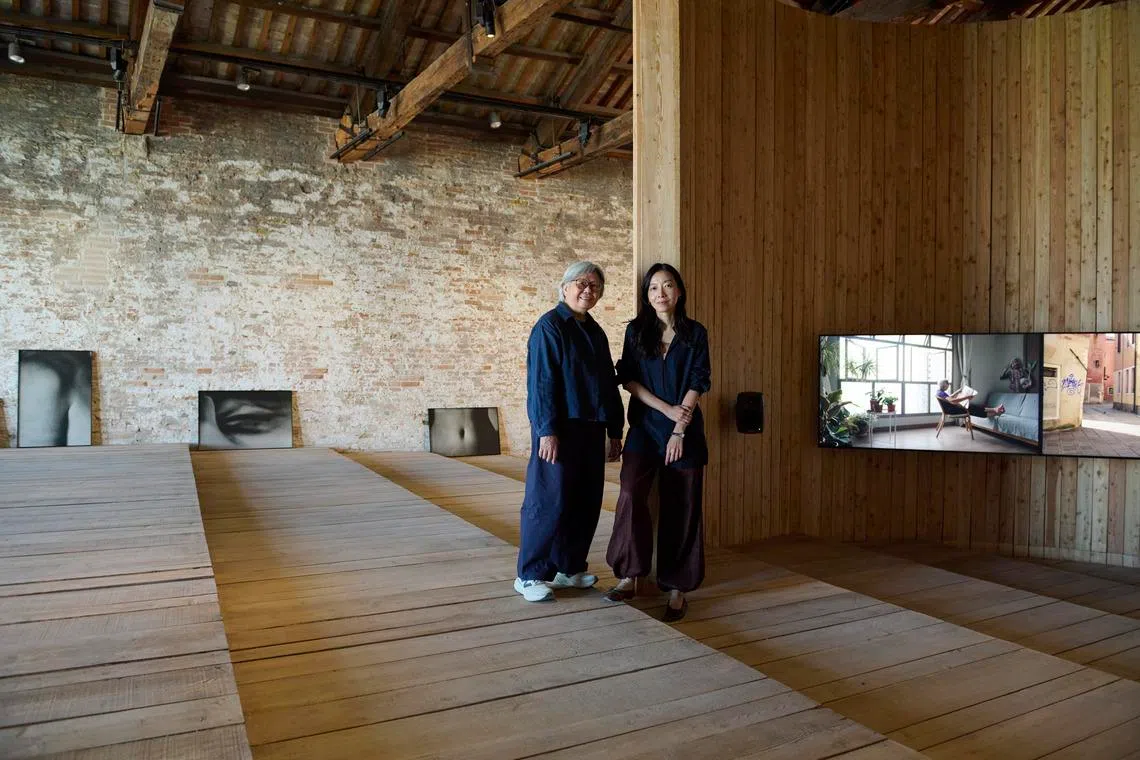
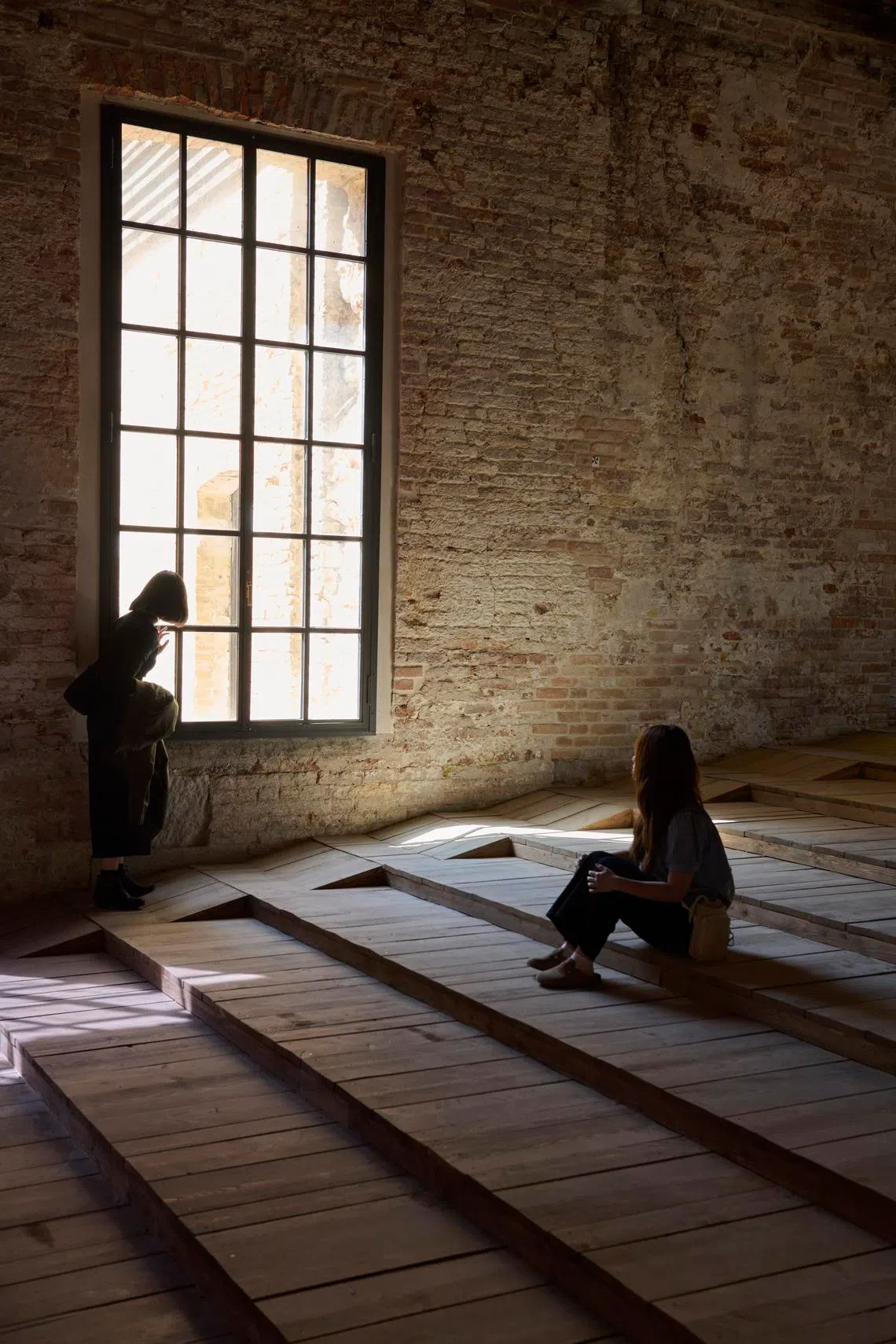
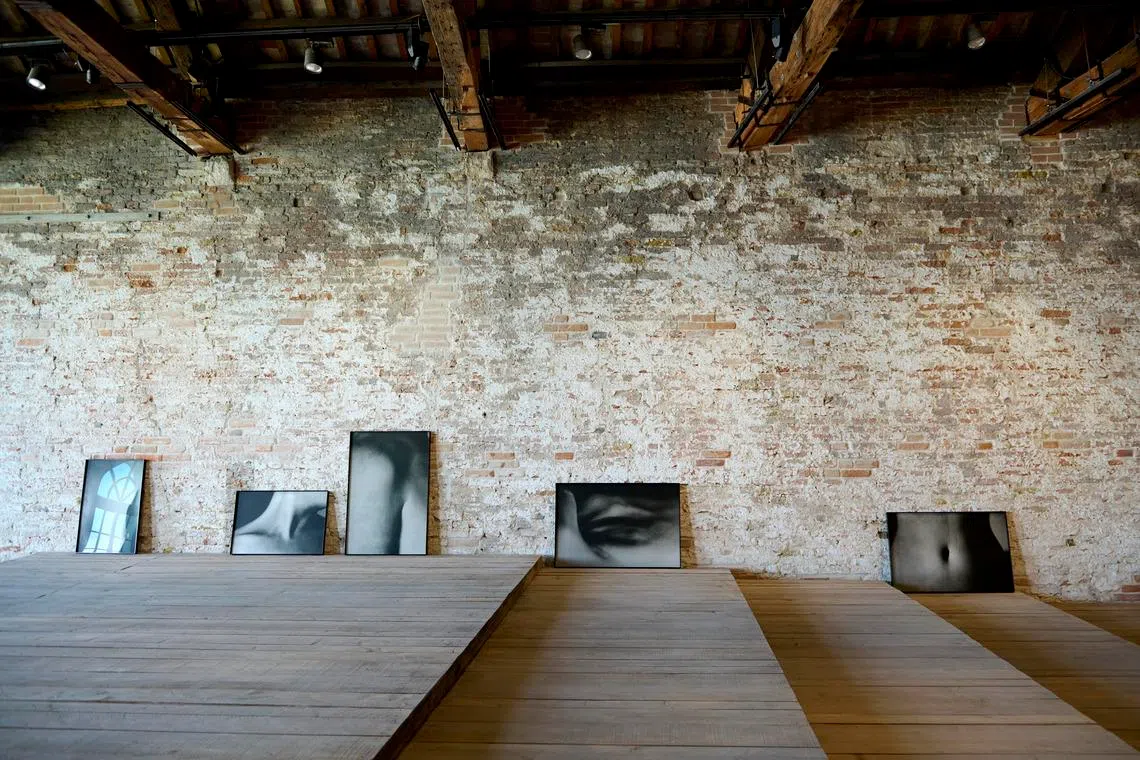
Her work is a gently terraced landscape of low timber steps spread across the floor, rising and falling in shallow increments – each one broad enough to sit, recline or simply pause. There are no prescribed routes, no obvious focal point.
Nothing much happens. And that is precisely the point.
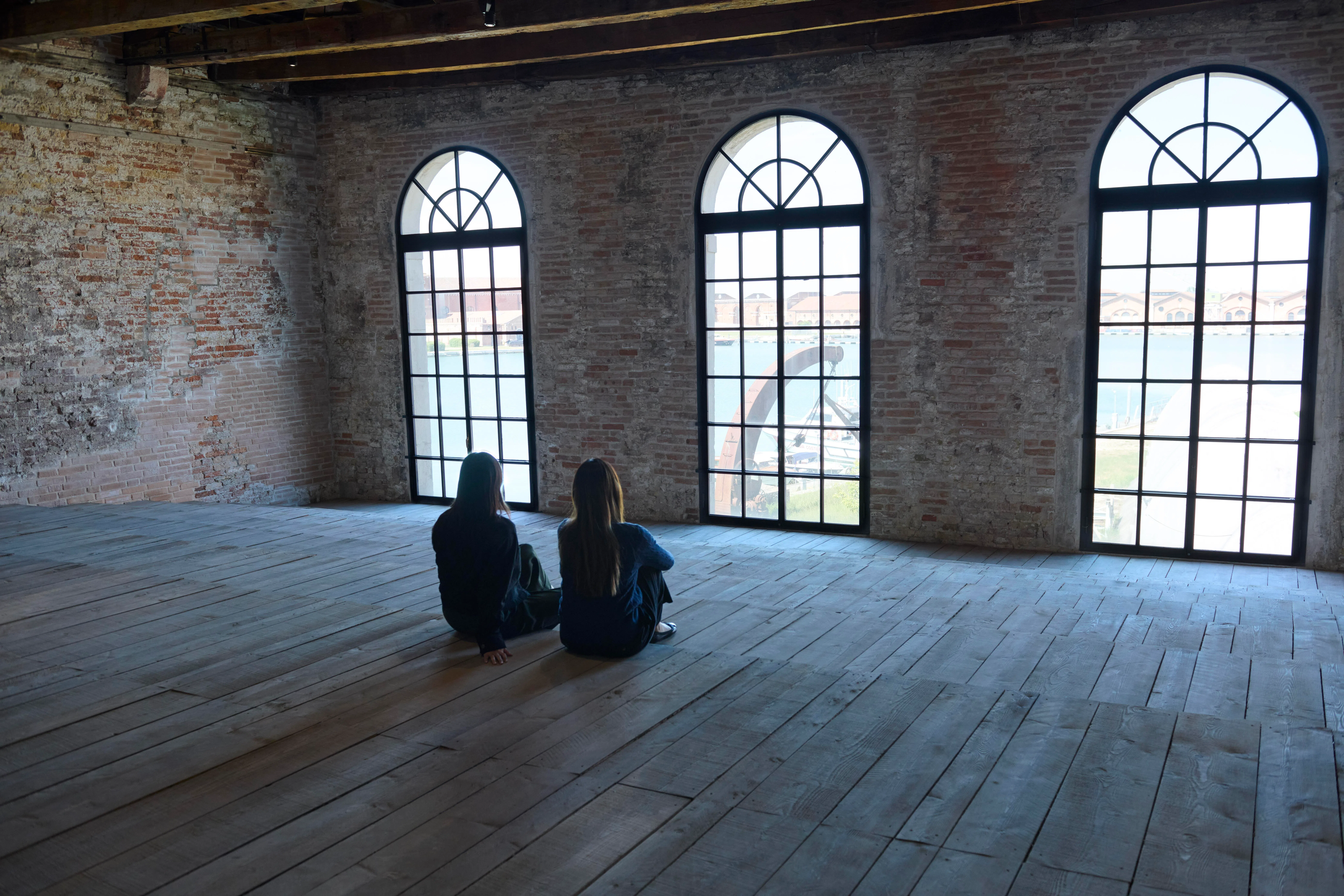
At the Venice Biennale, often described as the “Olympics of the art world”, Heng offers a counterpoint to the Singapore exhortation to stay driven, efficient and productive. Here, there is nothing to complete, nothing to optimise, nothing to prove.
The contrast is not just with Singapore, but with the Venice Biennale itself.
Sprawling across one end of the Venetian island, the international event is massive and saturated with thousands of works. It demands endurance. But after hours of walking, looking and processing, the pavilions begin to blur into one another. Attention thins. Fatigue sets in.
Navigate Asia in
a new global order
Get the insights delivered to your inbox.
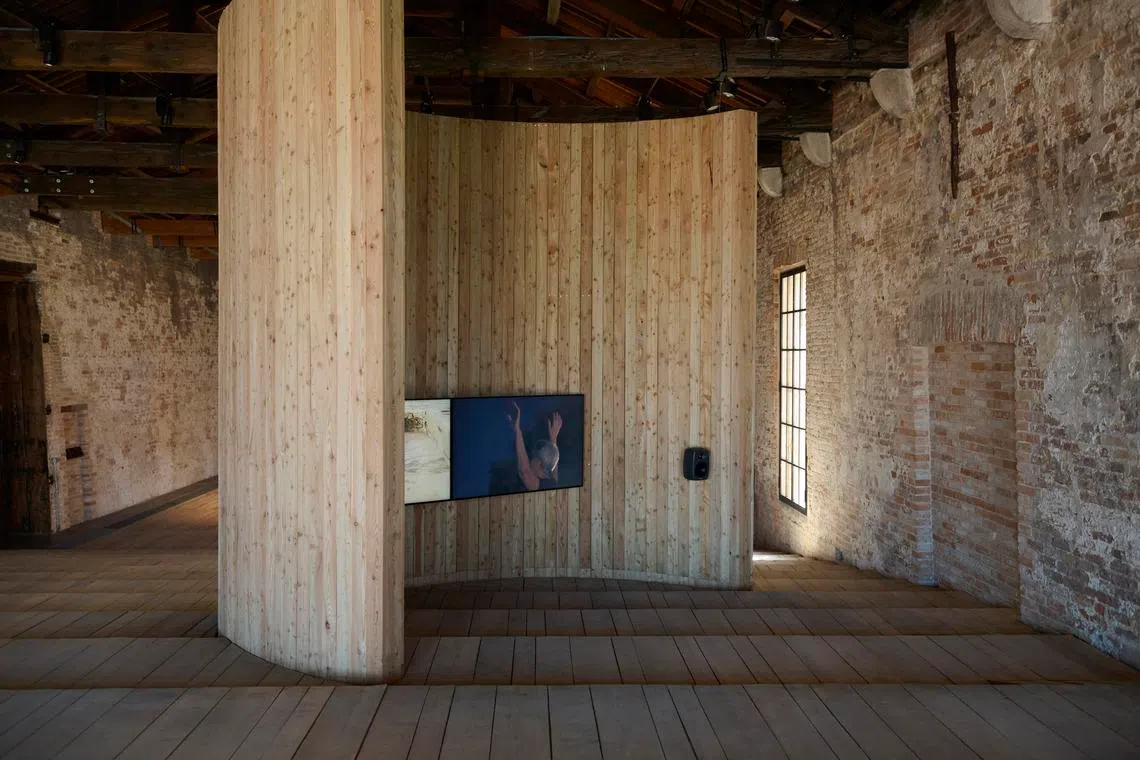
Against that momentum, Singapore Pavilion offers not another spectacle – but a reset. “Here, you can finally catch your breath,” says Heng.
Rest as resistance
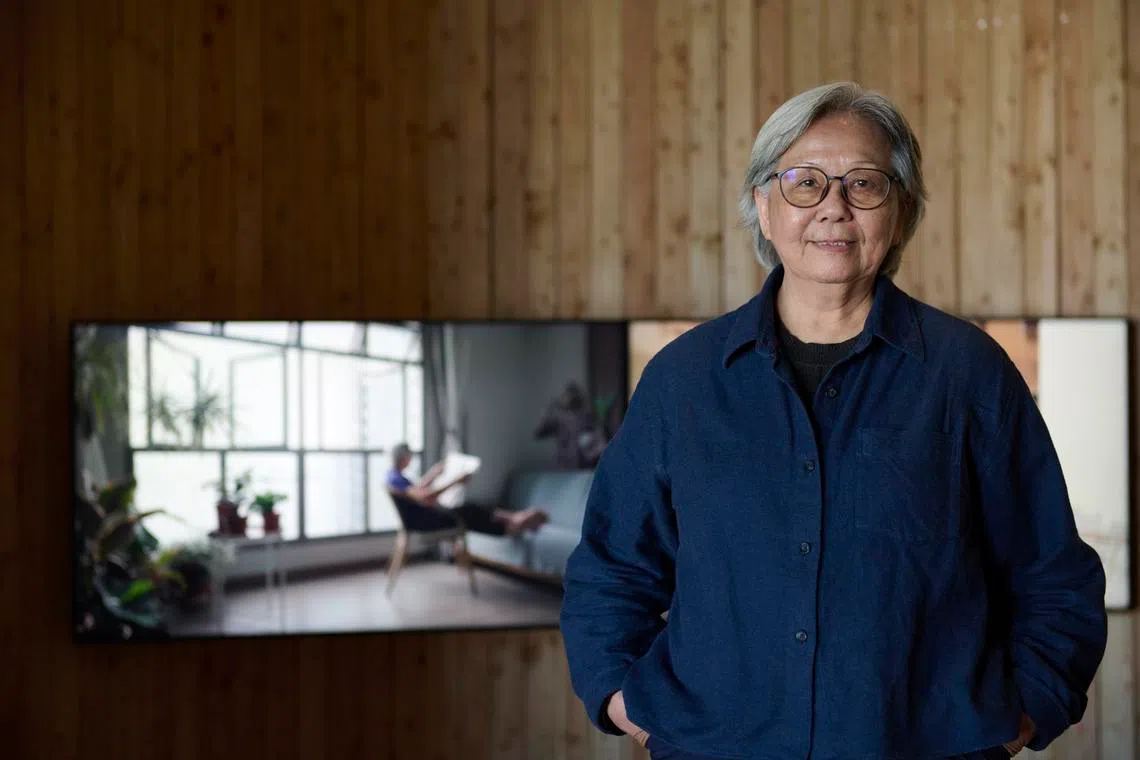
At 74, Heng is the most senior artist to present a solo at the Singapore Pavilion, and only the second woman to do so.
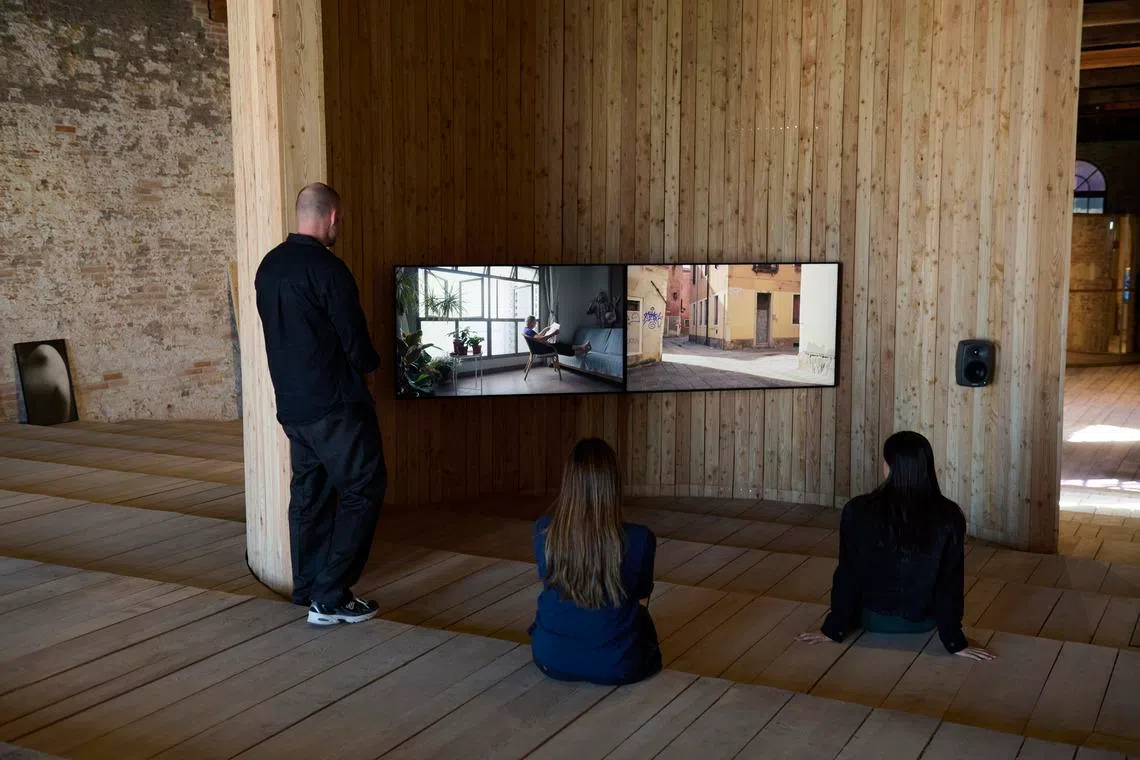
Yet, the work resists any sense of grand occasion. It is simply a place to slow down and, optionally, look at Heng’s black-and-white photos of her own body, or watch a quiet video of people at rest.
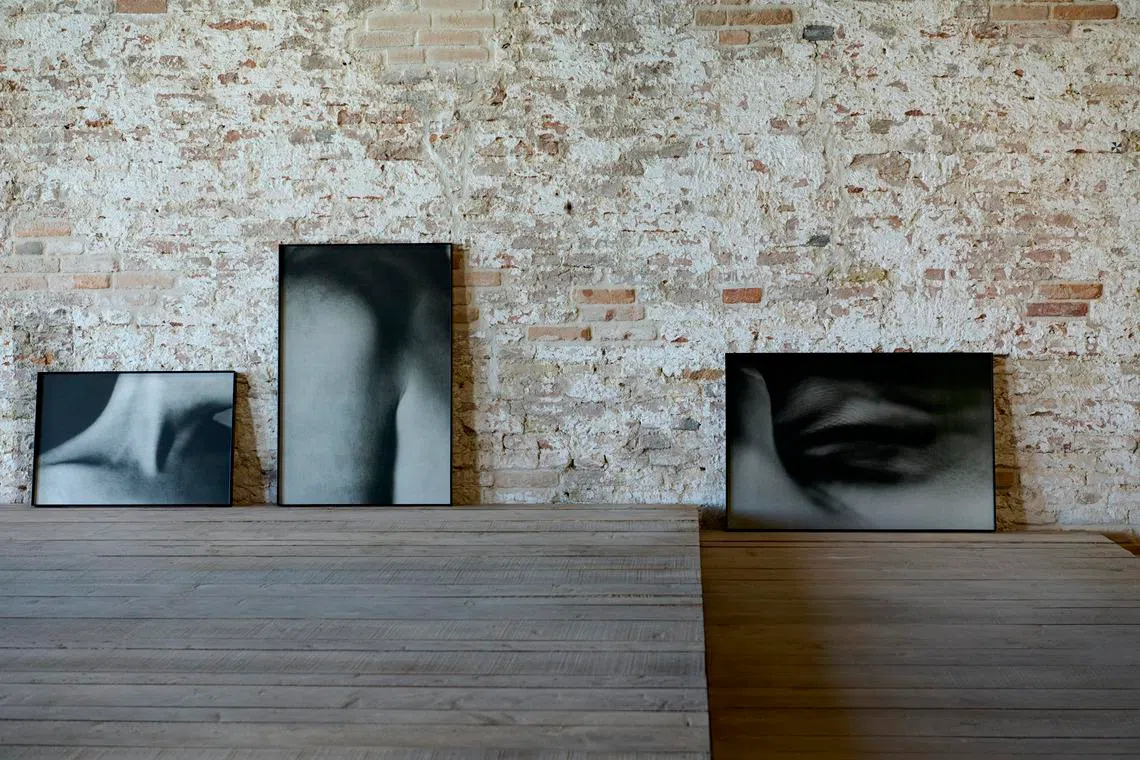
The entire work, titled A Pause, builds on her practice that has long centred the body through ordinary actions – such as walking, talking, sitting with strangers and cleaning beansprouts at a kitchen table.
Across four decades, Heng has used performance art not to dramatise, but to observe how bodies move through social expectations and gender roles.
Her most famous work, for instance, emerged after the 1997 Asian financial crisis, when many Singaporean women turned to cosmetic procedures to avoid losing their jobs – a reflection of how “women’s looks seem more important than their abilities”, Heng says.
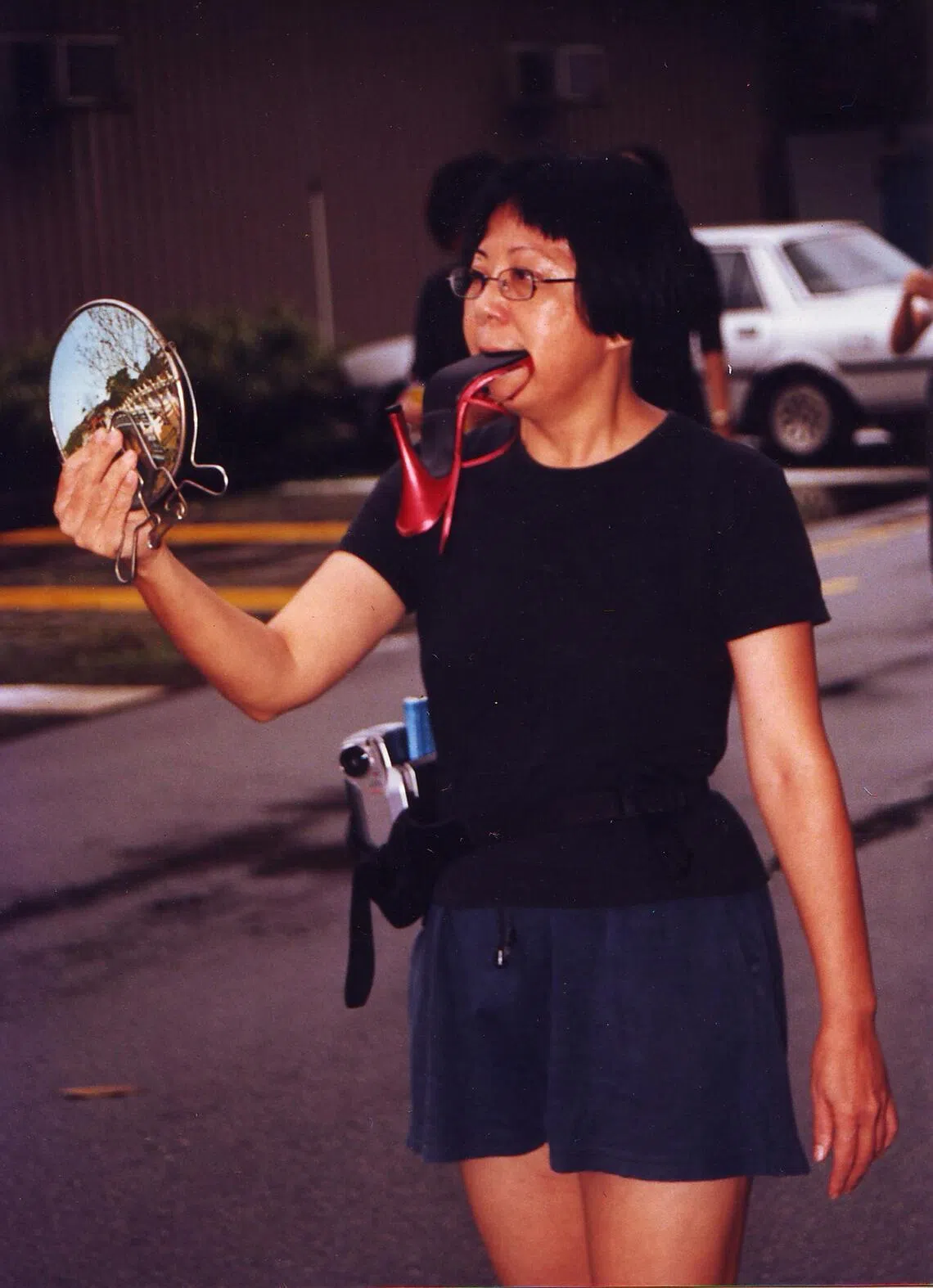
In response, she staged a simple but unsettling act: she bit a stiletto shoe in her mouth, held up a mirror, and walked backwards down the street: When a society measures women by their appearance, everyone moves backwards, the act suggests.
Here in Venice, that outward critique turns inward. Heng treats the body as a kind of archive – a place where time, memory and experience quietly build up.
The idea is grounded in her own life, especially the years she spent caring for her mother, who died in 2023.
“I was racing against time – caregiving and making art at the same time,” she says. “At some point, my body simply couldn’t keep up. That was when I realised I had to find a way to recalibrate.”
That recalibration is what A Pause offers. For Heng, contemporary life is governed by an unquestioned belief in productivity – the constant push towards speed, efficiency and competition. In that framework, rest feels indulgent and unnecessary.
“I wanted to push back against that, create a space that feels closer to everyday life – somewhere people might feel permission to slow down, or even just to rest.”
Bringing Venice’s bridges indoors
Curator Selene Yap worked with Heng on the presentation, which is organised by the Singapore Art Museum, commissioned by the National Arts Council, and supported by the Ministry of Culture, Community and Youth (MCCY).
“The architecture of the Singapore Pavilion is meant to modulate your pace and rhythm,” Yap says. “It invites you to let your body guide you – to sit, lean or lie as you wish.”
The design draws from Venice itself – a city navigated on foot, where movement is constantly broken by small bridges that rise in shallow steps. You slow down without thinking.
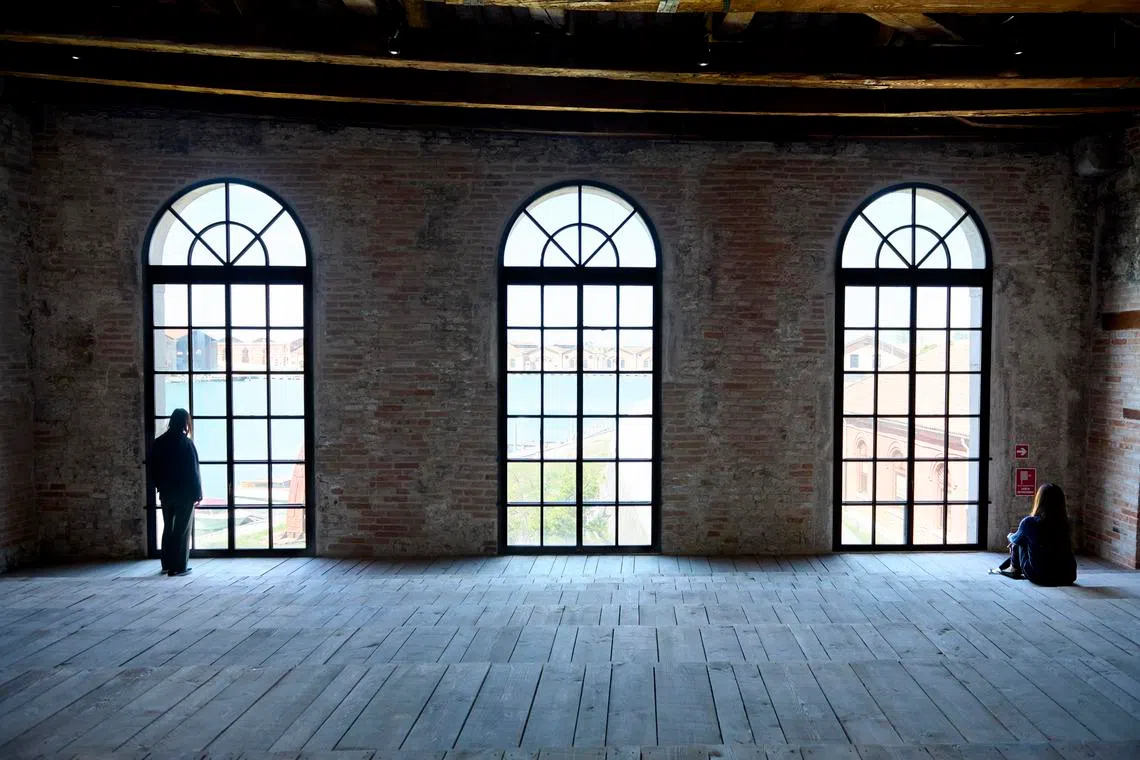
That rhythm is recreated indoors in the Singapore Pavilion. You don’t pass through the space so much as settle into it – slowing, sitting down, and lingering longer than you expect.
Even Heng’s photographs follow suit. The photographs are positioned like bodies at rest – leaning, reclining along the steps – while the video work sits within a curved wall that keeps the space open but creates “an intimate encounter”, says Yap.
Importantly, this pause is not about inactivity.
“For Amanda, the pause is a form of attention,” Yap says. “Pausing is not passive. It’s thinking about how we sustain ourselves and how we continue on – because the pause is actually where the work happens.”
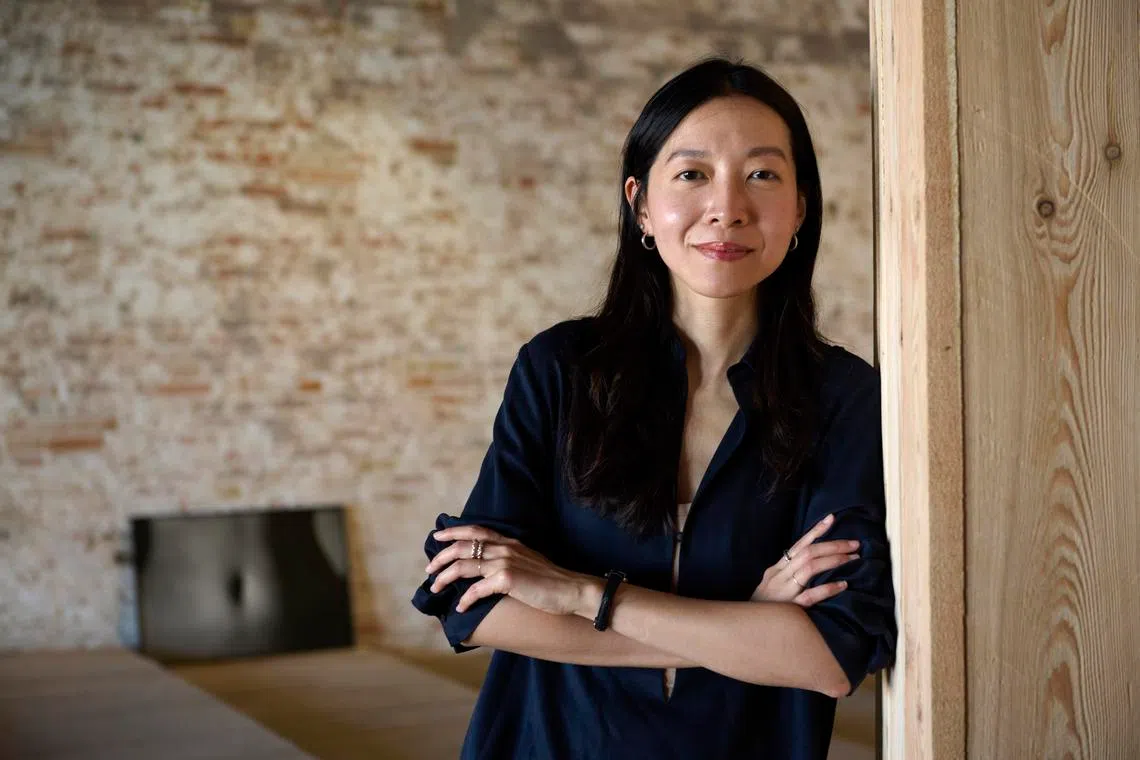
In other words, “doing nothing” is not an absence of activity, but a shift in where that activity takes place – from the outside world to the inner one.
An unusually turbulent Biennale
On Wednesday (May 6), MCCY Acting Minister David Neo officiated the opening of the Singapore Pavilion. “This year’s Biennale theme, In Minor Keys,” he says, “is a timely reminder that the ability to exercise restraint and quiet reflection are critical to navigating a world that is increasingly uncertain and rapidly transforming.”
Although Heng’s work was conceived before the Biennale’s theme was announced, it aligns closely with it. The Biennale’s late artistic director Koyo Kouoh was calling for a move away from spectacle and toward quieter, more attentive ways of seeing.
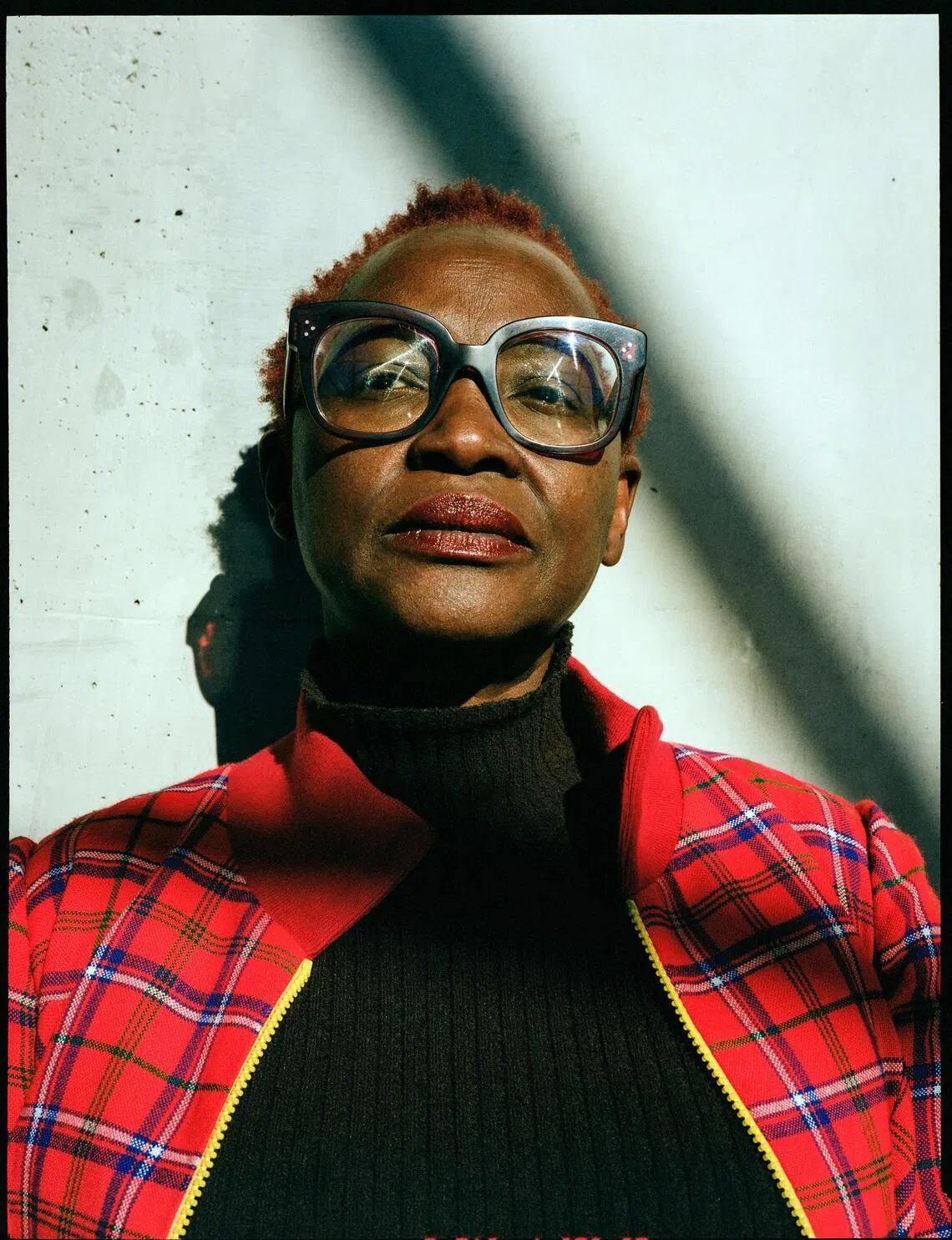
“In refusing the spectacle of horror,” Kouoh wrote before she died in 2025, “the time has come to listen to the minor keys… to tune in to the whispers, the lower frequencies; to find the oases where the dignity of all living beings is safeguarded.”
That proposition feels especially pointed this year. The Biennale opens amid high geopolitical tension and institutional strain – from strong protests over Israeli and Russian participation, to frictions surrounding pavilions such as South Africa and Australia, where artists had faced censorship over works addressing Israel’s actions in Gaza and Lebanon.
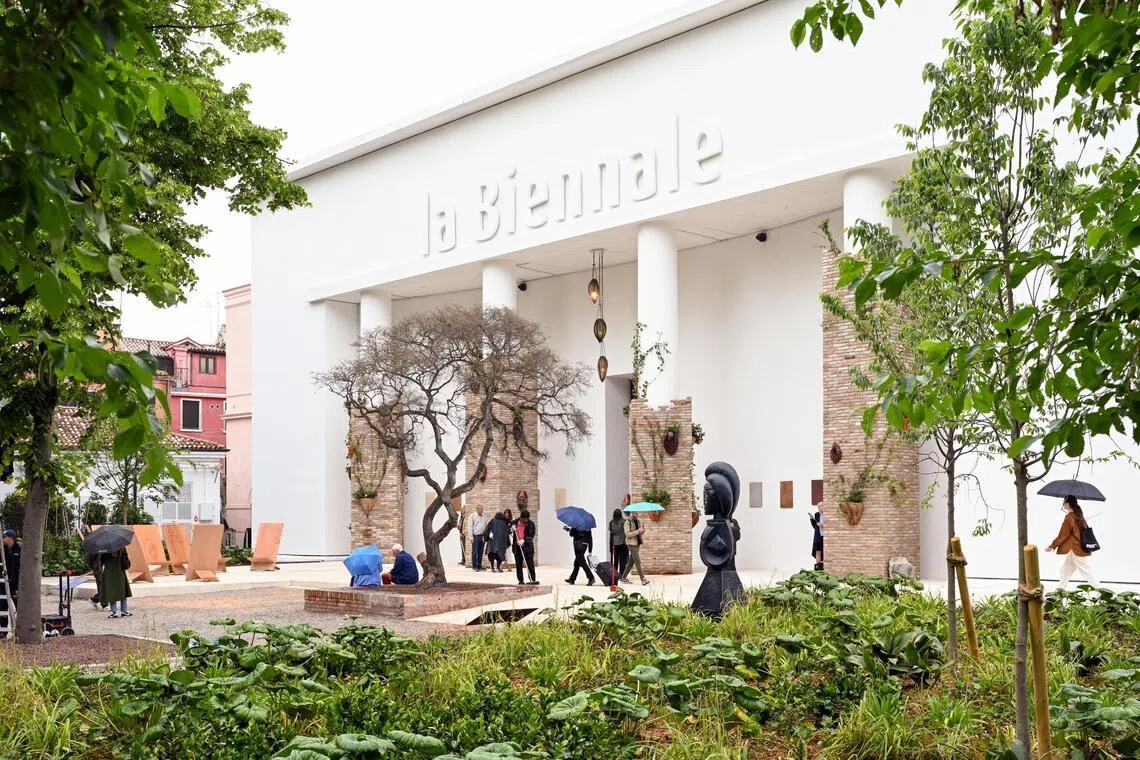
Iran withdrew its participation without giving a reason, while the Biennale’s five-person jury unexpectedly resigned, abdicating its responsibility to give out awards to the best pavilions. Instead, visitors will now be asked to cast votes.
Against the logic of escalation
Many pavilions respond to the issues of the world through confrontation or critique. But Heng’s response is different. Rather than escalate, she turns away from the spectacle of conflict, and toward something smaller and quieter: the body and what it carries.
Her earlier works often positioned the body in public, as a site of social tension. Here, the focus shifts. The body is no longer something to be seen, but something to be listened to – a place where time, memory and strain accumulate.
“There is still so much to learn from the body. But we spend too much time on the surface – we don’t go within,” she says. “The moment I began to accept my ageing body… that’s when it became easier to live with.”
It is a simple statement, but it reframes the entire work. In a biennale shaped by urgency and unrest, Heng does not try to answer the world. Instead, she asks for something else: to sit, notice and stay long enough to feel what the body is holding – fatigue, memory, grief, time.
“To return to the body,” she says, “is also a way of making sense of the world.”
The Singapore Pavilion is located in the Arsenale at the Venice Biennale.The Biennale runs from 9 May to 22 Nov 2026.
Decoding Asia newsletter: your guide to navigating Asia in a new global order. Sign up here to get Decoding Asia newsletter. Delivered to your inbox. Free.
[ad_2]
Source link