
[ad_1]
It was a delight and pleasure to be able recently to catch up with a dear friend and dance colleague. Christy Bolingbroke and I danced together awhile back in the Keshet Chaim Dance Ensemble as well as a few other gigs here in Los Angeles at the time. She is a positive force to be reckoned with, is sharp as a tack, has a fantastic sense of humor, and is deeply committed to her art, wherever that may take her. It has taken her over hill and dale until she landed in Akron, Ohio as the Founding Executive/Artistic Director of the National Center for Choreography Akron (NCCAkron), one of only two such centers in the U.S. I was elated that the assignment of interviewing her on the 10th anniversary of NCCAkron should fall to me. We discussed her journey to Akron, her 10-year tenure building the organization from scratch, its innovative programming models, and the shifting landscape of Dance Administration and sustainability.
BF: It is so great to see you again – and on this auspicious occasion! 10 years! they better be giving you a medal or something. Maybe a Spa day?
CB: It’s a pretty amazing situation.

Artist Raja Feather Kelly and NCCAkron Executive Artistic Director Christy Bolingbroke during the artists inside the Dancer’s Studio interview – Photo by Dale Dong.
BF: How did you get from here to there?
CB: When I left LA in 2005, it was because there weren’t as many professional opportunities; I was freelance dancing, I was company managing for Helios, getting Marketing Director experience, I was teaching, dancing, and worked with DRC (Dance Resource Center) as a volunteer board member. And I looked around, and there just weren’t that many administrative opportunities. There was the Music Center, or UCLA, or if you went out to Pepperdine or CalState Long Beach, but the Wallis didn’t exist, the Broad didn’t exist, BODYTRAFFIC didn’t exist or L.A. Dance Project. I left for a 10-month administrative fellowship at the Kennedy Center in Washington, DC; before moving on to become the Director of Marketing for the Mark Morris Dance Group in Brooklyn, NY (2006-2011); and eventually circling back to oversee performance programming, marketing, and development at ODC (Oberlin Dance Collective). I was very proud of the work I was doing in San Francisco.
BF: How long were you there?
CB: I left ODC and San Francisco after 5 years. I had a job and income but was living nomadically for 18 months due to SF’s high cost of living.
BF: Yes. San Francisco is crazy expensive. I was born and raised there.
CB: Right. I was super tired and needed to figure out what I wanted to do next. I was accepted into Wesleyan University’s low-residency Institute for Curatorial Practice in Performance Graduate Program. I had given six months’ notice to ODC along with giving myself permission to be underemployed while I figured out what to do next. Then NCCAkron presented itself. Part of the excitement was the idea to get to build something from scratch.
BF: You certainly did!
CB: Akron came calling, and I was like, I could go do this! Even MANCC, the first National Center for Choreography, didn’t exist when I entered the workforce.
BF: That is the other Center for Choreography in the U.S., correct?
CB: Yes, the Maggie Allesee National Center for Choreography (MANCC) in Tallahassee, Florida. What is different is that they are a part of Florida State University, whereas we are a discrete non-profit. We both invest in different stages of the artist trajectory and are currently collaborating on a tech support experiment.

K.J. Wade – Photo by Jahbrielle Henning Rayford.
BF: That is fantastic. What is NCCAkron’s origin story?
CB: Well, Akron was the fourth largest city in the U.S. 100 years ago due to the fact that it was the global tire manufacturing hub based on rubber and polymer science. Firestone, Bridgestone, Goodrich, and Goodyear were all based here in Akron. The John S. and James L. Knight Foundation (from Knight Ridder newspapers) has invested heavily in Akron Arts per capita as their “unofficial spiritual home”.
BF: So there was money and an interest in the Arts.
CB: Yes, and at the same time, as far back as the 1970’s, Heinz Poll came and founded the Ohio Ballet with Tom Skelton and seeded fertile ground for other progressive dancemakers. At the turn of this century, The University of Akron built out Guzzetta Hall with seven dance studios, sprung floors, double-high ceilings, etc. – all with the idea of housing Ohio Ballet on campus.
BF: That is a very generous gift.
CB: Right, but three or four months before the opening in 2006, Heinz Poll died and Ohio Ballet closed. Meanwhile, one of the country’s oldest dance presenters, DANCECleveland (just 40 miles up the road) started hosting educational residencies at UA in 2007. In 2012 DANCECleveland Executive Director, Pamela Young pitched the idea of a second U.S. Choreography Center to the Knight Foundation which led to a feasibility study and the creation of a $5 million endowment in 2015 to establish NCCAkron as an independent nonprofit organization operating on UA’s campus.

Kara Jenelle Wade – Photo by Wes Klain.
BF: That is incredible. I mean through the bends and twists of the story to have this organization come out of all that is an amazing outcome.
CB: Yes, the current facility occupies five office suites plus one dedicated studio in Guzzetta Hall. I call that our little ‘choreographic embassy’.
BF: How nice to have one. That must make rehearsals easier. Now what exactly is it that you do there?
CB: The National Center for Choreography Akron (NCCAkron) is an incubator for dance research and development, an organization that connects artists, resources, and audiences with space to play and explore ideas in the creative process. We are not a funder, presenter or artist but we may be perceived as that by anyone depending on their perspective of the field. As a curator, because I did still go to Grad School and get my degree in Curatorial Practice in Performance, I find myself focused on what I learned from Ishmael Houston-Jones curating from a place of absence. I look at the larger field of performance and administration and see where the gaps are between what is happening, and I focus there. It is that sort of adaptability that I find that’s the muscle. It’s where I also feel like the benefit of all the training that I’ve also been the recipient of in the studio. How do I apply that administratively? To work iteratively, to respond, to listen, and if someone’s like, well, not that, okay, but finding something else.
BF: It is the malleability of your role that allows for the creative answers to long held beliefs or habits. Zachary Lewis of the Cleveland Plain Dealer called you the “Matchmaker-in-Chief”, why is that?

2024 Creative Administrative Research – Kate Wallich – Photo by Ben Lindbloom.
CB: Because we are an intermediary between what is needed and what we have access to. We connect choreographers to what they need and provide open invitations for the artists to do what they feel is necessary in order to grow for themselves. Also, we don’t require all of our visiting artists to teach. Not all great teachers are great artists, and vice versa, so we never want to assume. In addition to curating in dialogue with one’s own history and our operating environment sometimes we raise funds that are dedicated towards a specific type of thing.
And we have partnered with some more academic funders who are really more interested in what the student engagement is going to look like. So we may then require and have built some such platforms with the student experience at the center. Ideas in Motion was one of them, and it had our 21st Century Dance Practices series where we would bring out artists like K.J. Wade, who would teach 2 or 3 classes during the regularly scheduled modern technique that week. She would do our interview and podcast series Inside the Dancer’s Studio, but then also would have the flexibility and time to do whatever she wants. If she needs to remount a piece or relearn that choreography, to make new work, or to take a nap, like, whatever the artist needs. It’s a very spacious invitation.

Creative Administrative Research – Group Portrait – Photo by Shane Wynn.
BF: You have instigated some fantastic new programs to handle the uncertainty of today’s economic landscape with Funds being cut left and right, and Budgets being slashed across the board. What are they?
CB: While not in response to the current moment, but in anticipation of how artists get support needing to change, we have tried to disrupt the lottery system of support by trying to support as many artists as possible instead of just a handful each year with our Dancing Labs Model and the Creative Administrative Research. The CAR program is based on the idea that there isn’t one way of making dances, so there shouldn’t be just one way of doing the business of dance. I’ve gotten to do 80 investigative retreats with that think tank. I’ve witnessed how deeply ingrained the scarcity mindset is, and it prevents us from letting go to see what else might be possible. One of my questions often is, like, if you asked for $100,000 and they only gave you $25,000, why did you still try to deliver a $100,000 show?
Our greatest skill is to be creative and make those adaptations as the challenge, instead of always operating from a deficit mindset.
BF: So that’s exactly what the Creative, uh, Administrative Research is about, right?
CB: It is, and there are some themes that come up, Do I need to incorporate or not incorporate? That is a false binary. You may want to be incorporated at one point and then might need to switch it up at another point. Do I need to own and operate a space? There’s pluses and minuses to both of those things, but you have to figure out what’s best for you.

Dancing Lab Screendance “But First” – Photo by Dale Dong Photography.
The CAR Program has been running for the past 6 years during which they built 26 teams across 19 states where each cohort pairs an artist with a thought partner. It has been less about Bolingbroke working individually with artists, but more about creating a space, or proximity for artists to be in community with each other. The core philosophy addresses the scarcity mindset which prevents people from letting go of learned or preconceived ideas of Administration and allows them to see new possibilities. The key themes explored in this work are incorporation decisions, space ownership trade-offs, archival work timing, capacity management, hiring practices, and handing off the to-do list. This all includes artists who are well established along with emerging talent in the field. Bolingbroke loves to encourage new perspectives instead of always asking, “Which way is front?”. The Dancing Lab model was prototyped with Tina Finkelman-Berkett and Lillian Barbeito of BODYTRAFFIC. NCCAkron’s first NEA grant application was due before Bolingbroke officially began in the position, but she reached out to Tina and Lillian imaging how to disrupt the usual commissioning cycle. She was also curious about how to support more female choreographers in BODYTRAFFIC’s repertoire. Bolingbroke explains –
CB: I accepted the position with NCCAkron in June 2016 but wasn’t going to begin until September. There was an NEA grant due in July of 2016. The founding board at the time said, do you have any ideas, or we can make something up. I was like don’t just make something up, I got this and called BODYTRAFFIC. I said, I’m looping you in. I get to build something from scratch, I don’t know what it looks like yet, but I’d be really curious, what are you interested in?
And so we decided to break the commissioning cycle and explore other ways to invest in female choreographers. I remarked to Tina and Lillian at the time, for a female-led company you don’t actually have a lot of work by women. Why do you think that is? And as I recalled the conversation, they shared one of three things usually happened.
- The artist would make the work. Maybe the artist didn’t like the work, but they would premiere it and then put it on a shelf.
- Or they would make the work. The dancers didn’t like the work, but they would premiere it and put it on a shelf.
- Or they would make the work, oh my god, the choreographer likes it, the dancers like it, and they give it to their agent to add to the touring repertory. Being a mixed Rep company, presenters could choose which pieces to have BODYTRAFFIC perform as part of an engagement – and the presenters wouldn’t choose the work by women, because they didn’t recognize the names. And so, if those are the stakes, these factors helped inform our first-ever Dancing Lab, to create a space for rigorous play and positive failure.
BF: That is brilliant!
CB: Yes I’m so fortunate and grateful to BODYTRAFFIC because they took that risk on me to trust when we were still figuring things out, and that has been such an important format. The Dancing Lab included a year-long process calling on presenters/funders nationwide to nominate female choreographers to NCCAkron and BODYTRAFFIC. 54 names were received. All of whom were invited to submit materials. 37 responded of which 3 were chosen. Each choreographer received 3 days with the BODYTRAFFIC dancers on the ground in Akron and no requirement to make work only occupy “a space for rigorous play and positive failure”. However, all created something. While not resulting in any kind of finished product, all artists (dancers and choreographers) reflected on how the experience changed or continued to inform their artistic practices. I learned not to underestimate the “power of proximity” and unstructured time.

Christy Bolingbroke – Photo by Neil Sapienza.
BF: Well, it is obvious that you are the right person for the job. Look what you have done in 10 short years! I cannot wait to see what you will accomplish in the next 10 years!
And speaking of which, the current and upcoming programs for Bolingbroke and NCCAkron include a June 2026 Summit Convening which will bring 80 CAR alumni and Arts leaders to Akron. Topics will include choreography of numbers, app development for freelancer fee design, and performance op-eds re-imagining the non-profit model. In July 2026, a Dancing Lab of 4-7 writers will come to Akron to explore “writing as power and currency” and cultural competency with MoBBallet’s Theresa Ruth Howard. A year-long series will kick off in August 2026 bringing artists to share screendance films with the Akron community to challenge audience habits with screens as well as simultaneously building a greater curiosity with dance. There is also an Administration Experiment comprised of 3 teams of artists and venues to explore how to evolve better technological support for dancemaking.
BF: Alright, well, You are making things happen. Thank you and have fun!
CB: Thank you. All right!
BF: I will talk to you soon to keep me posted.
CB: Okay, great. Awesome. Bye!
BF: Bye, Take Care –
To learn more about the National Center for Choreography Akron, please visit their website.
Written by Brian Fretté for LA Dance Chronicle.
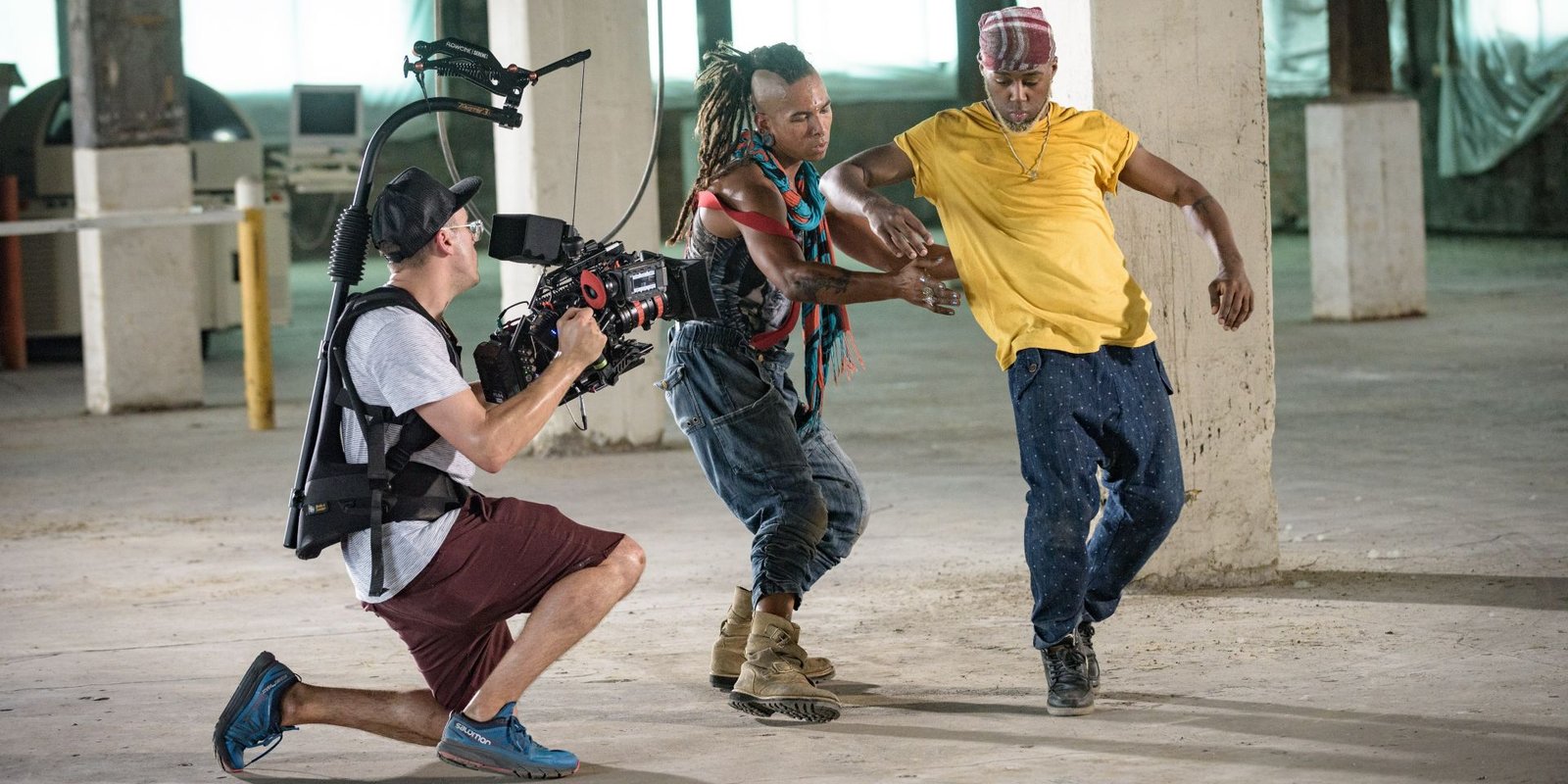
Featured image: Chrysalis Dancing Lab Screendance – Photo by Dale Dong Photography.
[ad_2]
Source link