
[ad_1]
Collecting art pieces, bidding in auctions, and buying sole ownership of an art piece is not an uncommon practice for billionaires. But, looking for artist names and selecting a famous painter is not enough, according to the new Knight Frank Wealth report, considering art has always been a luxury asset, billionaires are largely motivated by the value or potential value that it may bring to them.
The sale of Gustav Klimt’s Bildnis Elisabeth Lederer at Sotheby’s New York for $236.4 million in 2025 was an ode to this trend that does not lose its relevance. The Knight Frank report also revealed that the art sales across major auction houses were up 11% year on year, since 2022, valued at nearly $4.56 billion.
Additionally, according to a My Art Broker report, art lists closely with commodities that can survive inflation or economic downturns, unlike a portfolio, which may turn volatile in times of a financial crisis, thus pointing to the reason why billionaires actually ‘invest’ in art.
Art as investment
As the global economy grows more complex by the hour, international forces at play impact the price of practically any commodity. Treating art as an investment comes as a natural alternative to dedicating wealth solely to financial markets. In fact, the Knight Frank report revealed that luxury assets recorded their strongest gains since 2013, with quarterly growth peaking at 19.1% between 2020 and 2022.
With investment comes the need to hunt for returns, be it art or stocks. Collectable art, on the other hand, holds high potential for returns. Over the years, the creative arts market has experienced significant growth, exemplified by the $450 million price tag associated with Leonardo Da Vinci‘s Salvator Mundi sold at a Christie’s Auction in November 2017. But it’s not always about the artist; it is truly about the art itself, from impressionist style to contemporary, the price tag can vary widely.
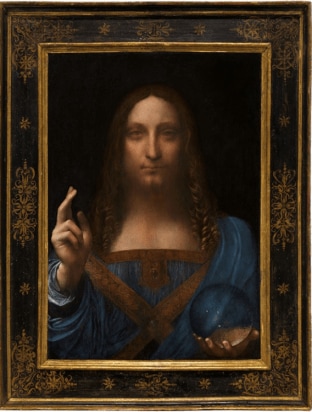
Over the past years, the art market has experienced significant financial growth as many artworks are selling for a comparatively higher prices. Some of the other record-breaking art pieces, apart from Da Vinci’s Mundi, include Interchange (1955) by Willem de Kooning, which was sold for nearly $300 million in 2015, and The Card Players (1892/93) by Paul Cézanne, which was auctioned for $250 million in 2011.
But while art collections are often seen as a means of legacy planning, the kind of art matters – even for billionaires and their generations to come. And, according to the latest Wealth Report, impressionists won the bet.
Not contemporary, not modern
Impressionism is largely a 19th-century art movement which originated in France. Typically, it features visible brushstrokes, open composition, and an emphasis on capturing the changing qualities of light and modern life. It focuses on unusual angles, ordinary subject matter, and uses the common concept of ‘en plein air,’ which means borrowing from the outdoor elements like nature, atmosphere, or even sunlight.
The Knight Frank Luxury Investment Index (KFLII) from Q4 2025 revealed that 2026 brought a volatile change in luxury investment. After peaking by nearly 20% in 2022, investment in opulence declined gradually to below 5% in 2025.
However, not all art is equally valuable. While impressionist art saw a 14.6% YoY change, as per The Wealth Report, modern art inched just above 7.1%. On the other hand, post-war art saw a 5.2% yearly change, but not for European Old Masters.
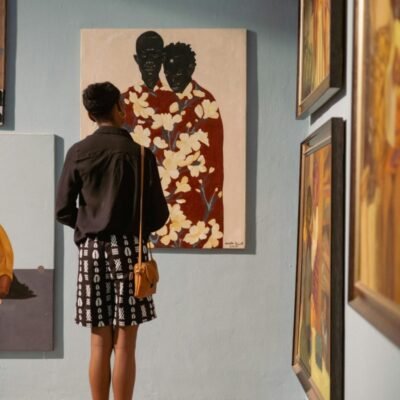
Interestingly, investment in contemporary art declined significantly by 6%, tipping the scale further towards impressionist art. However, Kerry James Marshall’s Seurat-influenced Past Times, a contemporary artwork, set an all-time high under the gavel at $21.1 million for a living African-American artist. As per the Knight Frank report, the falling values of overall luxury assets, from cars and watches to art and handbags, may be about to turn a corner, after dropping from nearly $1.7 million in 2022 and below $1.5 million in 2025.

Impressionist art writes the cheque
Over the past years, impressionism at art auctions has received wide demand. While the Viennese artist’s World War I-era portrait achieved the highest price ever paid for a modern artwork under the hammer, impressionist sales surged 80.4% to $1.04 billion. This “shift in market psychology,” as quoted by ArtTactic founder Anders Petterson, is not just because of Klimt, but also Van Gogh. Overall, modern art advance 19.4% ($1.38 billion) and Old Masters registered a robust 68.7% uplift to $282.5 million.
Why the style matters
According to the Collector and CEO of hand-painted advertising company Global Street Art, Lee Bofkin, Britain’s most prolific private collectors, “Collecting is not conspicuous consumption – it’s conspicuous taste.”
Bofkin added in the Wealth Report 2026, “More than consumption, people want to demonstrate luxury as a sense of taste. If you’ve got that and it’s internalised, it commands respect.”
[ad_2]
Source link