


[ad_1]

sankai/E+ via Getty Images
I was pretty surprised when I saw that a pivotal benchmark of the market like the $24 billion iShares U.S. Technology ETF (NYSEARCA:IYW) had a mere 10,000 followers on Seeking Alpha. This basket of equities is a key pulse point of a U.S. economy that’s mostly driven by a few sectoral entities but it gets very little attention compared to its bigger and seven-times-as-popular cousin, The Technology Select Sector SPDR® Fund ETF (XLK). XLK is not proportionately bigger, by which I mean that at $87 billion in AUM, it’s nowhere near seven times bigger, so why the loss in this popularity contest?
My aim here is to try and educate myself on IYW and maybe pass on some of those findings so investors who haven’t really taken the time to look closely into this opportunity have a better-informed view as the main takeaway.
So What’s the iShares U.S. Technology ETF All About?
To begin with, let’s put everything that’s already pretty well known on the table: tech-heavy, obviously, with 87% invested in the sector; $24 billion in AUM, as we saw; an ER of 0.38% (first ‘ouchie’ right there, compared to XLK’s 0.08%); a quarterly payout yielding 0.15% in the TTM (0.56% for XLK – ouchie 2?); almost as old (May, 2000) as XLK (December, 1998), and, about a third of its AUM invested in the top ten holdings. It’s also relatively passive, with a turnover of under 10% on an annualized basis.
Other familiar characteristics include adequate but relatively low ETF share liquidity with a trading volume (rolling daily average) of under $200 million (compared to XLK’s ~$2 billion); solid management reputation (BlackRock’s iShares); Buy ratings from both Quant and SA Analysts; a 30% 1Y return; and last but not least, great momentum across the full spectrum of timelines.
Beyond these nuggets, there’s plenty of information that’s more obscure, and by that I mean you won’t currently find it on Seeking Alpha. That’s what Seeking Alpha is trying to fix, and I applaud its editorial team (you’re such a suck-up, DeVas!) for this ETF Education Series that’s meant to disseminate that obscure information more widely among its readers.
I say obscure because even on the ETF’s website, you have to click multiple times to find the real juicy bits – download their prospectus, go through the most current fact sheet, and wade through roughly 50+ documents to find something specific or relevant. That’s why I’ve done a little of the hard work to bring it to you on a platter. The investment decision is always yours, but I find that gathering multiple views and more data on a particular vehicle you’re exploring really helps that final call.
So, in line with that, here are some things you probably didn’t know about IYW but are critical to your investment decision.
IYW’s Mix
Although we tend to group a lot of things into the ‘technology’ umbrella, it’s important to know what type of tech that money is invested in. Since IYW uses a rules-based investment strategy, we first need to look at the benchmark index that the ETF is trying to emulate: the Russell 1000 Technology RIC 22.5/45 Capped Index.
The “RIC 22.5/45 Capped” part of the index’s name comes from an investment methodology for Registered Investment Companies that caps allocation to individual equities. No more than 45% of the fund can comprise holdings that are higher than 4.5% by weight. Another restrictor is the clause that the largest holding can’t exceed 22.5% of net assets.
What this does is help avoid super-concentration in an already sectoral fund, so it’s bringing in that diversification benefit for investors. The other side of this is that there are more opportunities to capture upside rallies in specific technology niches like semiconductors, software, hardware, interactive media, etc.
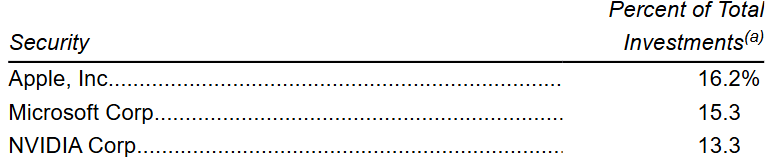
I’ll give you the perfect example of how this has worked since the fund’s annual report came out for the fiscal year ended April 30, 2025.
The top three holdings at the time were Apple (AAPL), Microsoft (MSFT), and Nvidia Corp (NVDA), with respective weightings of 16.2%, 15.3%, and 13.3%, and this is at the end of April.
IYW Annual Report
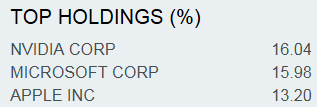
By June 30, the top three had reversed their positions, with the following being the holding structure.
iShares
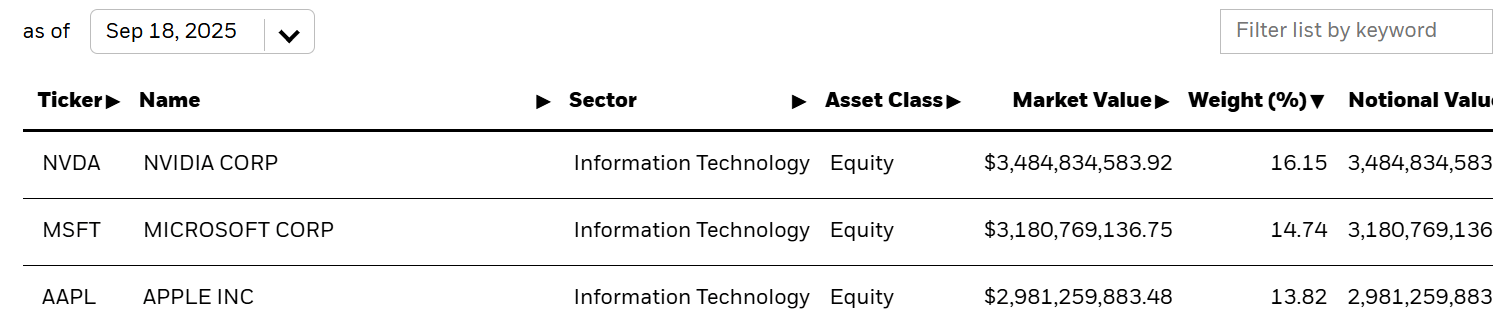
Fast-forward to this past Thursday, September 18, and that altered composition remains, but the price performances of these three mega-caps pushed the weights of NVDA and AAPL up, while pushing MSFT’s weighting down.
iShares
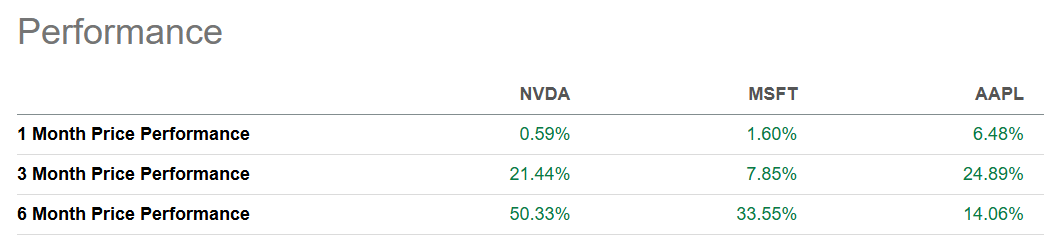
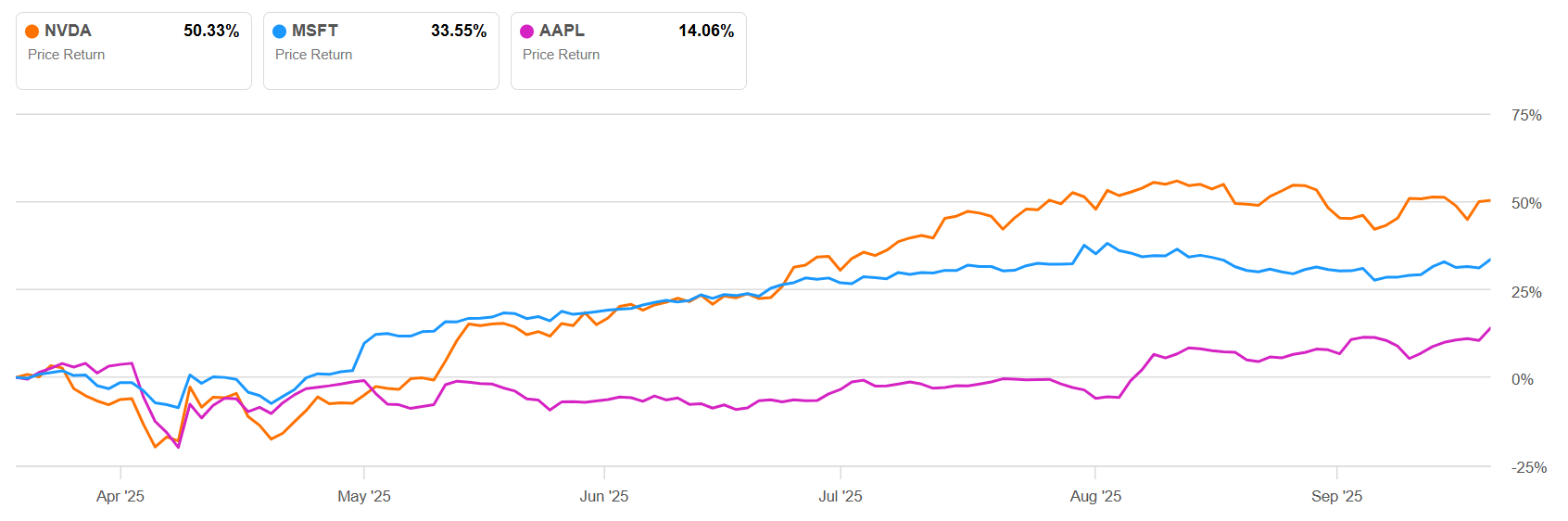
These movements are what decide how the ETF’s quarterly rebalancing will go, and they’ll also be reflected in the underlying benchmark index. You may not be able to control or even predict how the composition and mix of the top three will change over time, but it’s useful to look at these stocks’ price momentum.
SA
It looks like NVDA’s momentum may be slowing, while AAPL seems to be on a roll. Price charts can give you a visual version of this.
SA
If AAPL can hold on to that positive momentum, we could see it gain a higher weighting in IYW when the September rebalancing is done. NVDA and MSFT seem to have run out of steam for the time being, but it’s very unlikely they’ll lose their top three positioning.
IYW’s Performance
Since the ETF is designed to mirror investor sentiment on tech majors, its long-term performance is something you should be familiar with. Let’s see how it’s done over the course of its existence.
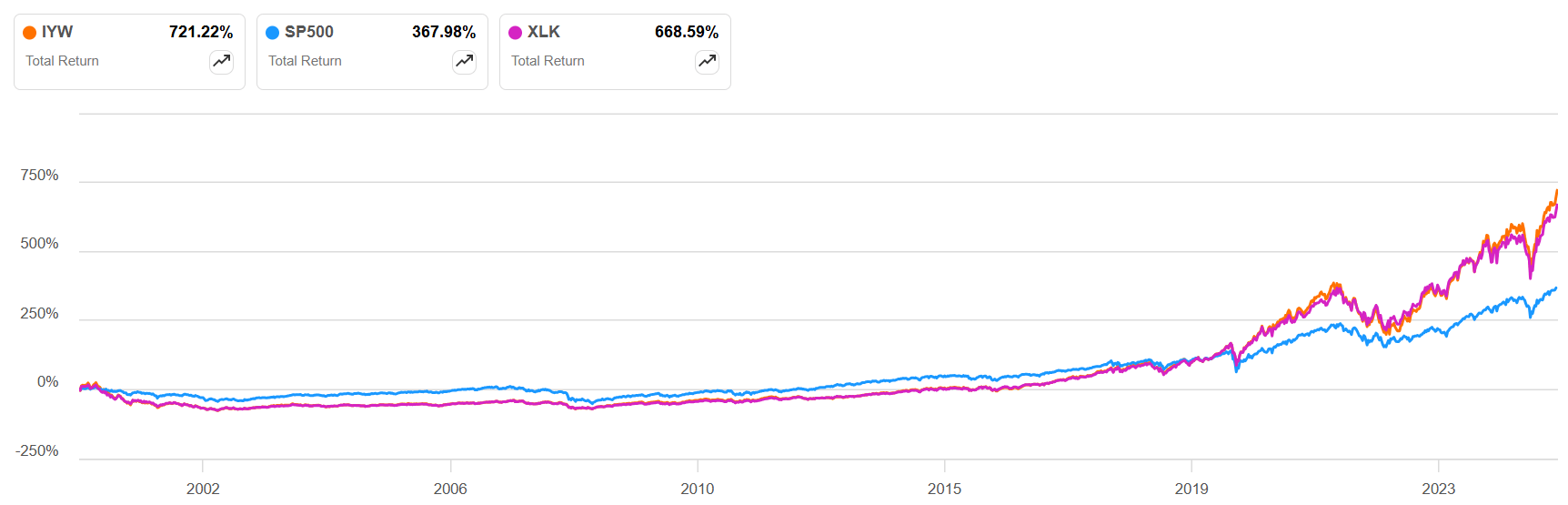
You may be surprised to learn this, but IYW and its larger peer underperformed the S&P 500 Index (SP500) since IYW’s inception in May of 2000, and it wasn’t until 2017 that they started catching up, and it would be another three years before tech took the lead and left the S&P far behind.
SA
The tech industry began a strong growth path that triggered a divergence in 2017, and thereafter exploded following the pandemic trough in March 2020, with the pandemic lockdowns acting as a trigger for technological development and global digitization.
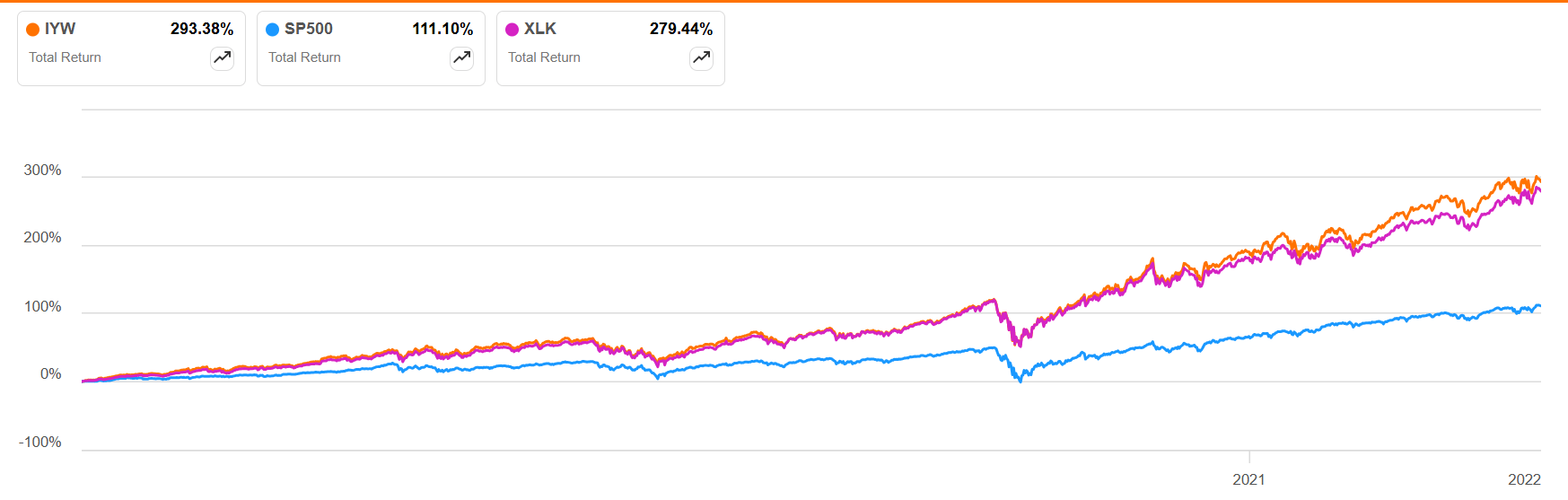
Let’s look at that particular timeline to see how this played out.
SA
The trough after the post-pandemic peak could have been much lower, but by the end of 2022, ChatGPT was a thing. A big thing. The next trough was the post-Liberation-Day rollbacks, which clearly gave the market a booster shot of confidence.
So, on the performance side of things, it looks like IYW will ride the tech wave into the foreseeable future, and I bring this up because it should be one of the bases for your investment decision.
That’s one side of the coin. The other side is that we’re in a possible tech bubble, and overall valuations may be a warning to investors not to put all their eggs into the tech basket. That’s up next.
The Risk
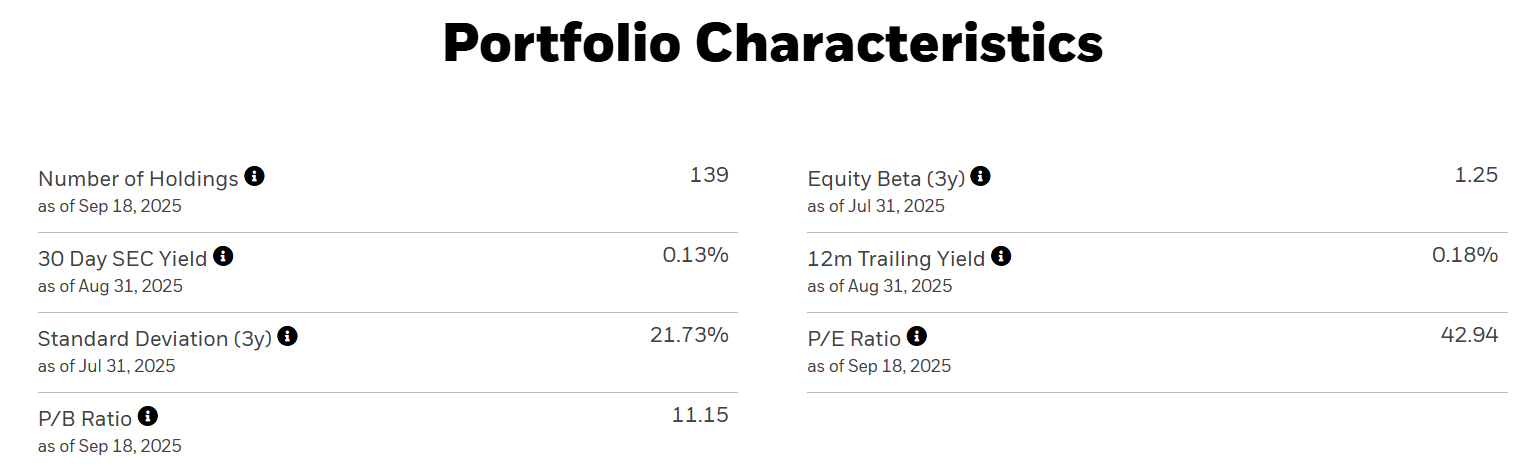
We’ve covered two of the key considerations until now – how the mix works, and how the fund has performed in the far and the recent past. The third, and I think this is definitely the most important of the three, is whether these lofty valuations will stand up in the current economy. To me, that’s an assessment of risk, and a major checklist item to cross off when you’re doing your due diligence.
iShares
We know tech is an expensive space to invest in, but we also know that growth rates are through the roof. Still, does it make sense to invest in a basket of equities that are clearly driven by three mega-caps, with the entire group sporting heretofore unheard-of price multiples?
That’s a question you’ll need to answer from the perspective of your own investment preferences. It boils down to whether you think these valuations will hold up, and what kind of time-frame you’re looking at for that sustainability.
This is a major risk consideration for IYW or any tech-centric ETF.
Thoughts To Take Away
I hope this gives you a reasonably deep look at this ETF, and although I leave the investment decision up to each reader, one point I’d like to make is that the greater the concentration of your portfolio in any one direction, the greater the risk it carries. Sure, the rewards for taking that risk may also be outsized, but at the end of the day, you want to make sure that there are mitigating elements within your portfolio that will offset or at least minimize your losses if this high-risk play goes south for any reason.
For that reason, I urge you to do deep due diligence on anything you plan to invest in right now. The market is extremely buoyant and strongly positive considering the macro circumstances we’re in. God forbid that should happen, and it may not, after all, but prudent investors always hedge their riskier bets. You need something to anchor your portfolio and keep it from capsizing in high winds.
Technology as a domain is now experiencing gust-and-gale-like tailwinds, but all it takes is one of many disruptive scenarios to turn those tailwinds into wealth-destroying headwinds. You could consider safe-haven asset classes such as T-bills, precious metals, staples, and such. Whatever you choose, my advice is to make sure there’s enough of a negative correlation with tech to protect your portfolio from stomach-churning drawdowns.
This article answers these three main questions about IYW:
- How does IYW differ from other tech-oriented funds?
- Are there concentration risks with IYW?
- How has IYW performed in the past compared to other tech funds and the overall market?
Editor’s Note: This article is intended to provide a general overview of the ETF for educational purposes only and, unlike other articles on Seeking Alpha, does not offer an investment opinion about the ETF.
[ad_2]
Source link
Other Articles

Weekend Max Mara’s Trench Gets a Fresh Turn by Five Female Artists
Rihanna partners with Mellon for Caribbean art