
[ad_1]
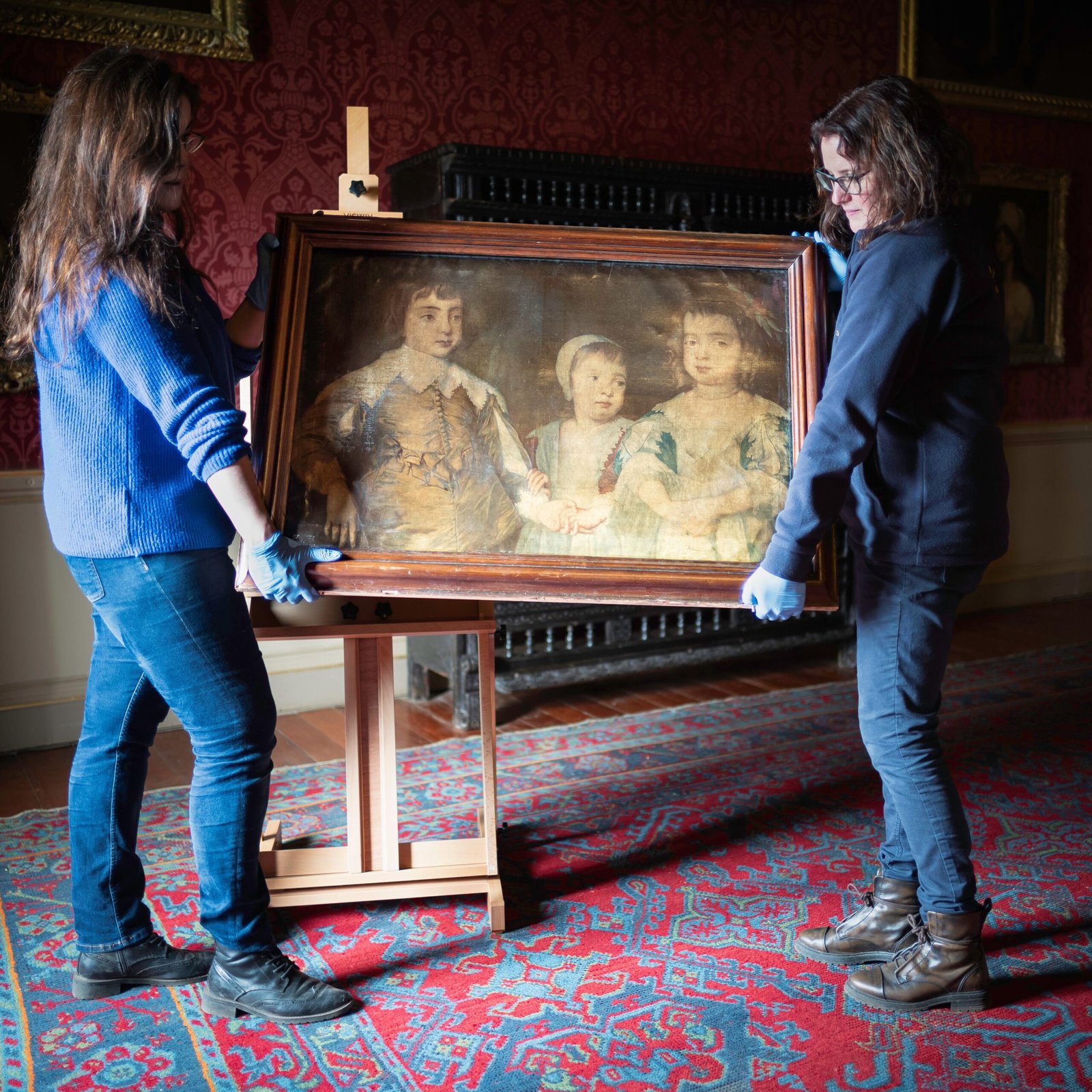
An artwork displayed at a National Trust property and seen by thousands of visitors each year has been identified as a rare surviving work by a printmaker credited with inventing colour printing.It had always been assumed that the copy of the Sir Anthony van Dyck portrait, the Three Eldest Children of King Charles I, displayed at Oxburgh Hall in Norfolk was oil on paper.But the artwork was found to be a rare print by 18th century printmaker Jacob Christoff Le Blon when it was sent away for conservation treatment at the Trust’s Royal Oak Conservation Studio at Knole in Kent.The German-born painter and engraver, who died in 1741 aged 73, was the first to create a three-colour printing process – the forerunner of the CMYK colour printing used today.His method used mezzotint – a monochrome printmaking process – with separate plates inked in blue, yellow and red and superimposed on one another in order to create an endlessly variable depth of hue.Until then, artists had inked colours one beside the other on a single printing plate.National Trust curator Jane Eade said van Dyck’s portrait, in the Royal Collection (1635-6), was “much copied” but “only three Le Blon prints of it were known to survive”.“To have a discovered a fourth is really exciting, especially as it is the only version that remains hanging in its historic setting,” she said.Analysis of the piece helped identify the colours Le Blon is known to have used, such as indigo and carmine or red lake.All of the versions were hand-coloured after printing.Ms Eade said a thick layer of 19th century varnish applied while the artwork was framed and hanging on the wall was “particularly challenging”, but that the conservator was “able to gently clean the surface layer, thinning the varnish in places and smoothing cracks to improve the picture’s appearance”.The canvas backing was peeling in some places but, since it was likely to be the original backing used by Le Blon’s Picture Office, it was repaired and conserved rather than replaced.Le Blon moved to London in 1718 where, calling himself James Christopher, he was granted a royal privilege by George I to practice his trichromatic printing.Royal patronage gave him access to Kensington Palace to copy paintings – including the Van Dyck of Charles I’s children.It is not known for certain how and when the print came to Oxburgh Hall, the home of the Bedingfeld family.Royalists and devout Catholics, it is possible that the print arrived at Oxburgh soon after it was created in 1721-22, in the time of the 3rd Baronet, Sir Henry Arundell-Bedingfeld (1689-1760).Ilana van Dort, Oxburgh collections and house manager, said: “There is now evidence that Henry Arundell-Bedingfeld was a secret Jacobite and van Dyck’s portrayal of the children of Charles I, including the future James II the last Catholic monarch of Britain, would have great resonance and symbolism.“James’ exiled son, James Francis Edward Stuart (the ‘Old Pretender’) had attempted to take the throne in the Jacobite rising of 1715 – only six years before Le Blon copied van Dyck’s original portrait.“Copies of this painting are known to been popular with those sympathetic to the Jacobite cause and it would have been quite feasible that the print has spent its whole life at Oxburgh, although we lack enough evidence to prove it.”The print will be on show at Oxburgh alongside some 16th century textile fragments, preserved beneath the floorboards of the Hall and conserved after being found during recent building work.
An artwork displayed at a National Trust property and seen by thousands of visitors each year has been identified as a rare surviving work by a printmaker credited with inventing colour printing.
It had always been assumed that the copy of the Sir Anthony van Dyck portrait, the Three Eldest Children of King Charles I, displayed at Oxburgh Hall in Norfolk was oil on paper.
But the artwork was found to be a rare print by 18th century printmaker Jacob Christoff Le Blon when it was sent away for conservation treatment at the Trust’s Royal Oak Conservation Studio at Knole in Kent.
The German-born painter and engraver, who died in 1741 aged 73, was the first to create a three-colour printing process – the forerunner of the CMYK colour printing used today.
His method used mezzotint – a monochrome printmaking process – with separate plates inked in blue, yellow and red and superimposed on one another in order to create an endlessly variable depth of hue.
Until then, artists had inked colours one beside the other on a single printing plate.
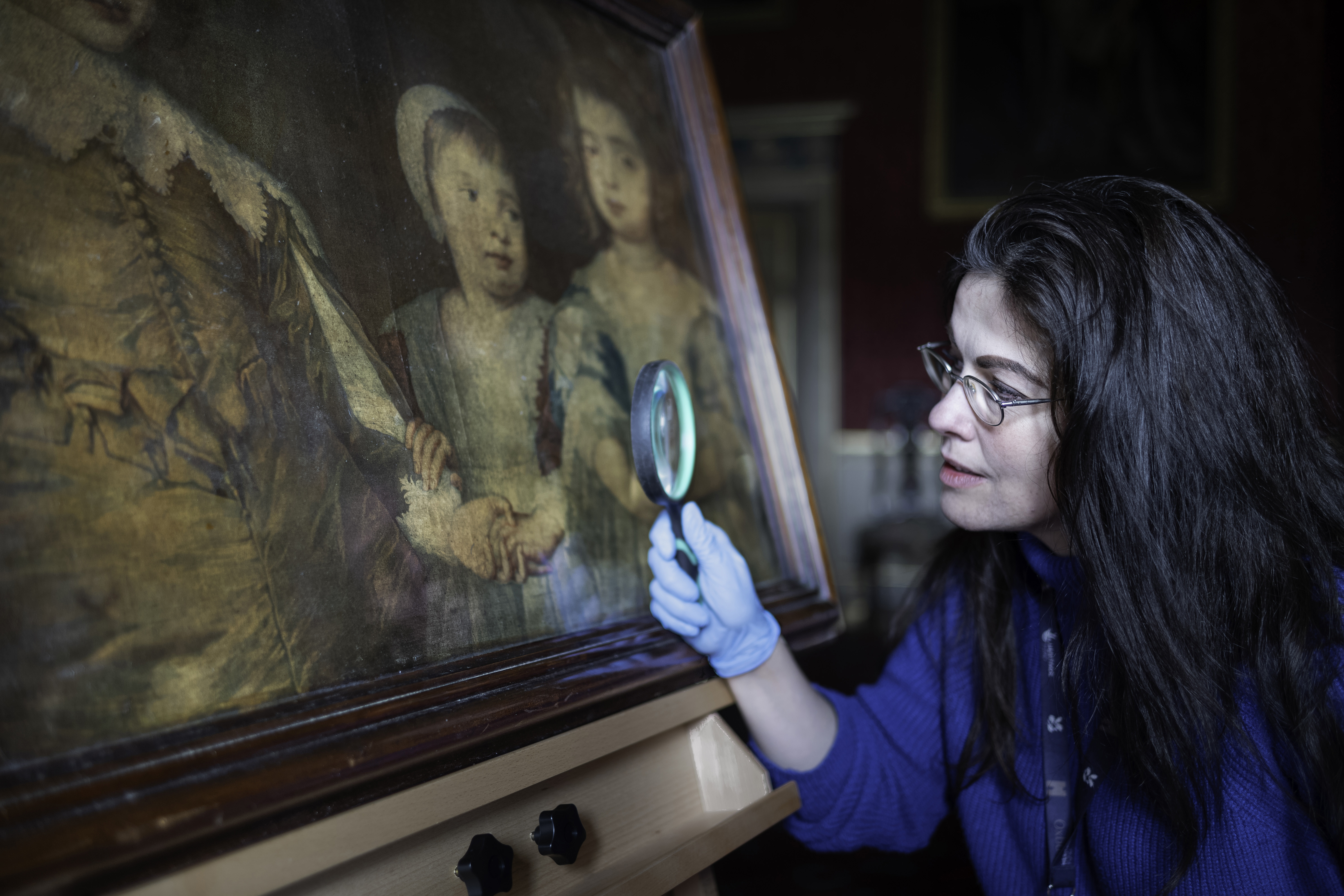
National Trust curator Jane Eade said van Dyck’s portrait, in the Royal Collection (1635-6), was “much copied” but “only three Le Blon prints of it were known to survive”.
“To have a discovered a fourth is really exciting, especially as it is the only version that remains hanging in its historic setting,” she said.
Analysis of the piece helped identify the colours Le Blon is known to have used, such as indigo and carmine or red lake.
All of the versions were hand-coloured after printing.
Ms Eade said a thick layer of 19th century varnish applied while the artwork was framed and hanging on the wall was “particularly challenging”, but that the conservator was “able to gently clean the surface layer, thinning the varnish in places and smoothing cracks to improve the picture’s appearance”.
The canvas backing was peeling in some places but, since it was likely to be the original backing used by Le Blon’s Picture Office, it was repaired and conserved rather than replaced.
Le Blon moved to London in 1718 where, calling himself James Christopher, he was granted a royal privilege by George I to practice his trichromatic printing.
Royal patronage gave him access to Kensington Palace to copy paintings – including the Van Dyck of Charles I’s children.
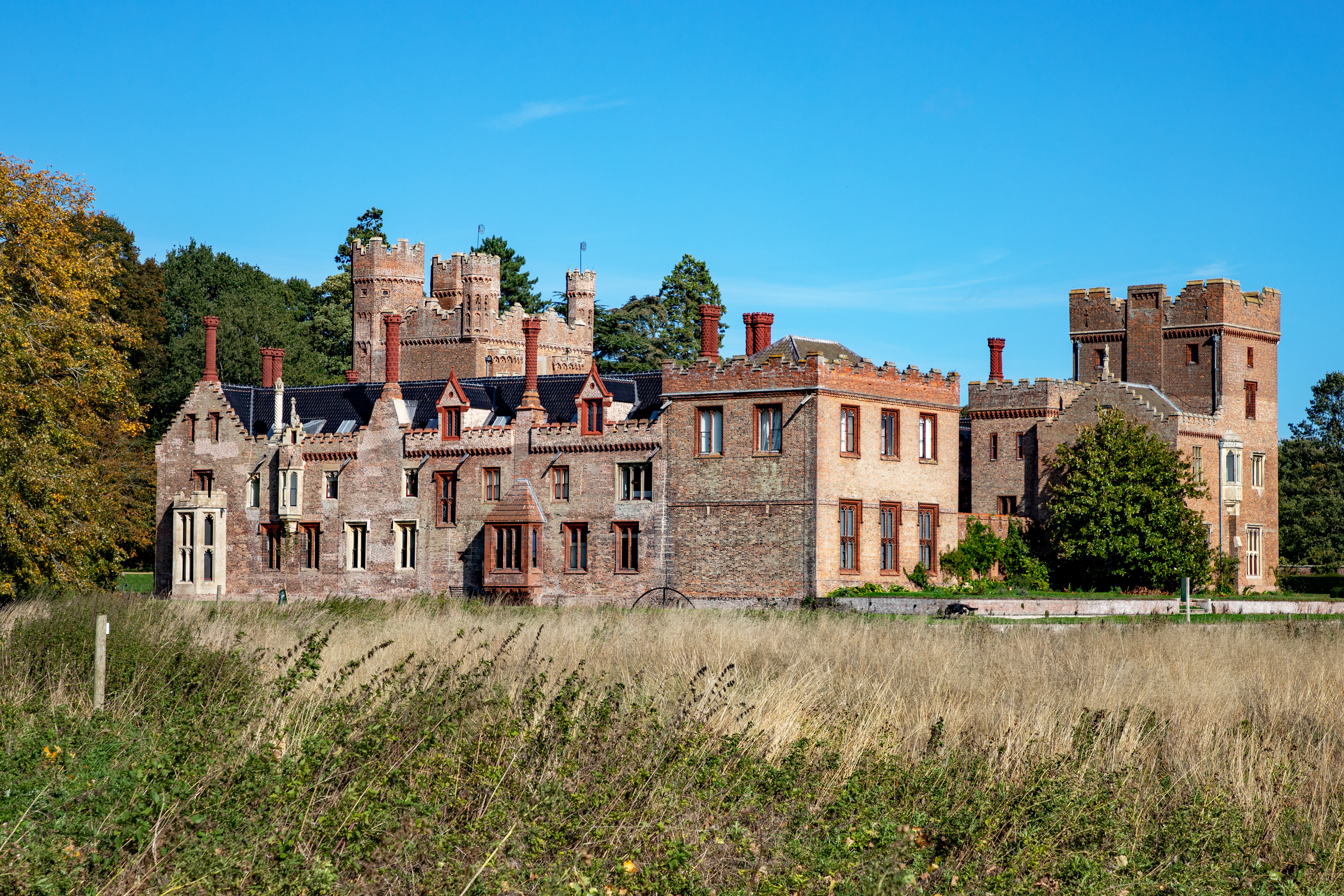
It is not known for certain how and when the print came to Oxburgh Hall, the home of the Bedingfeld family.
Royalists and devout Catholics, it is possible that the print arrived at Oxburgh soon after it was created in 1721-22, in the time of the 3rd Baronet, Sir Henry Arundell-Bedingfeld (1689-1760).
Ilana van Dort, Oxburgh collections and house manager, said: “There is now evidence that Henry Arundell-Bedingfeld was a secret Jacobite and van Dyck’s portrayal of the children of Charles I, including the future James II the last Catholic monarch of Britain, would have great resonance and symbolism.
“James’ exiled son, James Francis Edward Stuart (the ‘Old Pretender’) had attempted to take the throne in the Jacobite rising of 1715 – only six years before Le Blon copied van Dyck’s original portrait.
“Copies of this painting are known to been popular with those sympathetic to the Jacobite cause and it would have been quite feasible that the print has spent its whole life at Oxburgh, although we lack enough evidence to prove it.”
The print will be on show at Oxburgh alongside some 16th century textile fragments, preserved beneath the floorboards of the Hall and conserved after being found during recent building work.
[ad_2]
Source link