• Contact
  • Privacy Policy
  • Terms and Conditions
My Art Investor
  • Home
  • Art Investing
  • Art Investments
  • Art Investor
  • Artists
  • Artwork
  • Fine Art
  • Invest in Fine Art
  • Home
  • Art Investing
  • Art Investments
  • Art Investor
  • Artists
  • Artwork
  • Fine Art
  • Invest in Fine Art
Artists

‘Day Jobs’ Wants to Dispel Romantic Notions of Art Making

April 23, 2024 3 Mins Read


Day Jobs includes some great works. Fred Wilson’s Grey Area (Brown version), a series of Nefertiti heads painted in varying skin tones, is a standout. Richard Artschwager’s Mirror/Mirror – Table/Table from 1964, a set of formica on wood sculptures that playact as home furnishings, is another. But it’s Tishan Hsu’s biomorphic wall relief, Outer Banks of Memory, that arguably steals the show.

The Cronenberg-esque painting from 1984 mimics a modern-day laptop or smartphone screen. Fleshy ripples, bruised areas of color and screaming orifices accumulate on a surface that resembles the blue static glow of a vintage television set. Hsu studied environmental science and architecture at MIT, and worked in the technology sector in 1980s New York before taking a position teaching studio art at Sarah Lawrence College, where he stayed up until he retired from teaching in 2019.
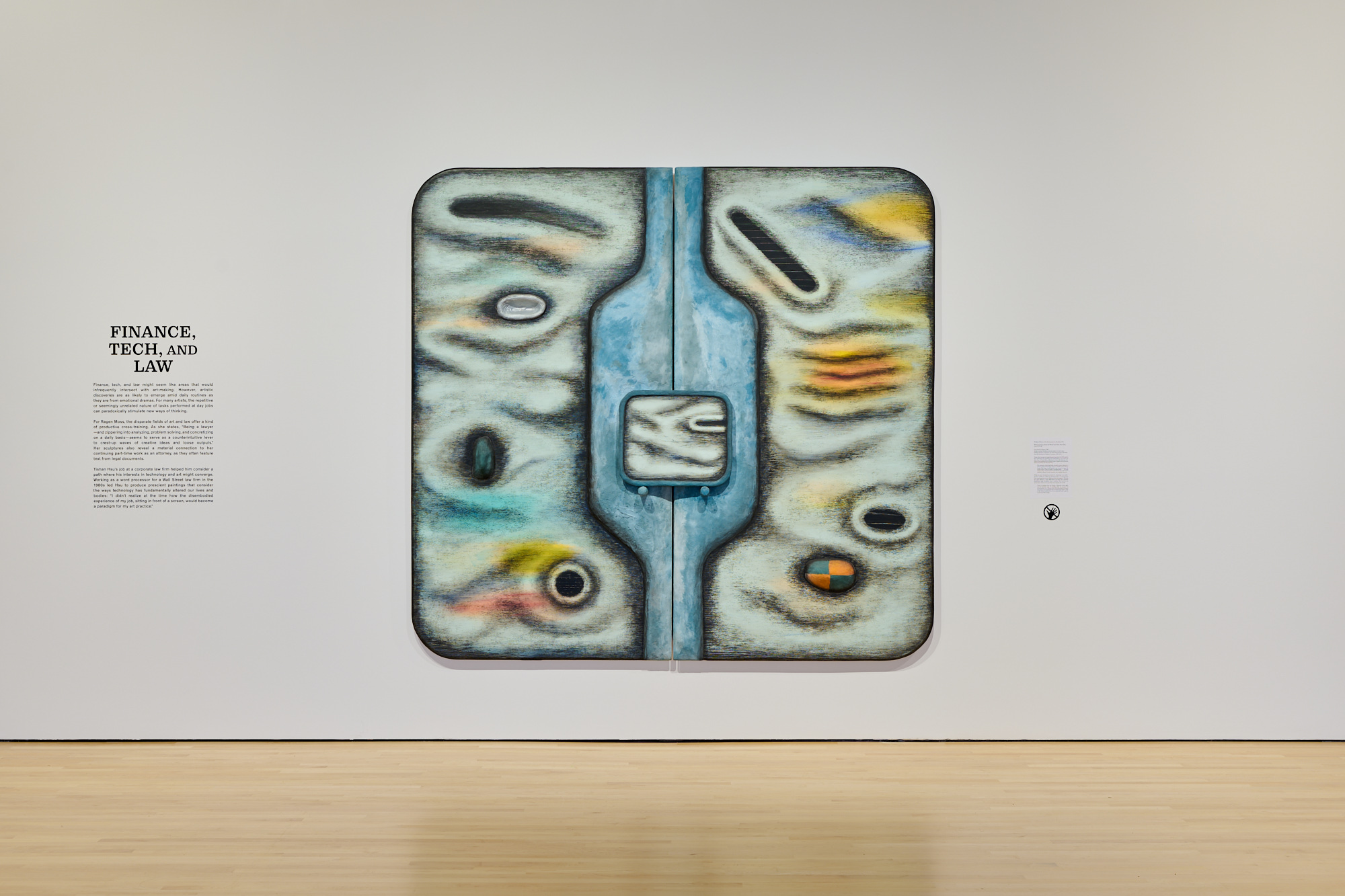
Large square relief with rounded corners, painted abstractly
Tishan Hsu, ‘Outer Banks of Memory,’ 1984; Acrylic, concrete, Styrofoam, oil and enamel on wood in three parts. (Glen C. Cheriton)

Ensconced in this museum context, the roadmap to success appears less treacherous than it really is. From a contemporary artist’s perspective, working and making art in the United States is a bleak, sometimes impossible balance. In an entertainingly raw piece published this month in The Baffler, artist Andrew Norman Wilson recounts the past eight years of his career: “It’s 2016. I’m a contemporary artist and have been living off of Medicaid, food stamps, and $20k annually since graduating from art school five years ago.” The essay, which ends with Wilson ostensibly exiting the art world for the film industry, has been going somewhat viral since it was published.

How much artists should be paid for their work — or their participation in shows — is very much part of the contemporary conversation around artists’ economic prospects. But museums often appear to operate outside of commercial reality — a useful, if fictional vantage point from which to consider these questions.

Rarely, the wall text points out, do artists’ biographies include information about how they’ve supported themselves. By adding this information back into the narrative surrounding well-known artists, the show models how we might remove associations of shame and disgrace from the subject.

​​The premise of Day Jobs is important and interesting, but it’s only a step in the right direction. Thirty of the 36 artists in the show were born before 1980. Without significantly addressing the current economic landscape for emerging artists, we get an oversimplified version of present-day reality.
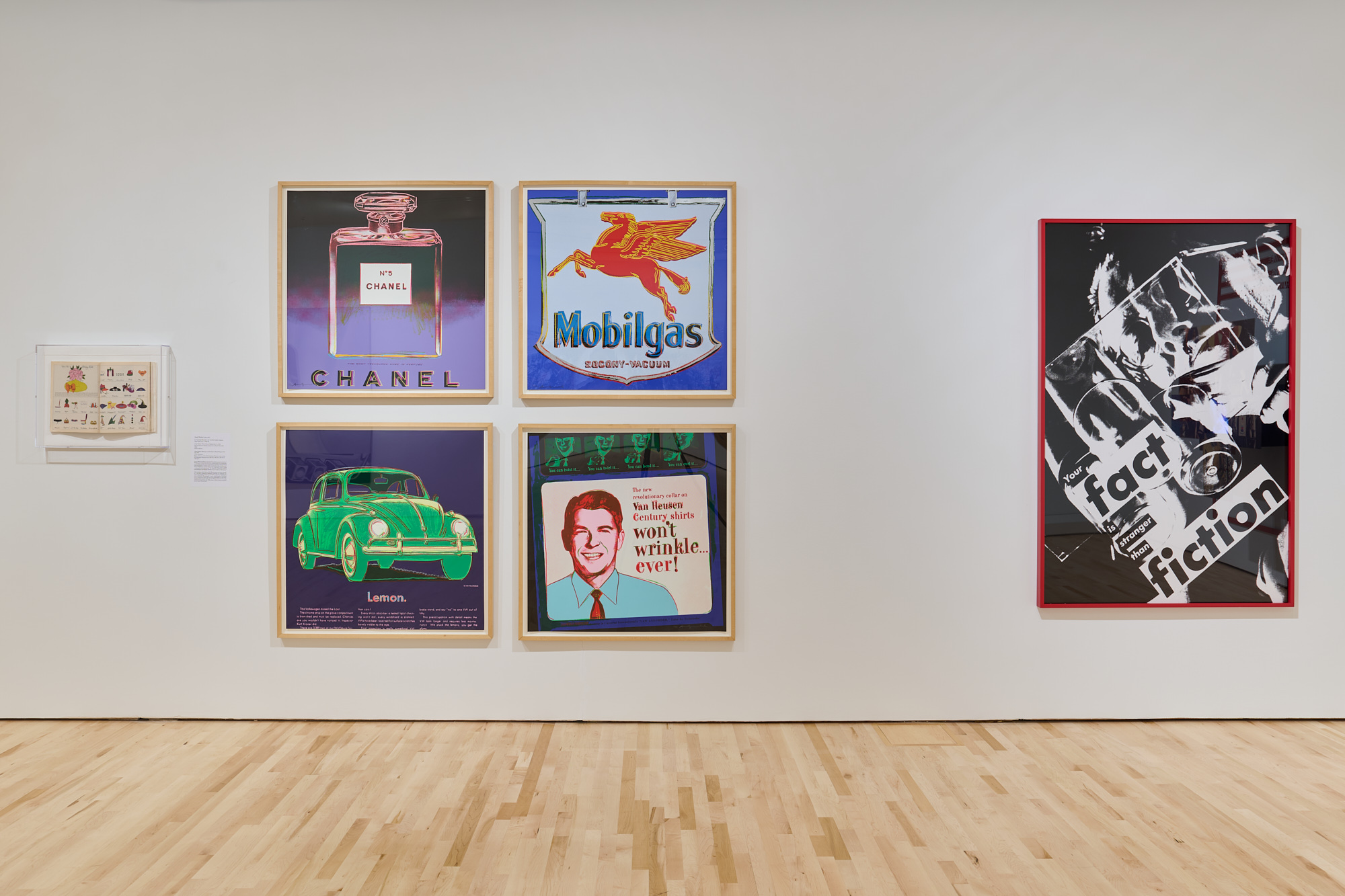
Grid of four framed colorful prints featuring products next to tall black and white print
Installation view of ‘Day Jobs’ at Cantor Arts Center with screenprints from Andy Warhol’s 1985 series ‘Ads’ at left and Barbara Kruger’s ‘Untitled (Your fact is stranger than fiction),’ 1983, at right. (Glen C. Cheriton)

We can look at postwar case studies like Andy Warhol (commercial illustrator and window display designer) and Sol LeWitt (museum security guard) and see prime examples of artists whose day jobs directly and successfully contributed to the content and context of their work. But that trajectory has become less and less relatable. In the 2000s, Margaret Kilgallen was a library page and book repairer at the San Francisco Public Library, but even that was two decades ago, in a very different version of the city. Is it realistic to look to the past as proof of the current options available?

The question of how artists can make time for their practice and survive financially is always critical. And the topic is particularly relevant in a time of ramped-up economic insecurity. In the Bay Area we ask ourselves all the time: How do you find the energy to work full time and have a life in the studio in one of the most expensive cities in the country?

Day Jobs presents strategies some artists have used in the past to find a way forward. It’s now up to the next generations to figure out how those strategies will map onto the art world of today.


‘Day Jobs’ is on view at the Cantor Arts Center (328 Lomita Drive, Stanford) through July 21, 2024.


Source link

Share Article

Other Articles

Previous

Humans of the U: Alix Twiggs – @theU

Next

BIC promotes creativity with Art Master Africa

Next
April 24, 2024

BIC promotes creativity with Art Master Africa

Previous
April 23, 2024

Humans of the U: Alix Twiggs – @theU

No Comment! Be the first one.

Leave a Reply Cancel reply

Your email address will not be published. Required fields are marked *

Recent Posts

What to Know About Banksy and the Street Artist’s Identity – The New York Times
March 17, 2026

What to Know About Banksy and the Street Artist’s Identity  The New York Times Identity...

“All roads go back to the music we did. I worked with Bruno because he loved what I did with Amy, and as big as other records were, that is ground zero": Mark Ronson explains what made Amy Winehouse such a great musical collaborator – "she had no filter" – MusicRadar
March 17, 2026

“All roads go back to the music we did. I worked with Bruno because he loved what I did with Amy,...

"What a voice. What a moment." Start your St. Patrick's Day celebrations the right way by watching Jessie Buckley, the first Irish winner of a best actress Oscar, absolutely smash a Primal Scream classic in a bar – Louder
March 17, 2026

“What a voice. What a moment.” Start your St. Patrick’s Day celebrations the...

“I had just finished a Christmas album; he had just finished a Metallica album”: It might have been “a bit of a whiplash” for some of his fans, but Josh Groban says he has no regrets about his “ballsy” decision to make an album with Rick Rubin – MusicRadar
March 17, 2026

“I had just finished a Christmas album; he had just finished a Metallica album”: It might have been...

“We do not ever want it to be like we’re going through the motions or we’re having to run on empty. We’re going to do 20 shows each year. No more, no less”: Radiohead suggest they’ll play short-term residencies in other continents – MusicRadar
March 17, 2026

“We do not ever want it to be like we’re going through the motions or we’re having to run on empty....

Related Posts

What to Know About Banksy and the Street Artist’s Identity – The New York Times

March 17, 2026

What to Know About Banksy and the Street Artist’s Identity  The New York Times Identity...

“All roads go back to the music we did. I worked with Bruno because he loved what I did with Amy, and as big as other records were, that is ground zero": Mark Ronson explains what made Amy Winehouse such a great musical collaborator – "she had no filter" – MusicRadar

March 17, 2026

“All roads go back to the music we did. I worked with Bruno because he loved what I did with Amy,...

"What a voice. What a moment." Start your St. Patrick's Day celebrations the right way by watching Jessie Buckley, the first Irish winner of a best actress Oscar, absolutely smash a Primal Scream classic in a bar – Louder

March 17, 2026

“What a voice. What a moment.” Start your St. Patrick’s Day celebrations the...

“I had just finished a Christmas album; he had just finished a Metallica album”: It might have been “a bit of a whiplash” for some of his fans, but Josh Groban says he has no regrets about his “ballsy” decision to make an album with Rick Rubin – MusicRadar

March 17, 2026

“I had just finished a Christmas album; he had just finished a Metallica album”: It might have been...

© 2024, My Art Investor, All Rights Reserved.

  • Contact
  • Privacy Policy
  • Terms and Conditions
  • Home
  • Art Investing
  • Art Investments
  • Art Investor
  • Artists
  • Artwork
  • Fine Art
  • Invest in Fine Art