
[ad_1]
I wonder what it must have been like to have been a sitter for one of the portraits of John Singer Sargent. He apparently used to oscillate between studious concentration and bursts of energy, where he might go off to play the piano in the drawing room of whichever grand or stately home he was visiting to fulfil a latest commission. The first thing that springs to mind at the present Tate Britain exhibition (Sargent and Fashion, until July 7) is to ask just what Sargent was looking for in his subjects – their appearance, their surroundings, their expressions – that went beyond a merely glamorous society portrait.
For it’s undoubtedly true that the glamour of his subjects and their wealthy belle-epoque serenity is a large factor behind Sargent’s appeal. The curators at Tate Britain certainly thought so, as they decided to have Sargent’s most famous paintings tied to his depictions and uses of, above all, fashion. The most casual visitor can see why: the dresses really are too expensive to be true, the colours too bright, the grandeur and sophistication all too vivid. It’s certainly enough to make Sargent into the “fashionable” artist he might not be if relegated to the archive of dated and deluded Edwardians.
The question is whether this fantastically well-stocked exhibition – most of the artist’s portraits of note seemed to be in sight – needed to be bracketed within the fashions of late nineteenth-century Europe, with dresses placed ostentatiously next to portraits and drawn-out explanations of fashion choices obscuring an appreciation of Sargent’s real insights. Did we need his already extraordinary Ellen Terry as Lady Macbeth to be seen solely through the lens of the stunning clothes worn by the actress, leaving no space for the drama it represents?
A fair few of those who’ve seen this exhibition have thought not. Jonathan Jones started his review in the Guardian by pronouncing it “a horrible exhibition”, lambasting the curators for putting “the hat before the head and the crinoline before the soul”. Jones’ polemic has divided critics, largely on the issue of whether or not it’s “snobbish” to question the predominance of fashion and clothes in an exhibition of paintings. Whatever the debate, the exhibition seems to have attracted good audiences, and even perhaps new ones. That may well be the Tate’s answer to its outraged critics.
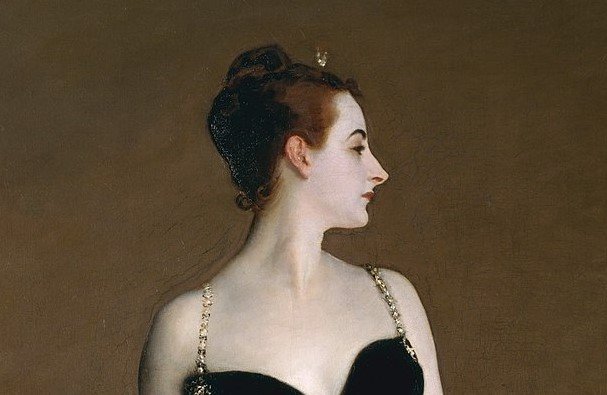
But there certainly was something missing from this exhibition, once we’ve moved past the fact that it could have done with a fair few hats and dresses going missing on their travels from the archives and museums of the world. We are told that Sargent’s most famous painting – Madame X of 1884 – was controversial, but not given the full artistic reasons for its controversy. What made this undoubtedly provocative portrait quite so outrageous to the family of its sitter and the art critics of Paris? In what kind of intellectual climate was Sargent working, when he gave us these ostensibly wealthy and sophisticated characters, and how might we look at the vulnerabilities or conflicts which his portraits lend to them? Is the stunning portrait of Sir Philip Sassoon of 1923 merely a portrait of aloof aristocracy, like that of Lord Ribblesdale? The renewed interest in Sargent’s work and the depths of his work in the century after his death would suggest otherwise. A quick slog through the peculiarly-painted walls of the Tate would not.
One can’t say that the clothes themselves are uninteresting: the sheer skill and splendour of their design is enough to merit attention. But the relentless highlighting of these garments-as-artefacts does take away from the artwork on display; it focuses our attention too much on the tight shoes and the florid carpets. These are part of the work, but putting them at the centre distorts its effect.
We get little of Sargent’s time as well. He painted the grandest society figures of his age: his magisterial view of Charles Stewart, Marquess of Londonderry made me think it was George V. The portrait of Lady Sassoon gives away everything and nothing about what it was like to be a participant in that supposed halcyon age of wit, grace and distinction before the First World War. The long, tentacular fingers of Aline Caroline de Rothschild are almost the same as those that make the portrait of Dr Pozzi at Home so spellbinding.
After all, the paintings are there for all to see. The distracting paraphernalia of obsessed curatorship can only detract from them so much. And Tate Britain is an underestimated institution – a real beacon of artistic idiosyncrasy. It’s just a shame when the Tate decides to take paintings from other major international galleries and reduce them to their relations with hats, scarfs, dresses, sofas and – it has to be said – remarkably labyrinthine carpets.
A Message from TheArticle
We are the only publication that’s committed to covering every angle. We have an important contribution to make, one that’s needed now more than ever, and we need your help to continue publishing throughout these hard economic times. So please, make a donation.
[ad_2]
Source link