
[ad_1]
- 70% Mena fund allocation
- Up to 15% possible returns
- Platform for new talent
From Greco-Roman to Early Christian, the late Lebanese banker Raymond Audi’s art collection famously contained mosaics from all four corners of the world.
Audi is believed to have amassed one of the region’s largest corporate art collections and three years after his death the bank he lent his name to is building on his legacy with the launch of the Middle East and North Africa’s first market-regulated art fund.
“Art is in the bank’s DNA,” Daniel Asmar, chief executive of Riyadh bank Audi Capital told AGBI.
Asmar, who spent two years as Mena managing director for Sotheby’s until 2024, is also chairman of Audi Capital’s SAR150 million ($40 million) Mena Art Fund. Launched last month, it aims to draw new investors to the region’s art scene and provide a platform for emerging talent.
“Not only are we channelling capital from the finance world to the art world, we want to play an active role in the ecosystem,” Asmar said.
The bank plans to stage events and talks and exhibit acquisitions rather than “hiding them away in warehouses”, he added.
Gulf countries are investing in arts and culture as part of economic diversification efforts, and regional artists are rising to prominence.
 Audi Capital
 Supplied
Western institutions are jostling for a presence in the GCC, such as London commercial gallery Colnaghi, which announced a $2.7 million deal last week to open a gallery in Riyadh, joining the incoming Guggenheim in Abu Dhabi, the Louvre and others.
Edward Gibbs, Sotheby’s Middle East and India chairman, said: “The Gulf art market is experiencing unprecedented and sustained growth. Dubai continues to play a pivotal role, alongside Abu Dhabi, while Saudi Arabia is another exciting and dynamic market.”
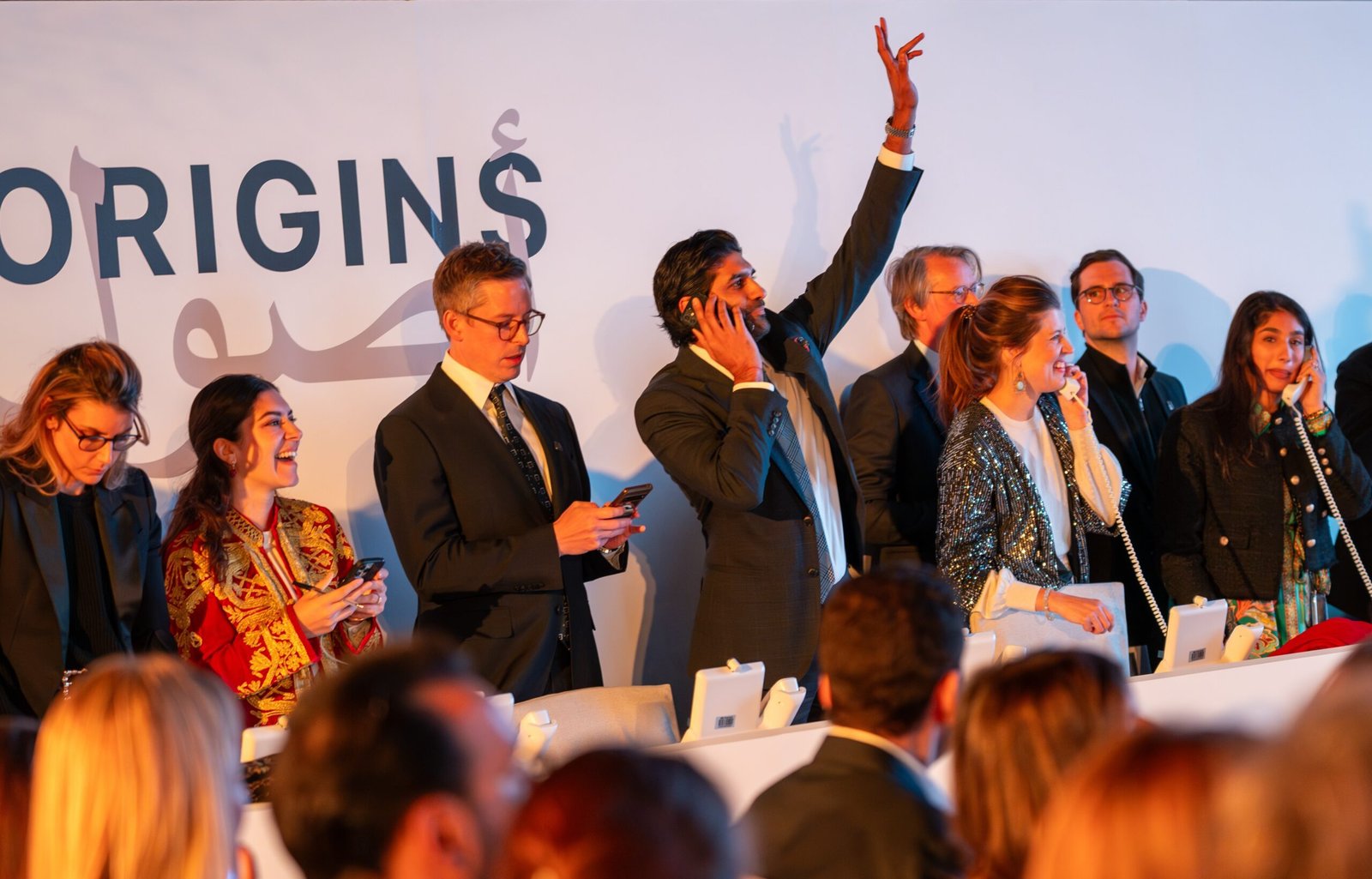
Sotheby’s first-ever Saudi auction in Diriyah in February netted just over $17 million of sales, it said. Across its auctions, the number of bidders from the Middle East has increased by more than 70 percent over the past five years.
Asmar said he spotted a gap in the market driven by rising appetite among family offices and high-net-worth individuals (HNWIs) for fine art and collectibles. Tangible assets are increasingly popular as a hedge against currency fluctuations but lack of knowledge can make investors wary and “need some handholding”, he said.
Regulated by the kingdom’s Capital Markets Authority, Audi’s fund will invest primarily in modern and contemporary works, with a 70 percent allocation to the Mena region and 30 percent to elsewhere.
 Amal Alhasan/Getty Images for Sotheby’s
Works will be acquired from auction houses, galleries or the artist, but the fund may also participate in third-party guarantees, agreeing to bid a minimum amount for an artwork to reduce the risk of it failing to sell.
It will raise funds over five years, with possible returns of 12-15 percent, Asmar said. Among those on the advisory committee are Dubai-based collector Charles Al Sidaoui, Michaela Watrelot, a curator at a private Abu Dhabi art foundation, and former Christie’s specialist Masa Al Kutoubi.
Art is a popular asset class but remains volatile, with prices fluctuating according to market trends, artists’ reputations and economic conditions. The 2024 Art Basel and UBS Survey of Global Collecting, based on responses from more than 3,660 HNWIs, found average expenditure per investor on art and collectibles dropped by 32 percent year-on-year in 2023.
However, median levels were more stable, falling from $50,165 in 2022 to $50,000, “suggesting that the majority of the decline was due to reduced spending at the higher end of the market”, the report said.
Further reading:
Further reading:
One attraction of the Middle East market is that it is possible to acquire “museum-quality” works cheaper than in the West, noted Daria Lomova, founder of Dubai-based Cultured Art Consulting.
Competition and interest is high, she said. At Sotheby’s Riyadh auction, works by Western greats generally sold for lower than their estimates or not at all, whereas regional pieces often sold higher than estimates.
“Buyers here are interested in regional artworks that show their identity and cultural heritage, which demonstrates the region’s potential for growth and the opportunities for investors.”
However, she added, “when I see clients looking at great paintings, proud to have them in their houses, I know it’s not just about the money.”
[ad_2]
Source link
Other Articles

Rosewood Offers ‘Rotating Exhibition Of Artwork’