
[ad_1]
“Somebody said to me the other day, I was born to write this book.” Christopher Frayling, a professor emeritus of cultural history at the Royal College of Art (RCA) and the former chair of Arts Council England, is referring to his book The Hollywood History of Art, which takes a long, detailed look at how mainstream cinema has portrayed artists. He may well be right; along with his distinguished career as an art history academic, Frayling has also produced a string of impressive books about film, writing about subjects as varied as westerns, vampire cinema, the set designer Ken Adam and the horror film The Innocents.
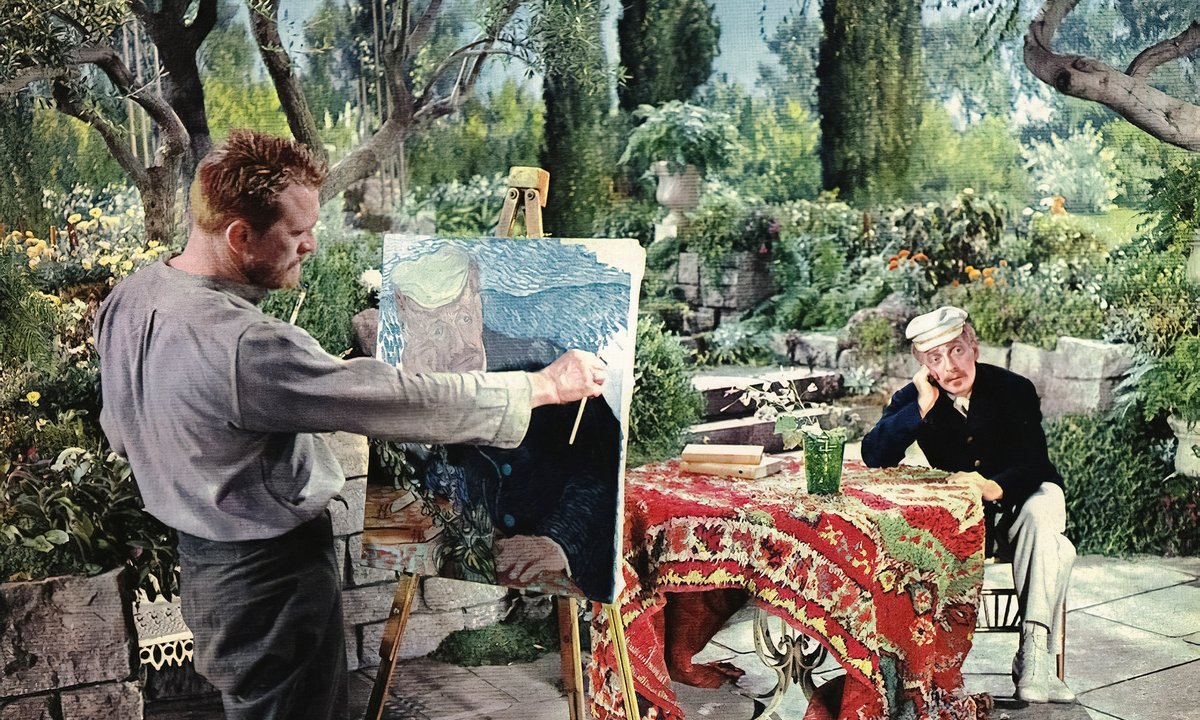
Frayling’s approach in the new book is to break the subject down by artist in the rough order of their adoption by the cinematic mainstream, starting in the 1930s with Fredric March as Benvenuto Cellini and Charles Laughton’s Rembrandt, sweeping all the way up to Timothy Spall as J.M.W. Turner. Along the way he covers the likes of Kirk Douglas’s Vincent van Gogh, Charlton Heston’s Michelangelo, Ed Harris’s Jackson Pollock and Salma Hayek’s Frida Kahlo. Frayling has a broad definition of Hollywood, taking in the full range of Anglo-American cinema, including such defiantly non-Hollywood products as Derek Jarman’s Caravaggio (1986). He says his real subject is how cinema has defined, and often reinforced, how art and artists are understood by the wider culture.
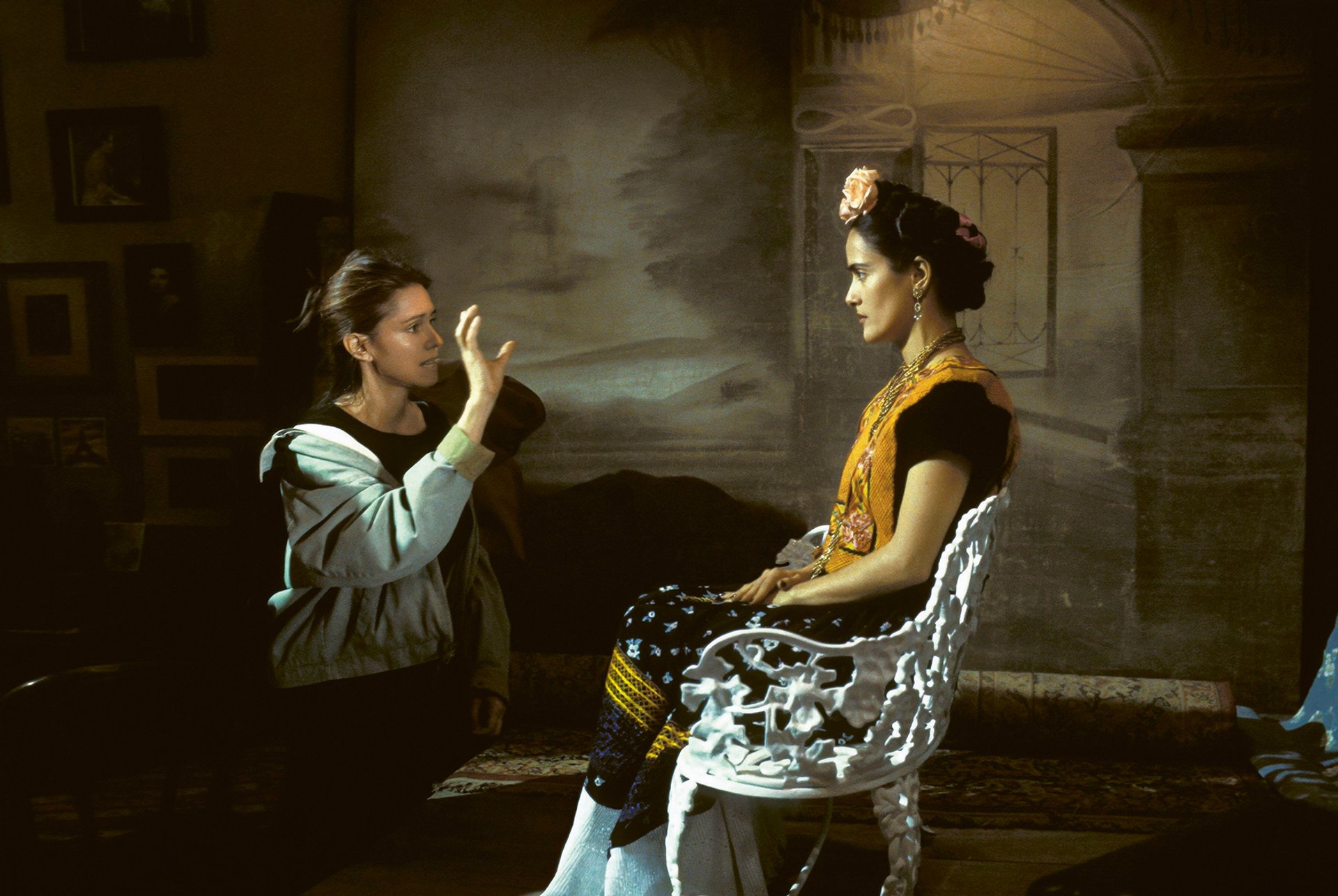
Julie Taymor directing Salma Hayek in Frida (2002) Image: Reel Art Press
“These films are important biographical fictions that feed into generally accepted common knowledge about artists in a big way,” Frayling says. “They offer a narrative where the art is a Rorschach test of the life. You read the life through the paintings. A lot of curators encourage you nowadays to make connections between the life and the art. Well, that’s what Hollywood is doing, only on a grand scale.”
The idea for the book originated with a series of lectures Frayling gave to fine art students at the RCA where he was intrigued to find that these young and presumably forward-thinking artists largely embraced what—to Frayling at least—was a clichéd idea of what an artist was. “I expected them to treat these films as camp, uninteresting, maybe even embarrassing, but they loved them. They identified with the image of artists as inarticulate, angry and lonely, pouring their soul onto the canvas, and, crucially, not needing training. And yet they were in art school. I thought, ‘That’s interesting’.”
Questions of historical, even artistic, accuracy are not what Frayling is concerned with, as “that is to miss the point and is rather snooty and snobbish”. In fact, he says, the commitment of film-makers to getting things right is impressive. “It’s a paradox that the surface details are well researched in a lot of these films. If you want to know about Renaissance scaffolding, watch The Agony and the Ecstasy [1965]. They had Michelangelo’s drawing of how the scaffolding was built in the Sistine Chapel and made an amazing facsimile,” he explains. “But when anyone opens their mouth, strange things happen. I suppose it’s because they are telling a story they feel has to appeal to people who know very little about Michelangelo, so you get a bizarre mix of visual sophistication and a story that is pure Hollywood.”
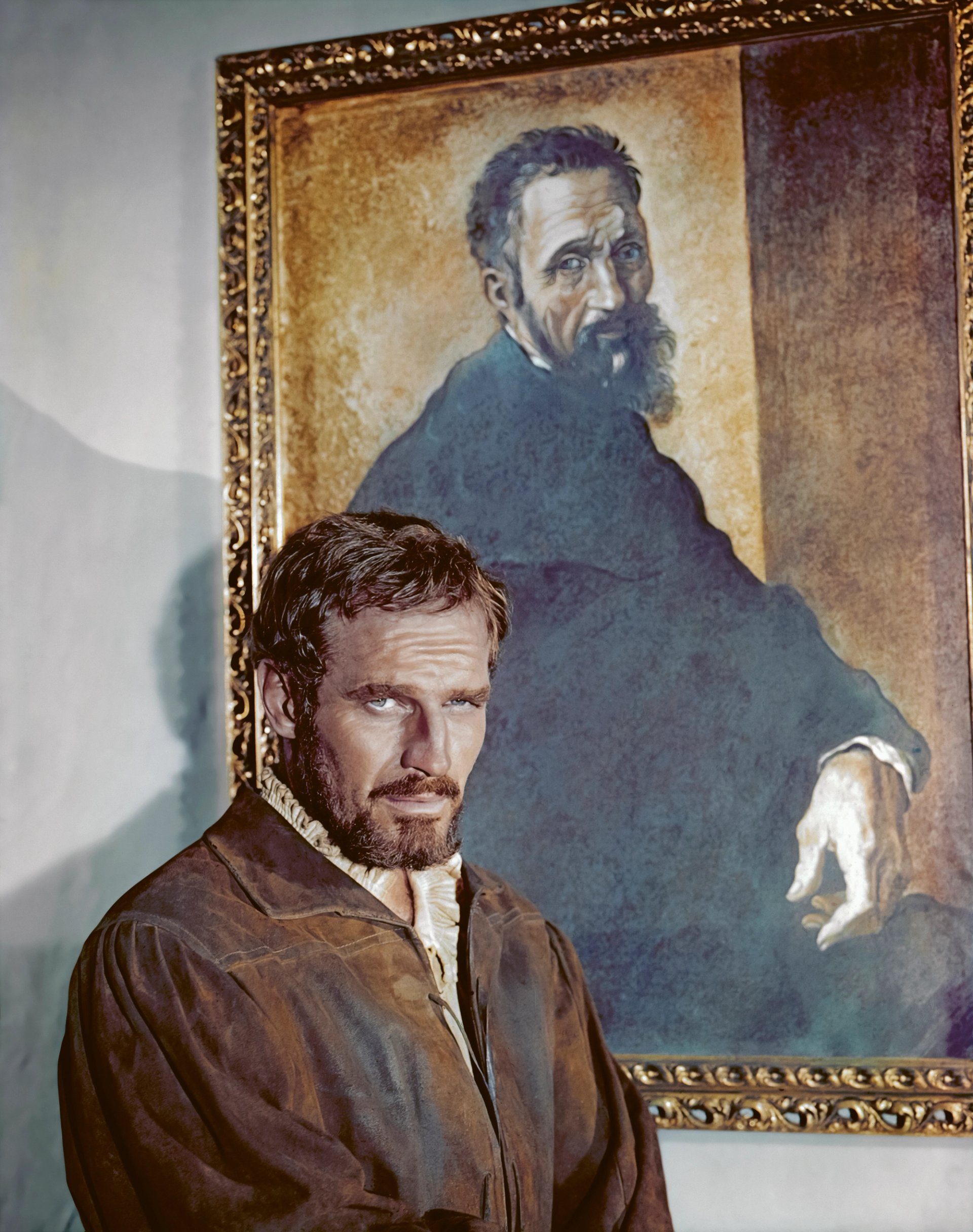
Charlton Heston played the Renaissance master Michelangelo in The Agony and the Ecstasy (1965)
Frayling says that whatever the limited view of the nature of artistic expression is in Hollywood, the films themselves have evolved. “The big change came in the 90s: art as commodity, celebrity, the art market, astronomical auction prices. Artists suddenly became more self-aware. So you get a film like Pollock [2000], which is all about what it’s like to be a celebrity, or Basquiat [1996] where [Julian] Schnabel takes a pop at the culture of dealers and gallerists.” Female artists finally got a look-in with Frida (2002). “Although it’s a bit of a hagiography, I like it very much. Kahlo, of course, was an autobiographical artist par excellence, so the idea of the life and work being inseparable works beautifully for the film.”
Frayling is keen to stress the often seismic effect such films have on art. “These films turn artists into a brand globally. The Van Gogh auction madness, and turning him into the archetypal modern misunderstood artist, are due to Lust for Life [1956]. You can draw a connection between auction values and the impact of films.” Frayling concludes that with many films, “it is not about the visual realm”. The audience is ultimately “interested in the biography and you use the paintings to rest it on. A lot of art history does that, these habits die very, very hard.”
• Christopher Frayling, The Hollywood History of Art, Reel Art Press, 368pp, £69.95, $79.95 (hb)
[ad_2]
Source link