‘We have over 1 million works of art,’ Artsy CEO says
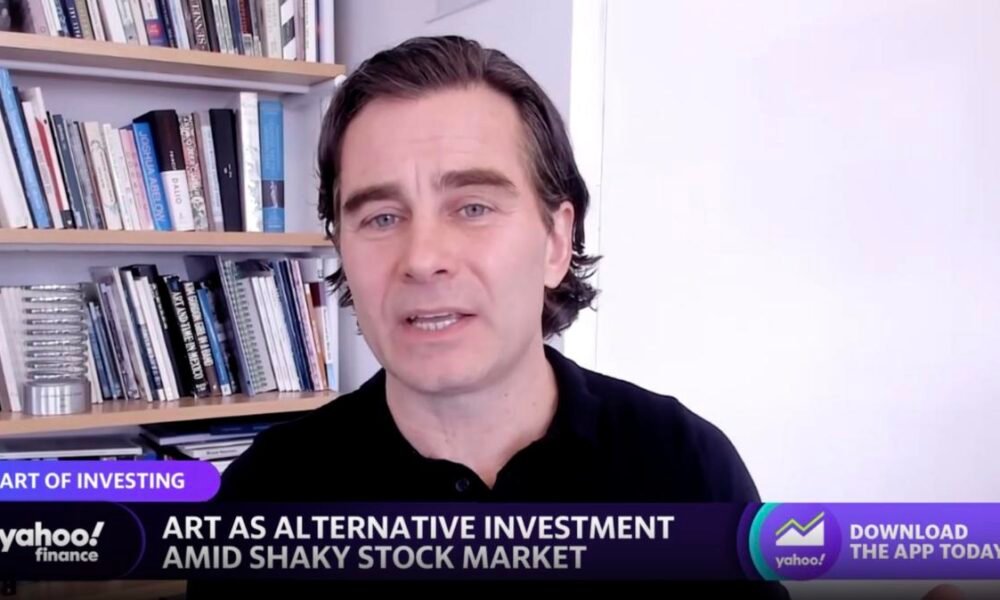
Artsy CEO Mike Steib joins Yahoo Finance Live to discuss market uncertainty, the value of art investments, and the outlook for investors.
Video Transcript
JULIA HYMAN: Between the economic data and the first quarter earnings season, the stock market continues to face a lot of uncertainty. But while markets might be worrisome, one could find a beneficial alternative investment path through fine art. Here to discuss this and more is Mike Steib, the CEO of Artsy. Thanks so much for being here, Mike.
So this offers people a way to get into the art market here. And it’s funny that we’re describing the art market as potentially more stable than the stock market. Because I don’t think of it as more stable, but maybe you can correct that perception. Talk to me about what people can expect when they invest in art.
MIKE STEIB: Well, there’s probably two ways to think about it. The first is if you look at art as an investment class compared to the S&P 500, real estate, et cetera, and how it performs, especially in times of economic disruption or high inflation, a basket of postwar contemporary art that has come to the secondary market performs at significantly higher levels than stocks and other assets. So folks who are focused on art as a part of their portfolio have found that it performs well for them, especially at times like this.
JULIA HYMAN: But, I mean, normal– isn’t that figure pretty heavily skewed toward some of the big ticket huge sales that we hear about in auction that are not the kind of art necessarily that normal people would be investing in? Or does it perform like that sort across the spectrum, across the price spectrum?
MIKE STEIB: When you look at the performance of art, you can really only price it to market when it has come to the secondary market. And as you know, that tends to be artworks that are by notable artists that have appreciated over time. So if someone is a newer investor in art, they have two options.
The first option is they can, if they’ve got the budget for it, they have the appetite for it, they can invest in artists who’ve already established a secondary market. That’s the kind of art that I’m referring to when I’m giving you comparisons to the S&P 500. That’s notable artists like Andy Warhol, and Kusama, and Kehinde Wiley and others who folks have heard of. And you can buy original works by those artists. And you can buy prints in multiples, both of which tend to have stable and consistent returns in the secondary market at a range of price points.
The second is there’s art investing that is more like venture capital. It’s buying into artists who are earlier in their careers, who have not established a secondary market yet, being a patron and a supporter of that artist before they’ve hit those marks in the secondary market. And you can find significantly higher returns on a single investment, but you’re going to have more beta in your portfolio, if you would, because you’re making more speculative bets.
JULIA HYMAN: And so, when you’re investing in the art market, something else that’s quite different from the stock market is a lot is done in the shadows, so to speak. In other words, these are not public deals. In many cases, a gallery might come in and make a bid for an artist to try to push up the price, for example. So what do people who are new to this need to in that sense?
MIKE STEIB: Well, the first thing I’d say, Julia, is right now, investing is not a lot of fun in a market like this. Investing in art is always fun. So the first thing I would note is you’re not only walking away with 10 Class A shares of some stock when you are participating in the art market.
You bring something into your life that’s going to warm your home and give you endorphins and connect you to the work of an artist who’s out there doing important things and speaking to the world in a way the world the world needs to hear it. So that, I’d say first and foremost, is something that really differentiates art investing from others, which is it’s cool, and it’s fun, and it brightens your life.
But secondly, it’s more fun when you do it and you do it well and you see your artworks appreciate. One of the things we’ve worked really hard on at my company at Artsy is we bring all of this data that’s historically existed in the shadows into the fore where the consumer can do their own research. We have millions and millions of secondary market transactions. So if you’re looking at an artist who has an established market, you can see where they have sold in the past every time it’s sold publicly.
But we also have access to lots of the data that hasn’t been out there before. We know all the searches and the inquiries and the saves and the followers on artists throughout their career arcs. And we share this information on our site, on the artist’s page, as well as through the editorial work that we do, and the data science work that we publish for our audience.
JULIA HYMAN: How is our– I mean, there’s been this new class of services and sites like this over the past decade or so, right, where you can either buy a work, buy a piece of a work, et cetera. What makes Artsy different? And how are you guys trying to compete in what has been a more competitive market?
MIKE STEIB: Artsy is different in that Artsy is comprehensive. We work with close to 4,000 of the most prestigious galleries around the world in over 100 countries. We have over a million works of art by artists represented by those galleries, all brought together in one place that is easy to search and sort and discover the work that’s going to be interesting for you.
We have artworks that are available for sale through auction. We have artworks that are available for sale at the click of a button. You also have the opportunity to communicate with the gallery if you want to get to know more about their program, more about the artist. We have an advisory team here that supports folks. We even have software that people use to manage their own collection on Artsy and track the careers of their artists once they’ve bought them.
So while there are a lot of folks doing interesting things in the art market, I think where Artsy has especially differentiated itself is in the size and scale of what we’re doing. Millions of people are on Artsy looking to buy art every single month. And the vast majority– the vast, vast majority of the leading galleries and artists from around the world have their works represented in our marketplace.
JULIA HYMAN: Mike, thanks for being here. Mike Steib is the CEO of Artsy. Appreciate it.
Other Articles



No Comment! Be the first one.