

Masterworks Review: Investing in Blue Chip Fine Art with $1k Review
In short, don’t sleep on making money from art. From 2000 to 2018, fine art outperformed the S&P 500 by 180%. And, a recent sale on the Masterworks platform returned 32% to investors in under 12 months. Again, because art is speculative by nature, the platform is best suited for DIY alternative investors—but if you have the risk tolerance we say dive in.
How do I make money with Masterworks?
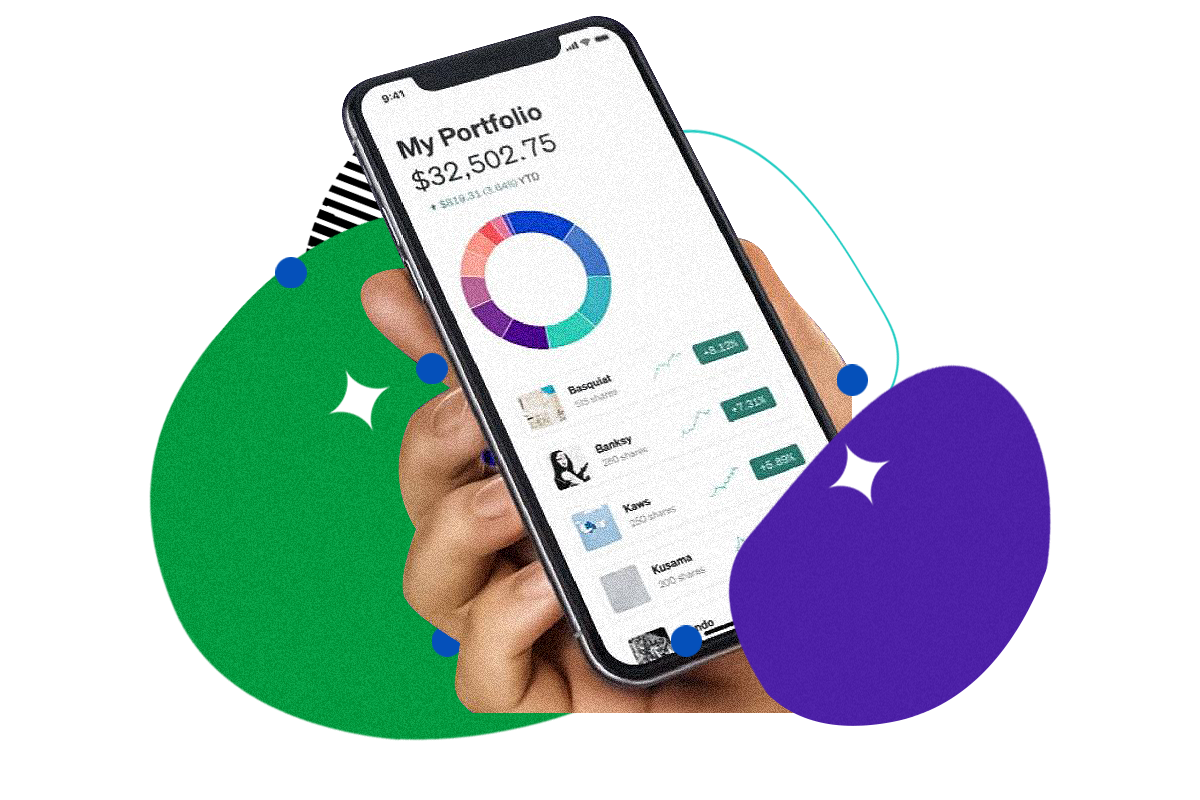
When you invest with Masterworks, you buy shares of paintings the platform has invested in. If the painting you invest in appreciates in value, the value of your shares goes up as well. You can sell those shares on their secondary market and perhaps turn a profit, or you can wait until the platform sells the painting—you’ll earn a portion of the profit from that sale that’s proportional to your investment less any platform fees and commission.
Your investments aren’t guaranteed to go up in value, and exact returns will depend on the paintings you choose to invest in and the overall performance of the art market. To give you some context, let’s take a look at the historical performance of art and the Masterworks platform.
How art as an asset class has performed
The average annual return of art was 8.9% between 2000 and 2019. And in 2018, art delivered a return of 10.6% as opposed to S&P’s -5.1%, -4% for real estate investment trusts (REITs), and -1% for gold.
Zooming out long term, we can still stan art as a worthwhile investment. During the period between 1985 and 2018, the art market returned 5.3% annually, on average, while investment grade bonds from developed nations returned 6.5%.
How Masterclass as a platform performs
Unfortunately, Masterworks doesn’t publish reports on its performance. And since it was only founded in 2017, there’s insufficient historical data to evaluate its longevity and performance.
How do I cash out with Masterworks?
If you want to get out of your investment, like if your artwork isn’t selling or you’ve decided to configure your portfolio differently, Masterworks has your back with its Secondary Market option.
With Masterworks’ Secondary Market trading platform, investors can buy and sell artwork shares that they own with other Masterworks users, all without Masterworks’ involvement.
So if you bought three shares of a Banksy painting and decided one year later to get out of your position, you can sell your shares on the secondary market. And for investors who want to buy their first share without the minimum $1,000 investment, they may be able to find a lower share price using the secondary market option.
This feature is only available to U.S. citizens with U.S. Synapse bank accounts.
Masterworks vs traditional investing
Art as an investment category has the potential for large gains, but you can’t discount the risks either. Even a painting by a top artist loses value occasionally. Some of them may lie unsold for years. You can’t really compare art investing with passive forms of investing such as index funds, which deliver returns comparable to market performance steadily. And compared to dividend-delivering stocks, be prepared to wait. The average time horizon to see any ROI is somewhere around 60 months (five years), with a minimum waiting period of three years. You can, in this respect, see Masterworks as comparable to investing in bonds.
Perhaps most similar to Masterworks is buying and selling NFTs on primary and secondary marketplaces. However, the Class A structure is distinct because it splits ownership up between multiple buyers. This kind of ownership structure is available within NFT smart contracts, but the ease of use with Masterworks is unique. There’s no crypto wallet or advanced coding knowledge required to participate in the Masterworks secondary marketplace. And while buying and selling NFTs gives you freedom and flexibility, the Masterworks team takes care of showing your art and finding a buyer—meaning there’s less responsibility on you.
Use Masterworks to diversify your portfolio when you have a solid foundation of passive funds making up the bulk. Alternative investments like artwork are a type of hedge that operates independently of the stock market. Consider Masterworks the icing on the cake, but make sure you have fully utilized retirement accounts such as IRAs and 401(k)s.

Other Articles


No Comment! Be the first one.