How To Invest in Art?
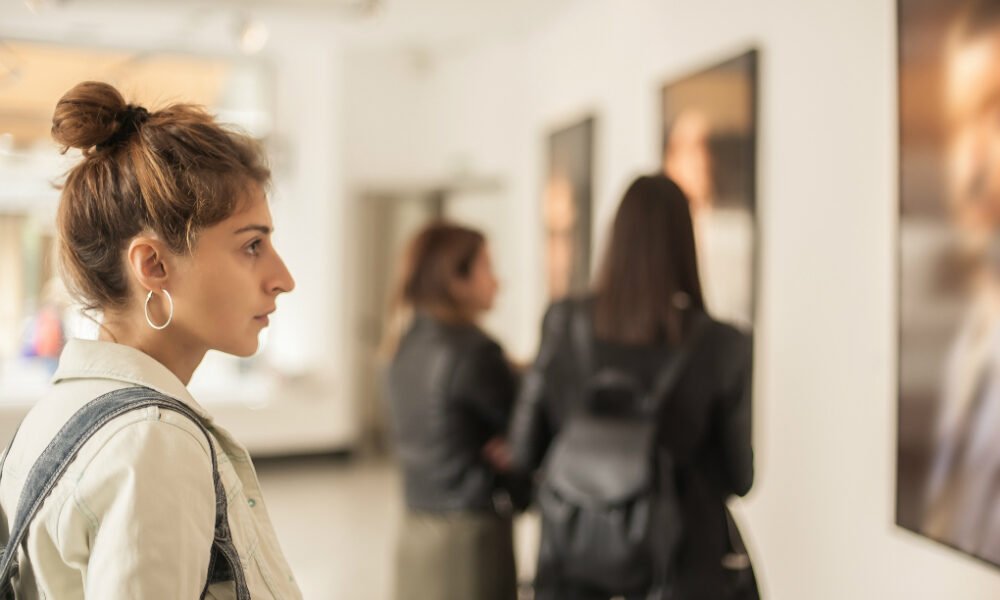
Learn about the market to invest in art
The art market represents an interesting alternative to traditional
financial investments. And for good reason: its average annual return
is comparable to that of the main stock market indices. So, if you
want to make the right decisions and invest in art, you’ll need to do
your homework. “You have to see works of art first, see what’s
going on in the museums. You must know the history of art and the
career of the artist. That’s how you start collecting,”
says Jo-Ann Kane, curator of major collections for corporations,
including National Bank, and a member of the board of the Conseil des
arts et des lettres du Québec. Museums, galleries, books and magazines
on contemporary art will allow you to follow the evolution of artists.
What if you chose to invest in Quebec art?
Choosing to invest in Quebec art is choosing to make a sound
financial investment. By acquiring an eligible work of art by a
Canadian artist, under certain conditions, a taxpayer – whether an
individual, a partnership, a corporation or a trust – can write off
20% of its cost at the federal level and 33.3% at the provincial level.
Good to know: the first year of purchase
The half-rate rule applies: the amortization corresponds to 10% at
the federal level and 16.67% at the provincial level.
A freelancer,
under certain conditions, can also deduct this expense from their
income and recover the taxes if they are registered for GST and QST.
Contemporary, renowned or emerging artists? Focus on the most
promising option
To make the best choice, assess if the artist is thriving by
considering their:
- Influence
- Public recognition in the art market
- Media recognition
“An artist comes with a certain level of recognition from their peers
and from a wider circle,” explains Pascal Desjardins, commissioner and
co-founder of La petite commission. “The more references an
artist has, the lower the risk of investing in their work.”
The following points are worth analyzing:
- Their biography and professional background
- If their work has been part of a private or corporate collection,
and whether it has been acquired by museums - If the artist had any solo exhibitions, and with whom they have exhibited
A renowned artist will have exhibited in well-known places, such as
an artists’ centre or a famous museum, either locally or abroad.
Have you got your eye on a piece by an artist who has exhibited in
New York?
“There are many galleries in that city, and some of them are far from
being reputable,” warns Kane. “For many people, exhibiting work abroad
seems like a good gauge of quality. Quite the contrary—you need to
verify the gallery or museum’s importance before acquiring work.”
For a few hundred dollars, you could also get your hands on a
painting by a promising emerging artist.
“If you have an interest in collecting, you may already have your eye
on some work,” says Desjardins. “It’s also nice to invest in an
artist whose work you like, who hasn’t yet acquired recognition yet.
You can start to develop an eye for this.”
Aesthetic qualities are also taken into consideration when
determining if a piece will gain value. “You want to make sure you
have their best work, acquired from the artist’s best period,”
explains Jo-Ann Kane. “A good understanding of their career is
essential.” Collecting based on a name is not a guaranteed good investment.
Stay informed
Sign up for our newsletter to get recent publications, expert advice and invitations to upcoming events.
Think about the long-term profitability of your acquisitions
For a project to be profitable, it must be considered a long-term
investment. You should also consider the physical conditions for the
exhibition, preservation and storage of the artwork so you can, quite
literally, protect your investment.
“Once a piece of artwork is
damaged, it loses at least 30% of its value,” explains Kane. “Even
more if it is badly damaged or restored. It should be framed well and
handled by specialists.” Artwork should not be displayed near a strong
source of light. “You must never hang work on paper near a window.
Even when the work is protected, the UV in the paper will continue to
damage the material,” she explains.
Donating your works of art, an initiative that pays off
When investing in art, the “aftermath” is also to be
considered. Indeed, the donation of one or more of your acquisitions
could play in your favour: “By choosing a piece that may
interest museums, it is possible you could eventually donate it. At
the time of the exchange, 125% of the artwork’s current value is
eligible for a non-refundable tax credit. Therefore, if you purchase
a $5,000 piece and 15 years later it is worth $30,000, you would be
entitled to a tax credit valued at $37,500.” The donation amount
of the artwork is increased by 25% if the donation is made to a museum.”
However, Kane explains that “To avoid speculation, the Government of
Canada tightened restrictions on acquiring work for the sole purpose
of donating it directly. If the government suspects that an
acquisition was made only for speculative purposes, the donation could
be restricted.”
Note that it is also possible for an
individual to offer a work of art to a charity recognized by the
Taxation Act. The gesture will then be treated as a cash donation and
the donor will benefit from a tax credit. Then, if the acquired work
is sold and its market value has increased since the purchase, 50% of
the capital gain will be taxable. If applicable, the purchaser will
also have to add the recapture of amortization claimed to income.
You wish to invest in art with peace of mind? Speak to an expert
To make a sound financial investment in art, it’s best to work with
an expert. An expert knows the art market perfectly and will be able
to guide you to make the right investments at the right time. Pascal
Desjardins advises, “Speak with gallery owners—they are the ones who
are most passionate. Go see them, listen to them talk about work they
love. Then decide if it makes sense for you.” Kane adds, “Gallery
owners can offer good advice, but you have to remember that it’s in
their interest to sell. When speaking with an advisor, do your
research to find out who they are working with and what collections
they have built.”
As you can see, investing in art takes time, patience and the right
resources. Before you get started, take the time to think about all
these elements to make the right investments at the right time.
If you lack a coherent investment strategy, take
the time to discuss it with our team.
Other Articles

How It Works and What To Know Before Investing
Is there art in your investment portfolio?


No Comment! Be the first one.