
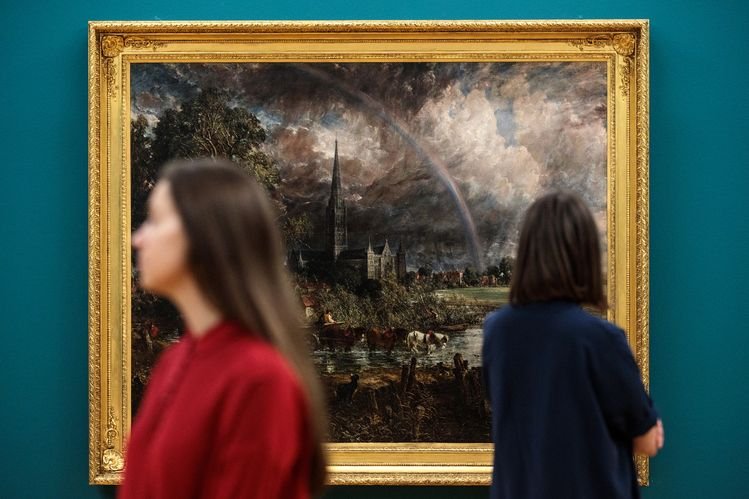
Fine art makes its capital markets debut
A gallery isn’t the only place to invest in art anymore.
Artex, a “stock exchange” for art, opened its door last month. Works are listed as if they are shares in a company.
The exchange is located in Liechtenstein, and has partnered with SIX and Bloomberg to build its market.
Jose Manuel Ortiz-Repiso, head of clearing and repo operations at SIX, is providing clearing services for Artex and said the exchange will behave like any other market in Europe.
“It is a venue operating under the same regulation as a traditional trading venue in Europe,” he told Financial News.
The exchange is being run as a multilateral trading facility overseen by the Financial Market Authority of Liechtenstein. Shares in the art would also be held in a European central securities depository such as Euroclear.
Artex co-founder and chair Prince Wenceslas of Liechtenstein said: “Operating a trading venue under one of the most demanding regulatory frameworks in the world brings a high level of confidence that has been crucial to the success of our project.”
READUK still working on government-backed NFT, officials say
Investing in art has traditionally meant buying an illiquid asset. The hope is that an art exchange dividing works into shares will help create a more liquid market that can be entered and exited with ease.
Ortiz-Repiso told FN the exchange already has interest from liquidity providers and investment firms that operate in equity markets.
“Investors are always trying to find new assets to invest in,” he said.
Prices in equities move with market conditions and earnings reports. It remains unclear what will move the needle for a painting. If prices don’t move, liquidity could be sparse.
Several pieces are currently being worked on as part of the exchange’s first art IPOs. The goal is to list one art piece a month.
The exchange expects the first to debut in the second quarter of this year. Rothschild & Co will advise on the IPOs, art experts will also help determine their values.
Though no art has been listed yet, Artex’s website is adorned with works from some of history’s most famous artists including Van Gogh, Monet and Titian.
This also isn’t the first time art has been bundled into a novel investment vehicle. Only a year ago, art backed by non-fungible tokens was in fashion, before the crypto winter put a damper on demand.
But unlike those NFTs, the pieces listed by Artex are real works in real galleries.
“A Rembrandt will always be a Rembrandt; you cannot delete it,” said Ortiz-Repiso.
Ortiz-Repiso said he expects the market to behave like gold and act as another asset in portfolio diversification.
According to UBS, an estimated $65.1bn of art was sold in 2021. Artex estimates art as an asset class is worth $3.2tn.
To make the tradeable assets available to all, shares in art pieces on Artex will start at €100. The aim, Artex said, is to “democratise the fine art market”.
There is potential for both private collections and museum pieces to be listed. And much like in equities markets, those listing can determine how much of a work to float.
The exchange said pieces listed on the exchange would be put on public display.
“What they want to do is show all these art pieces in different museums around the world,” said Ortiz-Repiso.
To contact the author of this story with feedback or news, email Jeremy Chan
Other Articles


No Comment! Be the first one.