
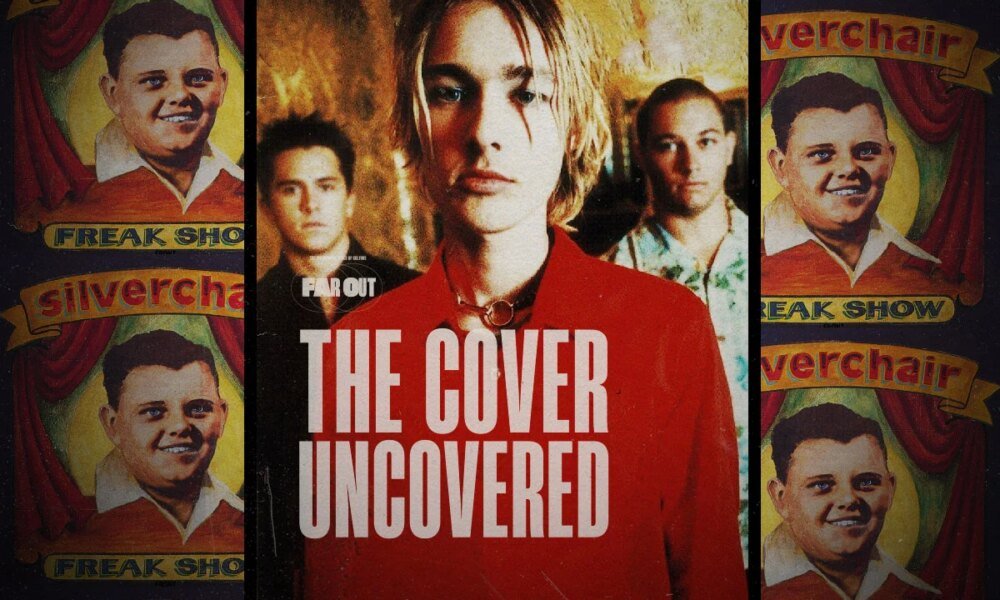
The story behind Silverchair’s cover art for ‘Freak Show’

(Credits: Far Out / Album Cover / Silverchair)
In 1997, Silverchair were one of rock’s most instantaneous successes. Underneath, they were just three 17-year-olds caught in the music industry’s circus.
Two years earlier, vocalist Daniel Johns, bassist Chris Joannou and drummer Ben Gillies were high school kids who decided to enter a television contest, hoping to win a day spent at a recording studio and their very own music video. The overnight sensation of their winning song, ‘Tomorrow’, plucked them from obscurity and placed them under a microscope.
A phenomenon ensued: fans lining up at their shows for hours to catch a glimpse, critics using their age as a basis for scrutinising their talents and amplifying gossip fodder and the pressures of labels and executives for success, all began to weigh heavily. And, to top it all off, the three members were still in school. Spending their days in high school, subject to bullying and mockery from their classmates, only to record and play gigs during their off-time, posed a strange juxtaposition that warped their attempts of a “normal” life.
Entering the studio to record their sophomore album, in the midst of the pantheon of sudden fame and success, Silverchair had angst at the forefront of their minds. Where their debut album, 1995’s Frogstomp, heard Johns’ pen chronicle an adolescent disillusionment, their follow-up would be written with full-blown anger, performed with brutal instrumentation to match. Such was their rightful adrenaline: as their lives were thrown into unexpected demands and constraints, their freedom was found in the studio, where writing about a lifestyle that no one could comprehend became a possibility.
The resulting album, 1997’s Freak Show, was a blistering display of unbridled rage. The album’s opener, ‘Slave’, dissects the stripping of one’s personality to be moulded into someone else, complete with an equally brilliant opening riff and breakdown to match. ‘No Association’ grapples with unwanted attention and the facades of people with ulterior motives.
With a scream of, “Stop sucking the blood right out of me,” Silverchair slice right through the glamour. ‘Learn to Hate’ rages against equal disgust, while the titular ‘Freak’ is an embrace of every so-called disparaging label thrown at the young band, complete with a mockery of, “If only I could be as cool as you.” With masterful musicianship, Silverchair channel every ounce of scorn and hatred into their chords and drums, producing a sound that engulfs the listener in their outrage. Freak Show, in turn, became an anthemic display of teenage aggression, defiant in the face of constructed fame and attempting to reclaim their emotions in a world that tried to stifle them, yet failed.

When asked about where the album’s name spawned from, Johns explained, “We decided to call it Freak Show because in the 1940s, there was these traveling freak shows with people with different things that [were] unusual about them. And they used to travel around from city to city and just display their talent or deformity or whatever it is, and we just thought, you know, we’re not making fun of people with things different about them, we’re just saying that it’s similar to being in a band that travels around and just performing a show from town to town. And we thought it would be a good theme for an album.”
Silverchair were, in a way, caught in their own freak show, placed on display for the world to see. While vulnerability in their lyricism was warranted on one end, the everyday routines of the three teenagers were suddenly altered. Forced to be tangled in fame’s web and regarded as “freaks” in their own right, finding a kinship in those who are placed under surveillance for the world’s gain seems an apt parallel.
Freak Show’s artwork features an illustration of a man named Grady Stiles, Jr, known by his stage name ‘Lobster Boy’. Stiles was a sideshow performer afflicted with ectrodactyly, or split/cleft hand, a congenital disorder resulting in the deficiency or absence of digits of the hand or foot. Both Stiles’ hands and feet were affected, forming claw-like extremities. His deformity was hereditary from his father’s side, who capitalised on his condition by joining a travelling carnival. Stiles was folded into his father’s act at the age of seven, touring as The Lobster Family. In the illustration shown on the cover of Freak Show, Stiles appears smiling, and the insert image shows his full body, with his limbs on display. Various editions of Freak Show show additional illustrations of sideshow performers.
Behind the image, however, Stiles’ life was much sadder and more sinister. Unable to walk, Stiles was sometimes wheelchair-bound, though he most often used his hands and arms for locomotion. He became an alcoholic and abusive to his family, increasingly dangerous as he aged. In 1978, he shot and killed his oldest daughter’s fiancé the night before their wedding, simply because he did not approve. No state institution was equipped to care for an inmate with ectrodactyly, so he was placed under house arrest and 15 years of probation.
As his alcoholism and abuse increased, his wife, Teresa, and her son from a previous marriage hired a 17-year-old sideshow performer named Chris Wyant to kill Stiles. He died alone, at home, with only ten people appearing at his funeral and no volunteers to carry his coffin.
The tragedy of Stiles’ life poses a harrowing memory of mistreatment, and whether Silverchair’s choice of his image was in line with his backstory or not, the album and its depiction work together to amplify the anger that seeps through the record. Freak Show’s cover proves one of the most uncanny, recognisable covers of the 1990s.
Related Topics


No Comment! Be the first one.