
• Contact
  • Privacy Policy
  • Terms and Conditions
My Art Investor
  • Home
  • Art Investing
  • Art Investments
  • Art Investor
  • Artists
  • Artwork
  • Fine Art
  • Invest in Fine Art
  • Home
  • Art Investing
  • Art Investments
  • Art Investor
  • Artists
  • Artwork
  • Fine Art
  • Invest in Fine Art
Artwork

Scientists may have extracted Leonardo da Vinci’s DNA from Renaissance artwork for first time

January 6, 2026 3 Mins Read


Health Check

Sign up for our free Health Check email to receive exclusive analysis on the week in health

Get our free Health Check email

Get our free Health Check email

Health Check

Scientists have recovered tiny DNA traces left on Renaissance artefacts, at least some of which they suspect belong to visionary Italian polymath Leonardo da Vinci.

They have recovered trace DNA from a red chalk drawing on paper called “Holy Child”, possibly made by da Vinci, and letters written by his ancestor, Frosino di Ser Giovanni da Vinci, held at a historical archive in Italy.

Some Y-chromosome DNA sequences from the “Holy Child” artwork and from a letter penned by one of Leonardo’s cousins appear to belong to a genetic grouping of people with a shared ancestry in Tuscany, where the painter was born, according to the study.

When scientists compared the Y-chromosome DNA sequences from the artefacts with large Y-chromosome reference databases, they found the closest match within the broad E1b1 / E1b1b lineage. This Y-chromosome lineage is found today at notable frequencies in southern Europe, including Italy, North Africa and parts of the Near East.

Some of the DNA may be from da Vinci himself, Science Magazine reported.

However, this is not conclusive proof, as establishing that any DNA trace from the artefacts indeed belongs to da Vinci is extremely complex, researchers said.

This is because scientists can’t verify genetic sequences from the artefacts against DNA known to have come from da Vinci himself. The iconic inventor has no known descendants and his burial site was disturbed in the early 19th century.

Historical artefacts can accumulate DNA from their environments and can potentially offer useful information about the people who created and handled them, the materials used to make them as well as the environments they passed through.

But studying such precious objects without damaging or contaminating them has long been a challenge.

Now, though, scientists have developed a “minimally invasive” method to recover “biological signatures of history” from Renaissance artwork and correspondence associated with da Vinci’s ancestors.

Most of the DNA traces belong to bacteria, fungi, plants, and viruses, shedding light on the nature of the materials of these artefacts, their storage environment, conservation treatments, and handling over the years. Some of the genetic material, however, comes from humans.

“We recovered heterogeneous mixtures of non-human DNA,” researchers wrote in a yet-to-be peer-reviewed study published on arXiv, “and, in a subset of samples, sparse male-specific human DNA signals.”
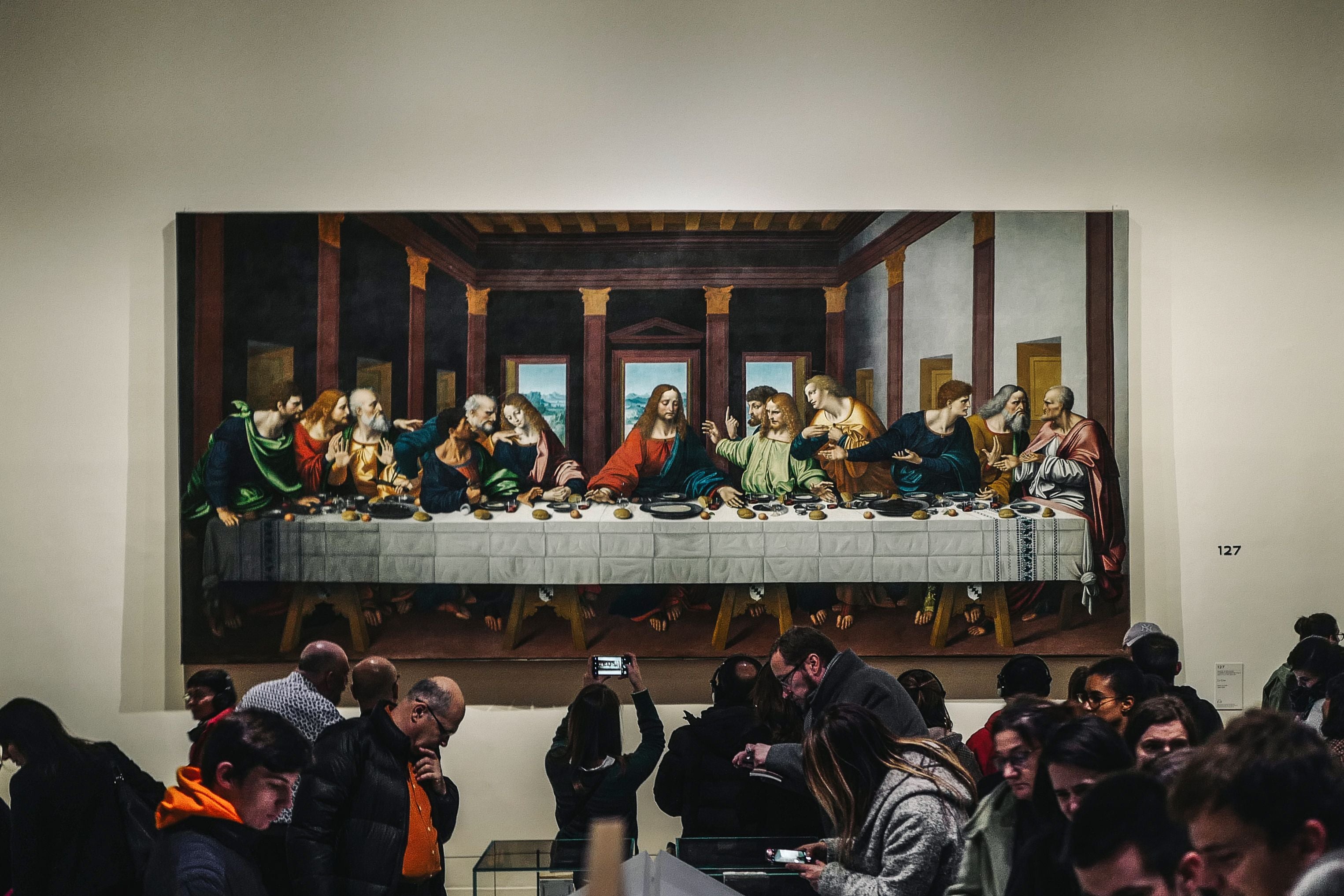
A version of 'The Last Supper' by Leonardo da Vinci

A version of ‘The Last Supper’ by Leonardo da Vinci (AFP via Getty)

Researchers employed a gentle swabbing method similar to that used in museums to collect flakes of skin, sweat residue, microbes, plant pollen, fibres, and environmental dust from the artefacts. From these biological materials, they extracted tiny amounts of DNA, which provided useful information about the artefacts.

“Certain non-human DNA may help us to understand the artefact composition, possible materials used, and the environment and geology of the pieces obtained during the Renaissance in Florence and other areas of Europe,” they said.

Citing an example, they said finding traces of plants like the Italian ryegrass could indicate that the artefact came from Italy in the 1400s and 1500s.

“Riparian species such as Salix spp were abundant along the Arno river and were commonly used for basketry, bindings, scaffolding, and charcoal production within artisanal workshops,” scientists explained.
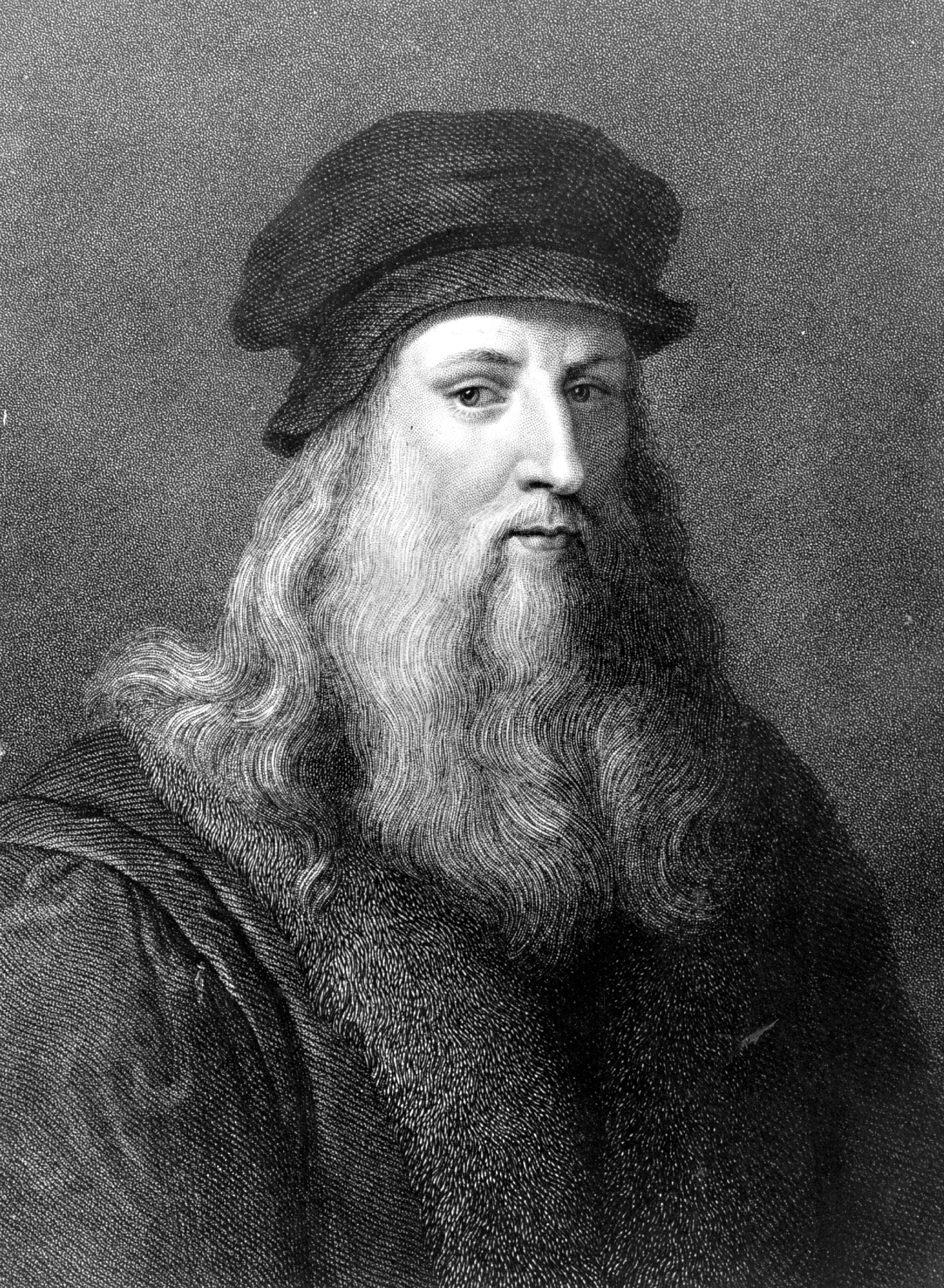
Italian polymath Leonardo da Vinci

Italian polymath Leonardo da Vinci (Getty)

“The unique presence of Citrus spp in the ‘Holy Child’ may provide a direct link to historical context.”

Since the artefacts assessed in the new study were associated with male historical figures, scientists looked at markers of Y-chromosome DNA found in the biological samples.

“To enable stronger claims, especially relating to provenance, geolocation, or historical characteristics, future work is needed to help distinguish artefact-associated signal from modern handling,” researchers said.


Source link

Share Article

Other Articles

Previous

More US artists forced to pay for their own shows as museum and culture budgets shrink – The Art Newspaper

Next

The best exhibitions to see in 2026

Next
January 7, 2026

The best exhibitions to see in 2026

Previous
January 6, 2026

More US artists forced to pay for their own shows as museum and culture budgets shrink – The Art Newspaper

No Comment! Be the first one.

Leave a Reply Cancel reply

Your email address will not be published. Required fields are marked *

Recent Posts

The artist Andrea Fraser had long felt that she was to blame for the years her mother, Carmen de Monteflores, was overlooked. She started plotting a course to revive her mother’s career and belatedly secure her position in art history. Then curators for the 202 – Facebook
March 4, 2026

The artist Andrea Fraser had long felt that she was to blame for the years her mother, Carmen de...

#TSRGreatDebatez: #KirkFranklin was asked if he would do the Super Bowl Halftime Show. He said though he would, he wouldn’t want to do it by himself, and wanted to know which other Gospel artists would folks want to see up on that stage. #Roommates, – instagram.com
March 4, 2026

#TSRGreatDebatez: #KirkFranklin was asked if he would do the Super Bowl Halftime Show. He said...

“I wanted to recreate it, being lost in instrumentation and the musicality”: Harry Styles says that “hypnotic” electronic music by the likes of Floating Points and Jamie XX has influenced not only his new album, but also his marathon training – MusicRadar
March 4, 2026

“I wanted to recreate it, being lost in instrumentation and the musicality”: Harry Styles says that...

“MTV in 1997 or 1998, suddenly they decided rock was out – it was replaced by rap… People were waving guns. Some people assert the CIA was involved… above my pay grade, but I saw it happen”: Billy Corgan says rock was “dialled down” in the late ’90s – MusicRadar
March 4, 2026

“MTV in 1997 or 1998, suddenly they decided rock was out – it was replaced by rap… People...

A4 Canvas For Painting 3-Piece Round Wood Canvas Boards For Painting – Unfinished Fiberboard Panels (15, 20, 25cm) – Deep Cradle For Artists & DIY Artist Wood Panels For Mixed Media – noescinetodoloquereluce.com
March 4, 2026

A4 Canvas For Painting 3-Piece Round Wood Canvas Boards For Painting – Unfinished Fiberboard...

Related Posts

Sophie Kirkpatrick Artwork Winter Robins Handmade Pebble Art Picture | Framed Sea Glass & Driftwood Art, Sustainable UK-Made, Choose Frame Color (White, Grey, Black) Pebble Pictures – noescinetodoloquereluce.com

March 3, 2026

Sophie Kirkpatrick Artwork Winter Robins Handmade Pebble Art Picture | Framed Sea Glass &...

Neo Bauchaus | «Infinite Horizon — Contemporary Geometric Landscape at Sunset», minimalist landscape painting, optical landscape artwork, geometric abstraction, architectural composition art, modern horizon painting, blue and gold artwork, luxury office a – Artsy

March 2, 2026

Neo Bauchaus | «Infinite Horizon — Contemporary Geometric Landscape at Sunset», minimalist...

First look at Jonathan Ross' outrageous new Channel 4 show sees aristocrat proudly showcasing artwork painted by Hitler hung on the walls of his stately home – leaving co-star fuming over 'abhorrent' move, shouting 'it belongs in the toilet' – Daily Mail

March 2, 2026

First look at Jonathan Ross’ outrageous new Channel 4 show sees aristocrat proudly showcasing...

Artwork by late artist Jack Vettriano to go on display

February 27, 2026

He learned by copying Old Masters, Impressionists, Surrealists and a plethora of Scottish artists,...

© 2024, My Art Investor, All Rights Reserved.

  • Contact
  • Privacy Policy
  • Terms and Conditions
  • Home
  • Art Investing
  • Art Investments
  • Art Investor
  • Artists
  • Artwork
  • Fine Art
  • Invest in Fine Art