
The New York Housing Law That Helped Sustain Artists
For many New Yorkers, real estate is a minor (or major) obsession. Given the degree to which access to space can determine your fate in the city, even those of us without much hope of owning end up accumulating knowledge on the topic. We know about the empty towers of hoarded wealth, affordability crises, people without homes, and those being forced out of shelters, and we have also often heard the near mythological stories of massive apartments that retain gobsmackingly low rents.
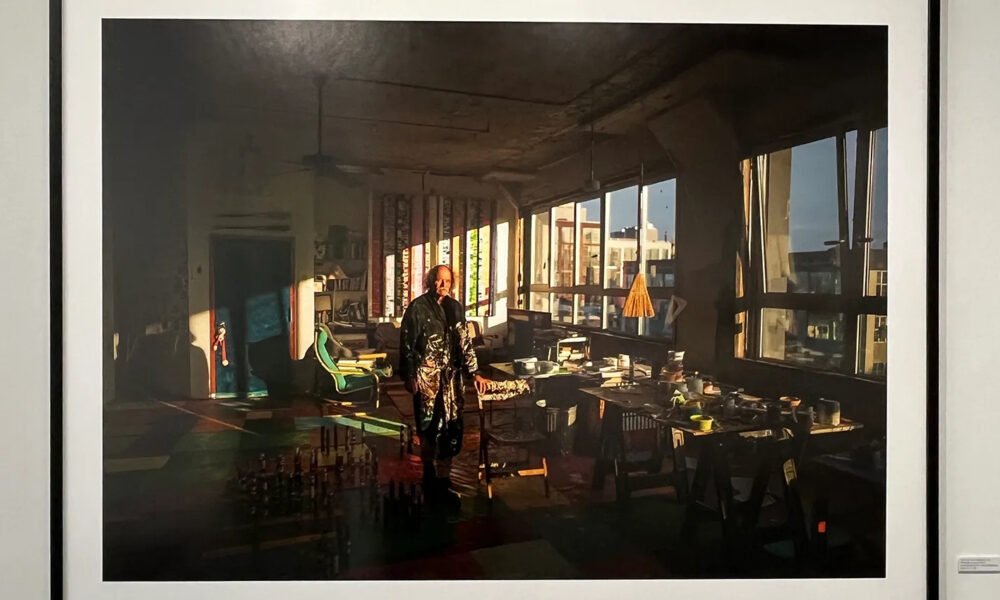
These legendary abodes generally fall under two categories: rent control or Loft Law apartments. Even if you don’t know anything about the Loft Law itself, you certainly know what a loft-style apartment is and may have a vague awareness that the Manhattan neighborhood of Soho made them famous. So any New Yorker who steps into the Westwood Gallery’s current show, Loft Law: Photographs by Joshua Charow, curated by James Cavello to include artworks by a number of the photographed artists, or opens the accompanying book, will likely look with a lascivious gaze upon these images of the few remaining protected artist lofts.

Conversations about bygone real estate eras in New York City, especially when the spaces and rents are the stuff of dreams, run thick with nostalgia and envy. A show and book like this could easily find an audience riding these two sentiments alone. So I was particularly curious if the work had anything more to offer.
A quick explainer on the Loft Law is worthwhile to clarify where the show might go beyond green-eyed longing. The cast iron buildings that give Soho its character were built primarily in the mid-1800s, often with the explicit intention of housing shops on the first floor and factories above. The then-innovative structures provided ample space for workers, as well as the tools and machines they required. A hundred years later, both the stores and the manufacturing were moving out in droves, just as the city began a roughly two-decade descent into economic strife. Meanwhile, artists, as always, were on the lookout for cheap, flexible spaces in which to live, produce work, and share that work with others, and their predilection for former manufacturing spaces was nothing new. Chelsea was where they found those spaces in the 1940s and ’50s, but in the 1960s, a growing number signed leases in Soho and elsewhere in the city, illegally occupying the lofts around the clock, with landlords happy to look the other way while money was coming in. As with every first wave of gentrification, their presence and changes to the neighborhood made it more attractive to others with more resources, and so landlords realized they could turn a bigger buck by kicking the artists out in favor of better-heeled tenants. But in this case, some particularly tenacious loft tenants began lobbying for themselves, getting the Loft Law passed in 1982, eventually winning permanent protections in 2010.

While part of that story feels as old as time, the fact that the tenants managed to get protections, and enough remain that Charow was able to photograph 75 of them, is notable. It’s also notable, for a group of artists that includes at least one person in his 90s, that this work offers some clear insights into what conditions help artists sustain a career across a lifetime, not to mention just how much space impacts ambition and scale, along with the ability to maintain and grow an archive of one’s work.
Make no mistake, though, these apartments are wildly different from the luxury units that have been built below, beneath, and beside them. Theirs is a world of peeling beams, rusting pipes, wonky construction, too much cold and too much heat, and a near total lack of accessibility, not “a secret door into a different state.”

But this show also raises questions about what it would mean to engage in new kinds of advocacy today, particularly for live/work spaces that alleviate the need for artists (and others who need it) to constantly chase affordable housing and studio or work space. At a time when thousands of offices sit vacant in the city, what would it mean to shift many of those to live/work spaces? Like the original Soho lofts, this has the double advantage of creating new housing without pushing existing residents out since these weren’t residential buildings to begin with. And what about pathways to ownership as well? Fluxus founder George Maciunus did it in Soho. Having spent years interviewing and studying LGBTQ+ groups trying to create and hold onto space, I found the number one reason some were able to keep their spaces long term is that they owned them or had occupancy agreements that extended for decades rather than one, two, or even 10 years. The amazing thing about New York real estate is that as wildly out of reach as it so often is, embedded within it are examples of collective action and policymaking that favor the people who actually live in and make the city run. And those examples are something we could all learn from.


Loft Law: Photographs by Joshua Charow continues at Westwood Gallery (262 Bowery, Nolita, Manhattan) through July 13. The exhibition was curated by James Cavello.





No Comment! Be the first one.