
Made in Fire Island: how artists were at the heart of the LGBTQ+ mecca | Art and design books
In the summer of 2015, Leilah Babirye, a sculptor, left her home town in Uganda and arrived for an artist residency in the bohemian, beach-y queer splendor of Fire Island’s Cherry Grove. She tells the story in a new book, Fire Island Art: 100 Years, released this month by Monacelli. After Googling “LGBTQ+ artist residences”, she earned a spot at the Fire Island Artist Residency, established four years earlier to make the famed enclave more accessible. But the lesbian daughter of a conservative minister wasn’t prepared for just how queer the place was. With its roving clusters of people buzzing around the dunes and pool parties to show off the various currencies – physical, financial, interpersonal – they had to spend, she says, “I thought Cherry Grove was America.” Was she wrong?
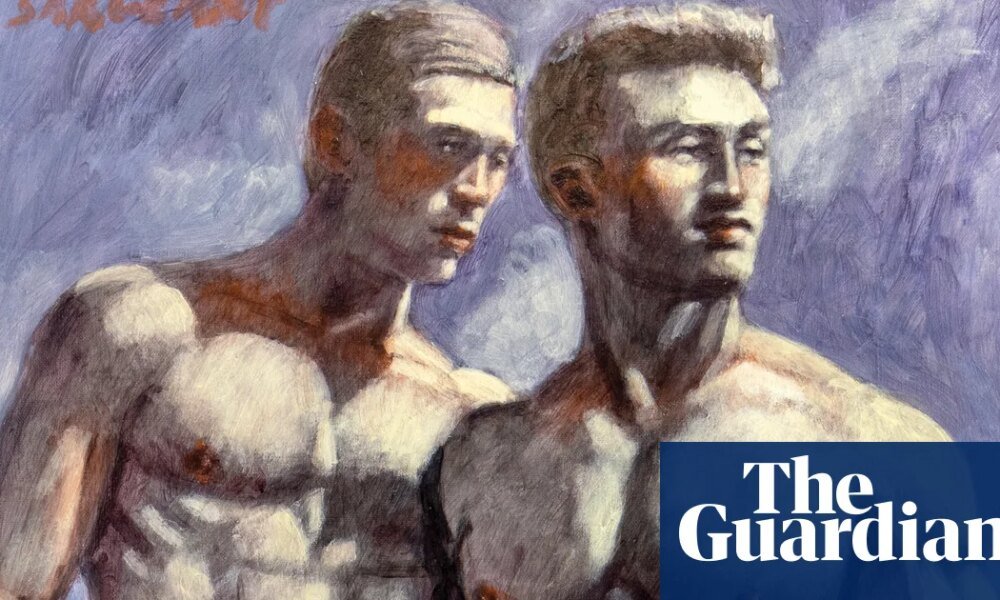
The story of the modern Fire Island is, in some ways, a particularly American one, in which outcasts light out for the territories to make their dreams come true. In the case of the picturesque barrier island off the coast of Long Island, those dreams were both sexual and creative from the start. Edited by John Dempsey, island resident and president of the Fire Island Pines Historical Society, Fire Island Art: 100 Years traces a legacy begun by the pre-war trio of Paul Cadmus, Jared French and Margaret French, who, as part of the artistic collaboration PaJaMa, made beguiling paintings and photographs of the unconventional intimacies they formed while summering among the island’s nooks and crannies.
By the 1960s, society types heard the call, along with party people and young talents like photographers Peter Hujar and Paul Thek, who made the island’s cozy cottages and exquisite beaches backdrops for their own bodies of work about their own bodies. As the erotic potential of the civil rights movement manifested itself as sex in hidden (and not-so-hidden) pathways like the Meat Rack, artists such as Robert Mapplethorpe made the beauties he found there immortal. And after so many of them perished in the 1980s and 1990s, queer visionaries including AA Bronson began practices of what, in the book, he calls “hereditary rituals”, performances involving ashes and charisma to honor the spirits of those who never left the island, or never made it there or never will again.
Fire Island Art sticks the locale’s artist work firmly in the canon. But it goes deeper. “If you don’t know Fire Island, you might think of it as a place where boys in Speedos go and party,” Dempsey says. “And there is some of that. But there’s a counter programming, a scene very in touch with nature and community and friendship. People who care deeply about art and literature are part of that fabric, too. You just have to look a little closer.” David Hockney made extraordinary paintings in and of the scene. “But he was only there for a few weekends,” Dempsey notes. “Mapplethorpe only came from time to time. The fabric of the community is really built on those painters who wake up and paint the beach every day.”
The book offers a welcome entry to the work of locals such as Dennis McConkey and John Laub, whose paintings capture the plain magic of the sand, waves and clouds, and Ferron Bell, who queered the landscape with surreal visual puns. An essential chapter by Ksenia M Soboleva, the writer and historian, gets on to the record how, for most of the 20th century, women weren’t really welcome. It was only in the late 1980s when, as she writes, “the Aids crisis had depressed the rental market and tarnished the carefree nature of queer cruising … [and] as women slowly but surely came into better economic standings and felt more sexually liberated in the wake of the sex wars, the lesbian presence in Cherry Grove [reached] unprecedented heights”.
With Fire Island’s time and space, artists such as K8T Hardy and Nicole Eisenman made riotous, ribald work. And in the book’s crucial conversation between Lola Flash and Pamela Sneed, the artists assert the importance of the total history of Fire Island. “Slaves were held there before they went to auction in New York,” Sneed says. “Queer people think of Fire Island as this queer mecca, a sort of homeland, but we also need to think about Black people and Indigenous people.”
The Fire Island Art Residency in Cherry Grove and its Pines sibling Boffo began, a few years ago, to welcome artists interested in that kind of thinking. In an elegant chapter towards the end of the book, Michael Bullock, the writer, editor and documentary film-maker, tracks the ongoing legacy of these efforts, which have nurtured the now-blockbuster art careers of Salmon Toor, Raúl de Nieves, Cassils and Babirye herself. That legacy is threatened by climate change’s rising waters which erase the beaches each year, and by the rising right that seeks to erase queer and trans people from public life. This too, sadly, is the story of America. “I write in the book about whether Fire Island will be looked back as a lost city of Atlantis,” Dempsey says. “I hope that Fire Island can still serve as a sanctuary for people whose rights are still not secured. We cannot take the place for granted. We have to do what we can to preserve it.”
Other Articles
Artists finish new mural on Weston Off Licence, Hornsey


No Comment! Be the first one.