
Investments of passion come with rewards and high risks
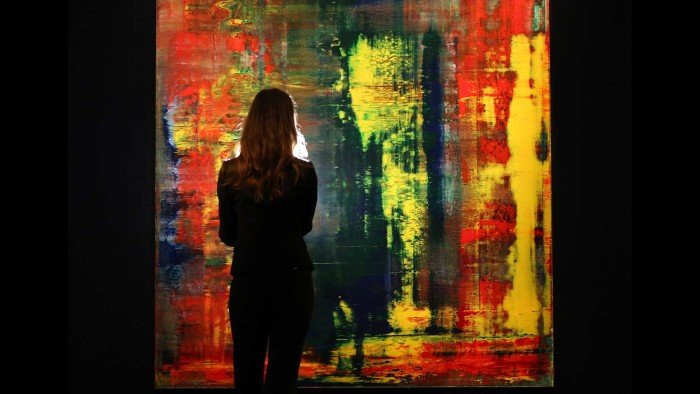
A Chinese bowl bought for a meagre $3 sells for more than $2.2m. The abstract painting “Abstraktes Bild (809-4)” by Gerhard Richter, the German artist, acquired by Eric Clapton for $3.2m in 2001, fetches $34m in 2012. Those are returns that are difficult to find, to say the least, by investing in stocks or mutual funds.
“These kinds of stories are what fuel the market for fine art,” says Suzanne Gyorgy, managing director and global head of art advisory and finance at Citi Private Bank.
The fine art market, as well as other collectables markets, are highly fragmented, unregulated and opaque. Yet they have rewarded investors with triple-digit returns over the past decade.
Among so-called investments of passion, fine art has appreciated by nearly 200 per cent in the past 10 years, according to the Knight Frank Luxury Investment Index. The index is based on the weighted performance of indices for nine classes of collectables, including fine art, Chinese ceramics, classic cars, coins, furniture, jewellery, stamps, watches and fine wine.
Investors are taking a closer look at these real assets beyond their aesthetic and emotional values. “What is changing perhaps is the investment angle,” says Andrew Shirley, editor of Knight Frank’s Wealth Report. “Previously, people liked to collect to have beautiful things and the best collection possible. But traditional investments have lost so much of their value …[that] these investments of passion are quite attractive.”
Tales of appreciation of art pieces, coupled with recent creation of wealth, especially in emerging markets, have brought fresh money into fine art. “There have been many new buyers coming into the market,” says Mary Hoeveler, a New York-based art adviser. “What comes with that, unfortunately, is a lot of speculation. Wall Street takes notice and people come to the market purely as investing.”
The allure comes with high risks. Take Damien Hirst, the British artist whose works include dead animals preserved in formaldehyde and a skull sculpture encrusted with more than 8,000 diamonds. Some of his pieces have dropped in value by 30 per cent since 2008.
The sheer size of the art market makes it seem large and liquid. The global art market totalled $60.8bn in 2011, according to estimates from Clare McAndrew at Arts Economics. That does not mean it is easy to sell individual pieces. “Art is something that is much easier to buy than to sell,” Ms Gyorgy says. “It is really an illiquid asset.”
To address liquidity concerns, banks that serve wealthy and extremely wealthy investors, such as Citi Private Bank and US Trust, have units that structure loans against art pieces.
These loans can help investors extract liquidity from their art assets, says John Arena, a senior vice-president and credit executive at US Trust.
“From a planning point of view, [clients] need to plan for the art,” he says. “If they just buy the art and they hold on to it, there are tax consequences that need to be considered.”
During the financial crisis, he says, these loans came in handy for investors stuck in other loans. “We were able to use the financial aspect of an art collection to offset the value of a margin loan.”
Planning is more important because the art market is characterised by “sheeplike behaviour” and susceptible to passing trends, Ms Hoeveler says.
Contemporary art in particular goes in and out of favour. “When you are dealing with contemporary artists, their career can change, their work can change,” Ms Gyorgy adds.
Still, market appreciation is not investors’ primary motivation – at least, it should not be – advisers say.
“For people who are collecting contemporary art and fine art at a high level, it is a lifestyle, not just a hobby,” argues Ms Hoeveler.
“You can call a collector in another part of the world, whom you’ve never met before, and introduce yourself. It is quite rare that you’d be turned down.”
The more serious art lovers are about assembling a collection, the more careful they need to be about their choices.
Raj Sharma, a private wealth adviser at Merrill Lynch whose clients are worth $25m or more, senses that when investors allocate 10-20 per cent of their portfolio to art collections “it becomes a sub-asset class”.
“People derive great satisfaction from [art pieces] but it is also an investment,” he says.
Mr Sharma has experienced first-hand both the investment and the aesthetic and emotional aspects of collecting art. He is a collector of Indian miniature paintings from the 1500s and 1600s. “These things have quadrupled in price,” he says. “It is exciting to see that.”
Venturing into the fine art and collectables market requires caution and specialised advice. “You may love a piece of art but the marketplace may not,” Mr Sharma says. He recommends working with an art adviser. “My advice would be look at it as a passion first and an investment later.”
Other Articles





No Comment! Be the first one.