
[ad_1]
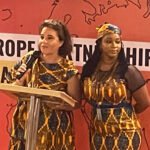
The European Union (EU) has launched the Africa-Europe Partnerships for Culture (AEPC) Nigeria Cluster to empower artists, expand creative networks, and build stronger bridges between Africa and Europe.
The €30 million EU-funded project, implemented by the Goethe-Institut, will promote international collaboration opportunities for Nigerian artists, cultural organisations, and creative professionals across Sub-Saharan Africa and Europe, advancing mutual exchange and co-creation.
Speaking during the official launch of the AEPC Nigeria Cluster in Lagos State, Gautier Mignot, EU Ambassador to Nigeria and ECOWAS, stated that culture remains central to sustainable development, social cohesion, and inclusive growth.
“We see culture as a driver of mutual understanding, creative innovation, and economic opportunity,” he said.
Emphasising that the launch of the initiative in Nigeria signals the EU’s strong support for cultural cooperation between Africa and Europe, he added: “Culture is part and parcel of our Global Gateway strategy, aiming at connecting people and creating opportunities and sustainable shared prosperity.
“The EU remains committed to deepening partnerships that amplify African voices and foster cultural diversity. Our goal is to create spaces where voices can be heard, where creative talents can grow without limits, and where stories that often remain unseen and forgotten can find themselves in the global community.”
Amb. Mignot highlighted several EU-funded cultural programmes in Africa as evidence of the EU’s commitment to promoting Africa–Europe cultural relation.
“In fact, AEPC is not the only proof of our commitment.
“Let me mention two other EU-funded cultural programmes in Africa: Strengthening African-European Museum Partnerships, a €20 million programme to support collaborative projects between African and European museums; and Creative Africa, a €15 million upcoming project that will support collaboration between the two audiovisual ecosystems.
“We also support the strengthening of cultural policy, in Nigeria as in many other countries around the world. And then, there are a string of smaller support initiatives that we bring to cultural actors, like the Festival of Illustrators that took place here a couple of months ago, or the Eastern Nigeria Film Festival in Enugu, where I will be next week with several of our Member States’ Ambassadors.”
He reaffirmed the EU’s commitment to supporting Nigerian creatives in accessing opportunities for collaboration, training, and global exposure.
In her remarks, Dr Nadine Siegert, Director of the Goethe-Institut Nigeria, explained that the launch of the AEPC Nigeria Cluster represents a landmark milestone in promoting cultural exchange, collaboration, and creative innovation between Africa and Europe.
“Nigeria’s creative sector is a force to be reckoned with-diverse, innovative, and increasingly recognised on the global stage. Through initiatives like the AEPC, we are not only showcasing Nigeria’s talent internationally but also creating pathways for collaboration, learning, and sustainable development within the cultural industry,” she said.
Stating that the Goethe-Institut, Germany’s cultural institute in Nigeria, is proud to support and invest in Nigeria’s creative ecosystem, she added: “Our commitment is rooted in three key pillars: collaboration, capacity-building, and visibility and access. Goethe-Institut is committed to ensuring that opportunities in the cultural sector are accessible to all. By supporting creative hubs, digital platforms, and funding mechanisms, we aim to bridge gaps in resources and visibility, empowering a diverse range of artists and cultural professionals to thrive.”
In West Africa, the project promotes cultural cooperation between countries including Benin, Burkina Faso, Cape Verde, Côte d’Ivoire, The Gambia, Ghana, Guinea, Guinea-Bissau, Liberia, Mali, Niger, Nigeria, Senegal, Sierra Leone, Togo, and the EU.
The project is expected to facilitate the training of 250 professionals, support 450 artists, network 48 festivals, and deepen West Africa-EU cultural relations for lasting social and economic gains.
[ad_2]
Source link
Other Articles